New Zealand-Ireland Study Reveals Lower Methane Emissions from Grazing Cows
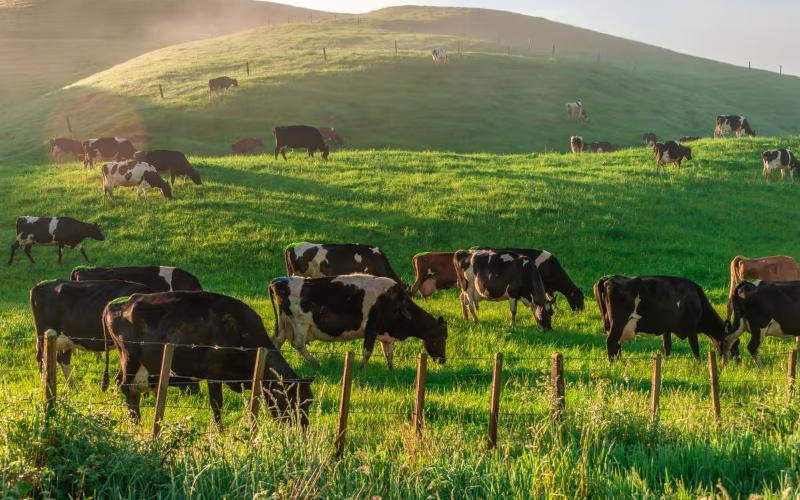
The Emissions4Pasture program, a collaboration between New Zealand and Ireland, has published new findings indicating that methane emissions from grazing cows are approximately 20% lower in spring than the default values currently used in national inventories. This research is supported by organizations such as DairyNZ, the Ministry for Primary Industries (MPI), and the Irish Department of Agriculture (DAFM), with contributions from University College Cork and the Irish Cattle Breeding Federation.
PhD student Jessica Dalton and DairyNZ scientists, Dr. Jane Kay and Dr. Konagh Garrett, found these lower emissions are linked to the high-quality, leafy, and digestible pasture available in spring. The findings align with similar research results from Ireland and the Netherlands, suggesting that grazing cows might produce less methane than anticipated at various times of the year.
As a result, current national inventory calculations and milk processor estimates may be overestimating methane emissions. Adjusting these calculations could provide a more accurate representation of the efficiency of New Zealand's dairy systems, reinforcing its standing as a leading low-emission dairy producer.
The program also explores the impact of other factors such as clover, plantain, and various mitigation technologies across different seasons. The ongoing analysis includes data from all seasons to create a comprehensive methane profile for New Zealand's dairy systems.
Jessica Dalton is currently in Ireland collecting additional seasonal data to further strengthen the research's findings. The full dataset aims to enhance national methane values, pinpoint seasonal emission hotspots, and support effective mitigation strategies that can be targeted to maximize impact.