Saudi Arabia's dairy market reaches 5.32m tonnes
IN TWENTY-EIGHT years the dairy industry of the Kingdom of Saudi Arabia has covered ground that most countries take a century and a half to traverse. Raw milk production rose from 460,000 tonnes in 1996 to 2.82m tonnes in 2024 — more than a sixfold increase, at a compound annual rate of around 6.7%. A mature domestic market has formed alongside, valued by the Dairy Intelligence Agency (DIA) at 5.32m tonnes of milk equivalent in 2023 — nearly three-and-a-half times the level of a quarter-century ago. By physical market volume and the breadth of product categories, Saudi Arabia is today comparable to major European economies.
Industrial model: scale and productivity
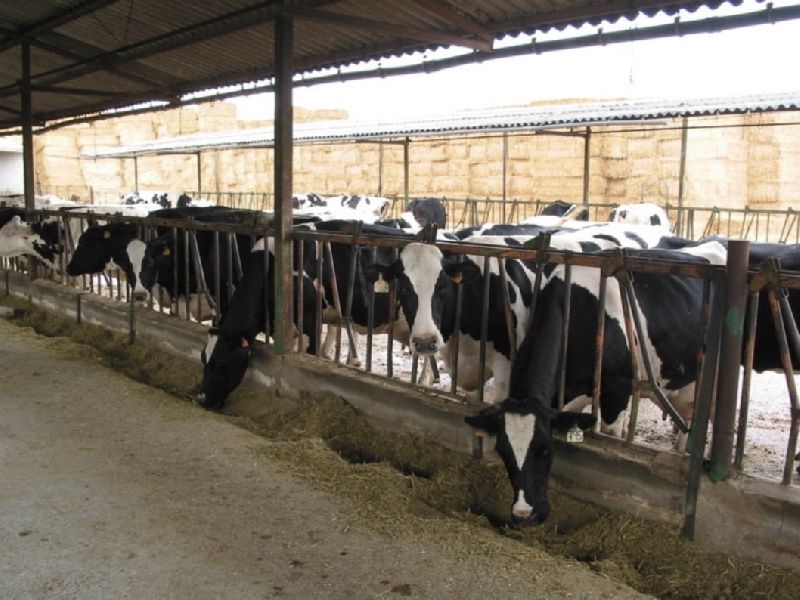
Average yields exceed 12 tonnes of milk per cow per year — one of the highest figures in the world, substantially above the European Union average (around 8 tonnes), the United States (around 10.5 tonnes) and Russia (around 7 tonnes). The dairy herd has reached 234,000 head, with average farm size standing at 7,424 head in 2022 against 1,179 in 1996. The leading operators run stables of a scale wholly atypical for the global industry: Almarai keeps 179,000 Holstein cows on seven farms with combined output of 1.5m tonnes of milk a year; NADEC runs 75,000 cows on six farms processing more than 1,500 tonnes of milk a day; Al Safi Danone holds roughly 37,000 cows producing some 220,000 tonnes a year. Seven leading producers control virtually the entire industrial market.
The financial figures match the scale. Almarai reported net profit of 2.31bn Saudi riyals on revenues of 20.98bn (about $5.6bn) for 2024. SADAFCO, the leader in the UHT-milk segment, recorded revenues of roughly $741m in 2025. Nada posted some $694m in 2026.
Export profile
According to the Dairy Intelligence Agency, in liquid and fermented products the Kingdom is a consistent net exporter on a regional scale. In 2024 drinking-milk exports totalled 372,000 tonnes against imports of 22,700 tonnes — a ratio of roughly sixteen to one. Exports have grown by 56% over eleven years. The principal buyers are the United Arab Emirates (50.5% of shipments), Jordan (13%), Bahrain (9.6%), Kuwait (9%), Iraq (7.2%) and Oman.
The yogurt and fermented-dairy segment displays an even more pronounced export bias: 123,000 tonnes shipped abroad against just 500 tonnes imported — a ratio of around 470 to one. The chief destinations are Kuwait (32.7%), the UAE (32.6%), Bahrain (15.5%) and Oman (14.1%). In condensed milk the Kingdom is a substantial net exporter, with 154,600 tonnes shipped in 2024, primarily to the UAE (53%), Kuwait (20.7%), Bahrain, Yemen and Iraq. Processed cheese is sold to Yemen (23.6%), the UAE (16.3%), Bahrain, Iraq, Oman and Kuwait, with total exports of 72,000 tonnes.
The dynamics in certain categories are close to exponential. Exports of butter and milk fats rose from 4,900 tonnes in 2013 to 19,400 tonnes in 2024 — a 440% increase. Other-cheese exports reached 17,500 tonnes in 2024; skimmed milk powder exports came to 12,600 tonnes, shipped to eleven destinations. The full geography of Saudi dairy exports spans every member of the Gulf Cooperation Council, the Levant, the Horn of Africa and North Africa.
A regional food hub
As analysts at the Dairy Intelligence Agency point out, the structure of foreign trade reflects a mature industrial model. Concentrated raw materials — whole and skimmed milk powders, butter and milk fats — are sourced on the global market from the most efficient producers: New Zealand supplies 58% of imported whole milk powder and 40.5% of imported butter, while India provides 13.7% of butter imports, mostly in the form of ghee. Value-added processed products are then shipped to Gulf neighbours and beyond. The model — running in parallel to the logic of petrochemical refining — turns the Kingdom into a food hub for the region.
Logistical resilience is buttressed by geography. In addition to its Persian Gulf ports, the country has access to the Red Sea through Jeddah, providing alternative import routes and reducing dependence on the Strait of Hormuz.
Global integration
Leading producers are expanding beyond the Kingdom's borders. Almarai is building up its dairy operations in Algeria with the goal of becoming the market leader by 2027; the company is investing in research, product-portfolio diversification and sustainable farming. SADAFCO has owned 76% of the Polish dairy producer Mlekoma since 2018 and runs four plants — two in Jeddah, one in Dammam and one in Poland. In 2020 it opened the largest ice-cream factory in the Middle East. At the level of state strategy, the Kingdom has signed agreements with China and is developing research projects in Asian and African markets.
"Vision 2030" and the structural agenda
Under the reform programme, the dairy sector is positioned as one of the priorities of food security. The food-and-beverage market in Saudi Arabia is forecast to reach $24.29bn by 2025. Whole fresh-milk production is estimated to reach 2.9m tonnes by 2024. Per-capita consumption has risen from 76.5 kg in 2009 to 159.8 kg in 2023 — a level comparable to the European average.
With further expansion of the herd constrained by water — the government banned commercial alfalfa cultivation in 2018 to conserve groundwater — the strategic focus has shifted towards greater processing depth, value-added exports and overseas expansion. This is a managerial choice rather than a constraint imposed by circumstance: importing concentrated raw materials from countries with natural advantages in livestock farming, and processing them within the Kingdom, is economically more rational than attempting to secure the full raw-material cycle in an arid climate.
The Saudi dairy market is an instance of successful industrial modernisation under unfavourable natural conditions, and a tangible demonstration that a modern dairy industry need not rest on pasture-based livestock farming. Over three decades the Kingdom has built an industry of global standing in productivity and scale, taken the position of the largest exporter of dairy products in the Persian Gulf zone, and embedded itself into global commodity flows simultaneously as an importer of raw materials and an exporter of finished products. For its regional neighbours — from the UAE and Kuwait to Yemen and Iraq — Saudi dairy companies are a backbone of the food supply.