Europe's Dairy Market Faces a Divided Outlook for the Second Half of 2026
European dairy is heading into the second half of 2026 carrying the weight of its own record production — and, in some corners of the market, struggling with acute scarcity. A historically strong milk flush across the EU-28, amplified by unusually high fat and protein content in milk fr om the Netherlands and Ireland, is intensifying supply pressure on butter and cheese. At the same time, a sharp reversal in global skim milk powder trade flows and explosive structural demand for whey proteins are pulling parts of the market in the opposite direction entirely.
The divergence, detailed in Vesper's comprehensive H2 2026 Market Outlook covering 13 product categories, is the defining story of European dairy as the year crosses its midpoint.
Abundant Milk, With a Twist
European raw milk production delivered strong volumes throughout 2025, particularly in the second half of the year, and that momentum is carrying directly into 2026. The seasonal flush is expected to maintain significant supply through Q1 and into Q2, keeping liquid prices very low — well before the flush even peaks.
What sets this cycle apart is not only volume but quality. The Netherlands and Ireland are recording milk fat and protein content running significantly higher year-on-year. Even at similar fluid volumes, the actual output of butter, cheese and powder products is higher than raw production numbers alone would imply. This compositional richness is adding an invisible layer of supply pressure on top of already abundant volumes.
Farm-level costs are edging higher due to Middle East tensions pushing up oil, electricity, gas and grain prices globally. Vesper analysts expect this to support milk prices going forward, keeping output elevated through and beyond the flush, without tipping farmer margins into negative territory.
Butter Stuck in No Man's Land
European butter entered 2026 carrying surplus inventory fr om a strong 2025 second half. Demand has not responded meaningfully, and cheaper product from global origins continues to arrive, keeping a lid on prices through the first half of the year. Buyers are in no rush when product availability is this high.
The market is proving less straightforwardly weak than the fundamentals might suggest, however. Geopolitical tensions in the Middle East triggered a sharp but brief spike toward €5,000 per metric tonne in early March before prices retreated to a rangebound zone around €4,500/mt. The bid-ask spread remains wide and volatility can flare quickly.
The picture outside Europe is notably firmer. US butter stocks sit at their lowest level in five years despite above-trend production, as strong domestic demand and surging exports keep inventories tight. New Zealand butter is functioning as a safe-haven origin for buyers across China, the Middle East and Southeast Asia, commanding a clear premium in Oceania. The regional divergence is stark: Europe rangebound, the US and Oceania pointing upward.
The inflection point for European prices lies in H2. As EU milk production is forecast to pull back through Q3 and Q4 — falling below 2025 levels — the supply overhang should gradually erode. Price recovery is expected to begin slowly in Q3 and build into Q4. The mechanism is straightforward: as long as European milk stays plentiful, butter stays cheap. When production dips, prices follow.
Skim Milk Powder's Unexpected Bull Run
Few commodities have deviated more sharply from their original 2026 forecast than skim milk powder. What was anticipated to be a supply-heavy, export-dependent market has turned decisively bullish — and that tone is expected to persist.
The catalyst is the United States. US non-fat dry milk production has been running at multi-year lows as processors have redirected capacity toward higher-value products: cheese, fresh milk and protein concentrates. January NFDM output came in below year-ago levels and stocks have barely moved. With the US effectively sidelined as a reliable exporter, international buyers have turned to Europe, making EU-origin SMP the cheapest available globally. EU drying capacity is now running at full utilisation, with no spare room to absorb additional volume.
The GDT Pulse auction recently confirmed a roughly $300 per metric tonne premium for New Zealand SMP over European origins — a striking reflection of how tight global supply has become. The Oceanian season is also winding down, reducing availability further. Geopolitical risk-buying from major Middle East importers has added an urgency premium on top of already firm fundamentals.
Vesper flags one nuance: demand being pulled forward now is demand that will not need to be purchased later, which could create a softer patch in H2 once covered buyers step back. A return to the weak, oversupplied conditions originally anticipated nevertheless looks unlikely.
Whole Milk Powder: A Modest Upward Revision
WMP pricing is fundamentally shaped by the interplay between butter and skim milk powder dynamics. With butter rangebound and SMP having turned meaningfully bullish, the WMP outlook has shifted modestly higher compared to early-year expectations.
Strong milk production throughout 2025 enabled increased WMP manufacturing, and producers built stocks during that period of abundance. European spot availability remains relatively elevated, keeping EU prices slightly below theoretical fat and protein fair value — meaning sellers are still competing for buyers rather than the reverse.
One notable development is the convergence between EU and New Zealand WMP prices, now trading within a $100/mt bandwidth for the first time since late 2021. This narrows the traditional European discount and has implications for export competitiveness going forward. As milk production declines through Q3 and Q4, WMP prices are expected to recover gradually alongside butter and SMP.
Whey Proteins: The Tightest Story in Dairy
WPC80 stands apart from the broader dairy complex entirely. Wh ere butter and cheese prices are being weighed down by milk abundance, WPC80 is driven by structural demand that is outpacing every available tonne of supply — and this bull run is different fr om previous cycles in its breadth.
Whey proteins are no longer primarily a sports nutrition story. Medical applications, weight management products and general food fortification have created a consumption base that is far less seasonal and far less vulnerable to consumer demand slowdowns. This structural shift is pulling WPC80 further away from commodity dairy pricing patterns.
Q2 volumes are reported as close to fully sold out across both Europe and the United States. Negotiations are now centred on securing any volume at all rather than on price. US safety stocks have fallen to below one month of production, well under the historical norm of around two months. Chinese buyers shifting sourcing back toward New Zealand means all three major producing regions are simultaneously experiencing very tight conditions.
WPI (whey protein isolate) tells a similarly strained story, with EU prices approaching €25,000/mt. Demand is being pulled higher by emerging applications including the growing medical use of whey proteins for consumers on GLP-1 medication, adding substantial new volume requirements into an already stressed supply situation. While new production capacity is coming online in Europe and US production grew double-digits year-on-year in January, the ramp-up is not happening fast enough to match demand. Vesper analysts note that WPI is approaching price levels wh ere demand destruction becomes a real possibility — the question is not whether prices stay high, but wh ere the ceiling is before buyers are simply priced out.
Cheese: Buyers Who Waited Paid the Price
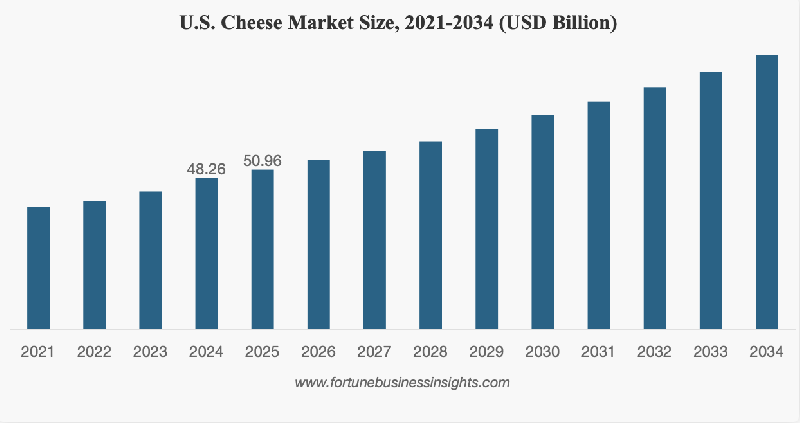
Across Cheddar, Gouda and Mozzarella, a consistent narrative has unfolded: buyers who expected cheaper spot opportunities in Q1 have largely been disappointed, and Q2 coverage is increasingly being locked in.
European Cheddar is trading in a range of €3,300 to €3,750/mt. The premium Cheddar historically commanded over Gouda and Mozzarella has nearly vanished as those varieties have become less available. Stocks across Europe remain relatively low despite solid production, as export demand and firm domestic consumption have absorbed volumes before meaningful inventory could accumulate. Competition from US producers adds a structural ceiling on European export ambitions, with the current exchange rate lending further support to American competitiveness.
Gouda capacity across European cheesemakers is fully utilised with no easy pathway to expand. The Netherlands — one of the largest Gouda-producing countries — is expected to see production shrink faster than other regions as milk availability contracts, leaving a more pronounced gap in Gouda compared to other varieties. The wait-and-see strategy adopted by many buyers has so far not paid off: prices have moved higher since February as product availability tightened, and the youth of cheese currently being traded underlines the lack of aged inventory.
European Mozzarella has risen sharply since early February as buyers seeking nearby product found little availability and were forced to accept significantly higher levels. The stronger Euro since mid-January has further reduced European export competitiveness, reinforcing a notable price gap between EU and US origins.
For all three cheese varieties, the H2 outlook points toward gradual price recovery as European milk production declines through Q3 and Q4. Given that stocks are already lean heading into the flush, the tightening may prove more supportive than originally anticipated.
Energy: A Modest Headwind That Bears Watching
Energy costs provide the broader backdrop against which all dairy production and processing economics are calculated. Middle East tensions have pushed oil, gas and electricity prices higher, adding to farm and factory costs across Europe. The EU's 19th sanctions package has significantly restricted Russian energy exports, though US and G7 officials appear focused on enforcing existing measures rather than expanding new ones in the near term.
Non-OPEC supply increases are expected to exert downward pressure on oil prices over time. Natural gas forecasts suggest a gradual easing at EU-EEX levels through mid-2026, which would provide some relief for energy-intensive dairy processing operations.
A longer-term structural factor worth monitoring is the explosive growth in data centre energy consumption globally. IEA projections show total data centre electricity demand on a trajectory that would dwarf the energy consumption of many individual nations by 2030, with the United States leading that growth curve — a dynamic that could create sustained upward pressure on power prices well beyond the current geopolitical cycle.
Source: Vesper Commodity Intelligence — Dairy H2 2026 Market Outlook