Ukraine’s Small Dairy Farms Are Disappearing
Marinka Hritsik, who farms near Chernihiv, said her village had 18 household-owned cows in 2022 and has seven in 2026. She said that none might remain by winter. Her experience reflects a wider change in Ukraine’s dairy industry, where the number of registered farms has fallen by one-third in five years and household herds have dropped by two-thirds over the past decade.
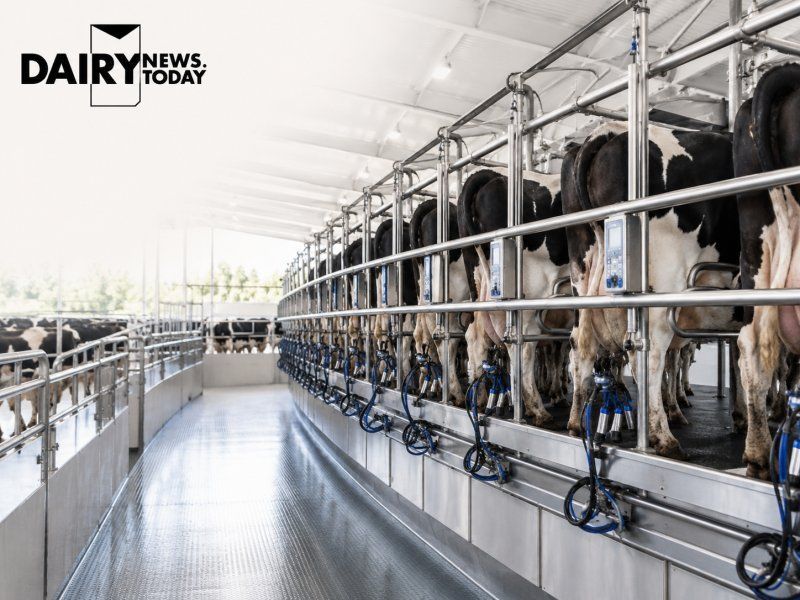
Only farms with herds of at least 1,000 cows have increased in number. Household farms once accounted for an estimated 75% of milk production. In 2026, enterprises are forecast to produce more milk than households for the first time. In May, the UN-led Food Security and Livelihoods Cluster warned of an approaching rural crisis among household farms, citing the prolonged war, higher feed costs, lower profitability and disrupted rural markets.
The conflict has reduced the availability of workers, damaged or taken land out of production and displaced farmers. Livestock have been killed during occupation and attacked by drones in villages close to front lines. Winter adds pressure because pasture growth stops, forcing farmers to buy feed, while cows generally produce less milk during the interval between lactations.
Hritsik said her cost of producing a litre of milk is about Hr 13 ($0.29), depending on fuel and feed prices. Farms may receive roughly Hr 15 per litre on average, but factories have offered smaller producers as little as Hr 9. She said some farmers have sold their animals and left because consumers lack money to buy their products, while feed costs prevent producers from lowering prices further. Worldwide milk prices also fell after production exceeded demand in 2025. Fertiliser and fuel became more expensive after the US and Israel attacked Iran.
Ukraine’s dairy producers are also adapting to EU animal-health and welfare standards. Hanna Lavreniuk, director-general of the Association of Milk Producers, called the reforms logical because they improve quality and efficiency, but said compliance would require many farms to renovate their buildings. The national interest rate is 16%, making such investment difficult. Ukrainian producers also compete with EU farmers, who benefit from different tax and subsidy arrangements, shorter logistics routes and stronger access to investment.
Imported cheese has become a visible part of that competition. Demand for cheese has increased, while Ukrainian factories do not always have the equipment needed to supply it. Foreign producers are seeking markets for surplus stocks, and imported cheese in Ukrainian shops can cost the same as, or less than, domestic products. The government’s draft dairy strategy for 2035 says processing plants need support to purchase machinery and meet demand.
The decline of small farms is changing land ownership in rural areas. Hritsik said larger farms buy land when smaller operations close. Maks Fasteyev of InfoAgro and the Union of Dairy Enterprises said dependable profitability may begin at about 400 cows. Larger farms can secure better prices and higher revenues, invest in feed, breeding and equipment, and produce more milk per cow. Ecoaction has warned that large operations can put pressure on land and create pollution if manure is not managed properly. Its representative Mariia Bielkina said smaller livestock systems can support grassland and pasture management, biodiversity and carbon capture.
Ivan Pankiv, president of the Agricultural Advisory Service, works with small and medium-sized farms through a milk-testing laboratory. He said test results help farmers manage animal health and establish the reliability needed to sell to factories. Pankiv said household herds had declined rapidly and were unlikely to return, but he also said smaller farms could survive and expand. “Farms will develop, because every week people call us, write to us, and meet with us — people who want to build,” he said.