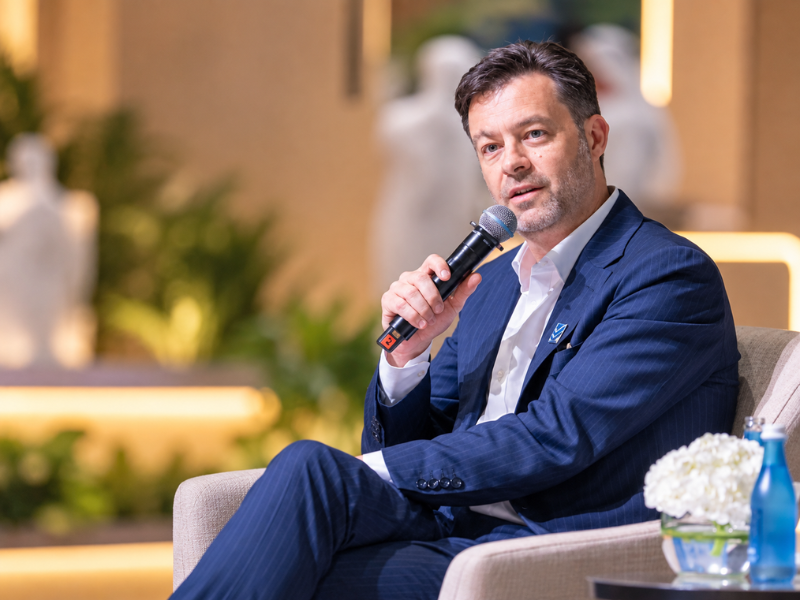
Kaha Koniashvili Advises Georgia to Prioritize Domestic Milk Supply Before Exporting
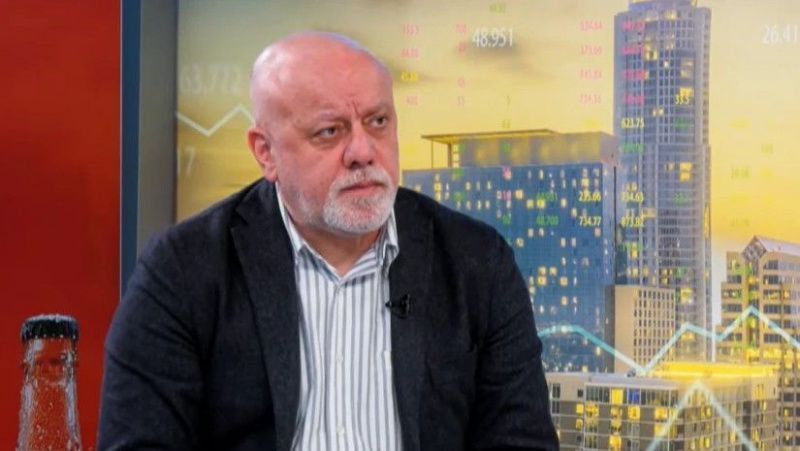
— Kaha, this year, we explored Georgia and noticed that Georgian companies are increasingly looking towards Kazakhstan, Uzbekistan, and Central Asia as a whole. How do you evaluate the prospects of such cooperation?
— You see, the route from China through Central Asia and Georgia to the Black Sea and Europe is becoming prominent. The instability in other regions is giving the New Silk Road a real shape. But even setting logistics aside, there is an interest.
For several years, I have seen great potential in cooperation with the Central Asian countries and have begun working with Uzbekistan myself. It's a significant market: Uzbekistan alone has nearly 40 million people, Kazakhstan over 20 million, plus Kyrgyzstan and Tajikistan. We maintain connections from Soviet times, we are mentally close, and we understand each other well.
I want to emphasize: this should not be a one-way movement. Georgia offers Central Asia access to the Black Sea and Europe. In return, Central Asia opens a large regional market for Georgian businesses and a pathway to China. Joint projects that benefit both sides can certainly be developed here.
— Moving directly to the dairy sector, Georgia's presence in the post-Soviet space is primarily through Georgian cuisine and cheeses. Does the country have a policy for promoting them?
— Such work is ongoing. Of course, it helps that Georgian cuisine and cheeses are well-known in the former Soviet Union countries. People are familiar with sulguni, Imeretian cheese, khachapuri. In Central Asia, there is no need to start from scratch to explain what Georgian gastronomy represents. However, the European market is much more challenging: there is high competition, no one knows you, and promoting requires much more investment.
But there's a nuance — raw materials. Georgia remains deficient in raw milk. To seriously consider exports, we must first establish a base at home: increase production and raise productivity. This doesn't happen quickly. New productive animals, good feed, technologies, and, of course, significant investments are needed.
Hence, in a sense, we've initially focused on exporting technologies rather than the cheese itself. As I understand, many Georgian technologists are currently working in cheese factories in Kazakhstan, helping make Georgian cheeses. This is also an interesting form of cooperation.
— During our trip through Georgia, we encountered products made using powdered milk. Are they sold as cheese?
— No. According to Georgian standards, a product made from powdered milk cannot be called cheese. We have a clear and principled distinction.
— Then there's a reasonable question: how did Georgia, where cheese is part of the national culture, lose its dairy farming?
— Frankly, in the 1990s, we nearly destroyed our collective and state farms. However, there are still many cows in the country — around 400–450 thousand milking cows. The issue is their very low productivity: about 1.5–1.7 tons of milk annually. That's indeed quite low. Our goal is to reach an average of about six tons. Then there will be a base for considering serious, large-scale exports.
I’ll give a simple example. In Israel, as I recall, there are about 125 thousand milking cows for a population of roughly nine million people. They supply themselves with milk and even export products. We have a population of less than four million, yet we have three to four times more cows, and still lack raw materials. So it's not about the number of cattle per se but about productivity, feeding, and organization of production.
— Georgians themselves eat a lot of cheese.
— Yes, our cheese consumption is one of the highest. We eat cheese literally everywhere. We can even eat khachapuri with cheese on top — just to make it cheesier!
Moreover, tourism is very active. Everyone visiting Georgia wants to try local cheeses, khachapuri, khinkali with cheese. With such high domestic demand, the space for export, of course, narrows. Therefore, the first task is to increase raw milk production, not just in quantity but also in quality. Both state and private projects are currently aimed at this.
— Georgian wine has become the flagship of the country's food exports. Could a similar story happen with cheese?
— I think yes, but there is much work ahead. A gastronomic agency was recently established in Georgia, and our association plans to closely collaborate with it. Outside the country, mainly sulguni and Imeretian cheese are known. But Georgia has many other traditional cheeses that no one knows about. In fact, many of them are barely known even to Georgians themselves. We still need to study, preserve, and promote them.
— What personally would you find interesting to see and discuss at AqAltyn? Is Central Asia of interest to you not only as a sales market?
— Certainly, not only. First and foremost, I am interested in dairy farming experience. Both in Georgia and in many areas of Central Asia, livestock farming has traditionally been pasture-based. I would like to see how farms transform this model, how they transition to modern industrial farms that can consistently provide the necessary volumes and quality of milk year-round.
Our problems are very similar: seasonality, feeding, animal productivity. Therefore, it's beneficial to compare the solutions already working in Kazakhstan with Georgian experiences. As far as I see, in Kazakhstan, large farms are currently being actively developed, and high-level technologies are being applied. For Georgia, this experience could be very valuable.
— So Central Asia can offer the experience of industrial farming. In your opinion, how can Georgia be useful to Central Asia?
— Probably, primarily in terms of working with traditional products. We are making good progress in marketing authentic and craft cheeses, developing brands and geographical names. And I, from my side, would be interested in exploring traditional Central Asian products. Currently, among local cheeses, kurt is most well-known. But surely there are other cheeses that just haven’t gained wide recognition yet. The same goes for kumis, ayran, and other dairy products. It's interesting to find out what could catch on in Georgia.
Overall, we have much to share with each other. Central Asia can showcase the experience of industrial farming, and Georgia — cheese-making technologies and promotion of national products.
— Especially since Georgian technologists are already working in Kazakhstan.
— Yes, although we need good technologists ourselves, — laughs Kakhaber Koniashvili. — No worries, they’ll gain experience and return home.
Main Partner - Borte Engineering https://engborte.kz/
As a leading national producer in Kazakhstan, Borte Engineering creates high-tech equipment for the food industry, confirming its quality by inclusion in the Registry of Domestic Producers. The company successfully collaborates with enterprises throughout Central Asia, strengthening the regional economy.
Event partners also include:
Kazakhstan Dairy Union https://kazsut.com/
France Group https://francegroup.org/ru
Qazaq Sut Association https://qazaqsut.kz/
CRI Kazakhstan https://cri-kazakhstan.kz/