UK Dairy Herds Are Urged to Capitalize on Market Swings
The report found that commercial dairy farms across Britain experienced pronounced changes in operating conditions during the 2025/26 season. The early improvement in the milk-to-feed price relationship encouraged producers to increase output and generated record gross margins after purchased feed costs. The subsequent rise in national milk supply and weather disruption exposed farms to greater market volatility.
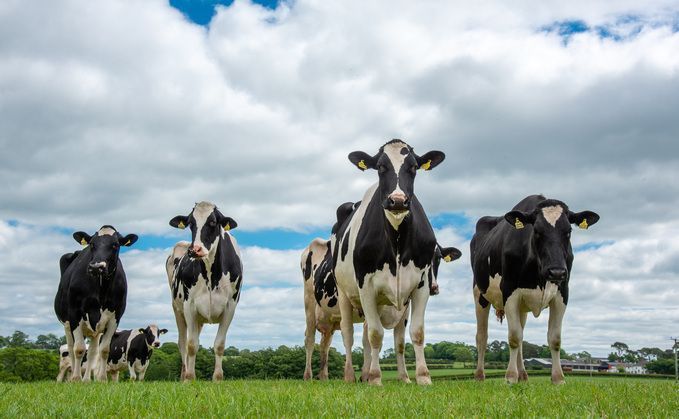
Conventional Holstein Friesian herds set new productivity records. Average yield increased by 6% from the previous year to 8,848 litres per cow. Concentrate use reached 2,997kg per animal, a 4% annual increase, while milk produced from forage rose by 9% to 2,652 litres per cow. The figures recorded higher purchased-feed inputs alongside an increase in forage-based production.
Performance and profitability remained uneven between the highest-performing herds and those in the bottom quartile. Basic herd-health indicators improved slightly across the farms covered by the report, but the financial cost associated with clinical disease and involuntary culling became more pronounced. Higher prices for cull cows and calves provided additional cash receipts, although these were largely cancelled out by increased expenditure on replacement dairy heifers.
Analysts cited the summer drought as a factor affecting production conditions, including the availability of winter forage. Farms also faced higher bedding and labour costs and uncertain grazing conditions in the autumn. The report said producers should not base budgets on consistently favourable weather or an uninterrupted rise in milk prices, and should instead prepare plans for several possible operating conditions.
For pasture-based and mixed systems, the report identified timely turnout as one operational response. Producers can place cattle outside as soon as soil and pasture conditions allow, although the timing depends on local conditions. The report also linked future milk margins to feed-conversion performance, replacement-cost control and the maintenance of sufficient operating reserves.
Industry leaders said periods of strong profitability should be used for financial and physical improvements rather than short-term increases in spending. Measures identified in the report include reducing short-term debt, upgrading effluent and feed-handling facilities, and improving biological efficiency. These actions were presented as ways for farm businesses to maintain financial capacity during weaker points in international commodity cycles.