Montbéliarde — from Field to Comté
EVA Jura: a cooperative built around breeding
EVA Jura is an agricultural cooperative employing 130 people. Its main areas of activity include artificial insemination, the Montbéliarde JB breeding program, semen production and distribution, trade in breeding cattle in France and for export, health prevention, breeding advisory services and milk recording. The cooperative has been exporting live cattle for more than 30 years and semen for more than 50 years.
The organizers placed particular emphasis on the history of the Montbéliarde JB breeding program. The first Montbéliarde selection program based on testing and involving breeders was launched in Jura in 1952. One of the cooperative’s objectives is to connect the work of French technical specialists and the commercial team with the needs of international dairy producers. According to the cooperative, EVA Jura genetics are now represented through commercial partners on all five continents.
EVA Jura’s breeding scheme is based on the successive selection of bulls. Every year, around 400 bulls undergo preliminary selection by a committee, around 80 are kept on the cooperative’s farm in Jura, and approximately 40 bulls per year are included in the catalogue. Selection begins with genotyping on farms, followed by technical analysis, review by the committee and a tour of the dams of the bulls. In France, 60% of genotyping is carried out in the western and central parts of the country, while 40% is carried out in the east, including the Jura region. Eight technical specialists are responsible for Montbéliarde JB selection, while the committee consists of seven farmers and seven technicians, with the participation of the export team.
The key selection criteria are the maternal line and bull family, milk yield, fat and protein content, morphology, udder, type, beef value and functional traits. The presentation also notes that all French Montbéliarde breeding centers, including EVA Jura, Coopex-Umotest and Montbéliarde Sélection, use the national ISU Montbéliard index.
Montbéliarde as a breed: milk, resilience and cheese economics
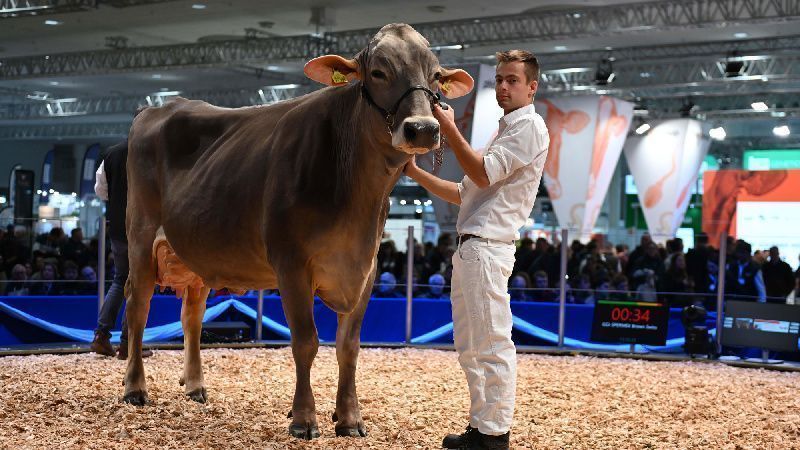
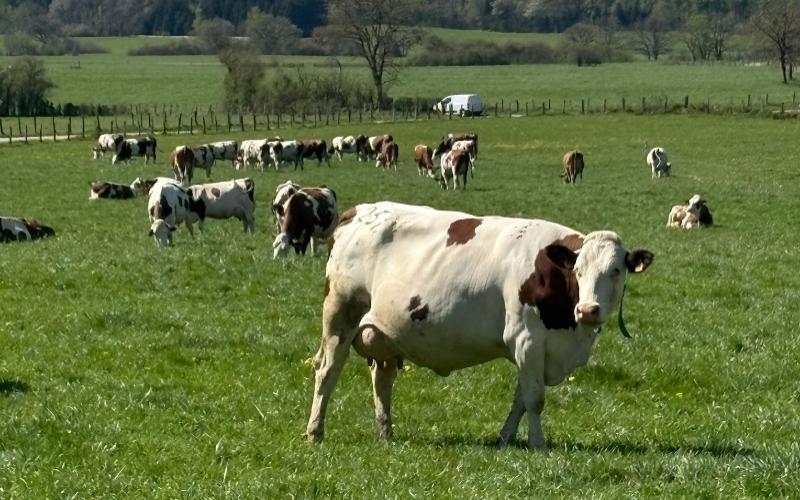
Montbéliarde is a red-and-white cattle breed originating from Franche-Comté. The breed was officially recognized in 1889. It is presented as the second-largest dairy breed in France by population and the leading French breed by number of animals and volume of milk production. Montbéliarde is the only breed in France that continues to grow thanks to its economically advantageous characteristics.
According to EVA Jura’s presentation, the average production of mature Montbéliarde cows is 8,845 kg of milk with 3.9% fat and 3.5% protein. The best first-lactation cows produce more than 10,000 kg over 305 days, the best mature cows reach 12,000–15,000 kg, while the potential breed average is estimated at above 10,000 kg. The materials also point to high lactation persistency and the best fat-protein balance among the three main French dairy breeds.
The breed is promoted not only as a dairy breed, but also as a functional one. EVA Jura notes that udder traits have been among the most actively selected characteristics for more than 20 years, and that the cows are adapted to various milking systems, from rotary parlors to robotic milking systems. The presentation also notes that Montbéliarde cattle have twice as few somatic cells in cases of mastitis, the calving interval is reduced by 38 days, and an average of 1.8 semen doses is required per conception, compared with 2.2 for Holsteins and 2.0 for Normande cattle. EVA Jura guarantees 8 million live sperm cells per semen dose for insemination, describing this as a unique figure in Europe. The average productive lifespan of the animals exceeds seven lactations.
Farms on the tour: milk production for Comté
The first farm in the program was GAEC Simon in Clucy. The farm produces 600,000 liters of milk for Comté, keeps 80 dairy cows, is managed by three partners and uses 180 hectares of land. The farm focuses on “strong cows” with good reproduction, strong legs and feet, since animals walk a great deal under the pasture-based system. The selection criteria include milking speed, udder health, chest width, balanced morphology and compliance with the requirements of Comté production. Among the animals shown were cows with high lifetime production: INSOMNIE with 68,154 kg of milk over her career, JULIA with 63,655 kg, OCEANE with 45,649 kg and NARNIA with 46,188 kg. OCEANE’s best 305-day lactation was 10,618 kg.
The second stop on the route was GAEC Le Vieux Chene in Vevy. The farm produces 500,000 liters of milk for Comté, keeps 65 dairy cows, operates on 140 hectares and is managed by two partners. The breeding objectives here are built around high milk production, milk quality without somatic cells, fat and protein content, functional morphology, a well-attached udder and the absence of teat problems. Among the animals presented, LUMIERE stood out with 67,678 kg of lifetime milk production and a best lactation of 9,725 kg, as well as MELISSANDR with 58,004 kg, ONYX with 43,042 kg and PRALINE with 34,828 kg.
The third farm was GAEC Benoit Gonin in Hautecour. It also produces 500,000 liters of milk for Comté, keeps 65 dairy cows and uses 140 hectares. The farm is managed by two partners — a father and daughter — works with a 100% Montbéliarde JB herd and places strong emphasis on the udder. The farm also sells animals, including heifers for export and dairy cows. The presentation notes that a good udder is regarded as a key to longevity and as an important factor for buyers of dairy cows. Among the animals with strong performance were NIVEA, with a best 305-day lactation of 9,566 kg and lifetime production of 48,605 kg, LAUSANE with 45,924 kg, ORCHESTRA with 42,358 kg and OGIVE with 39,931 kg.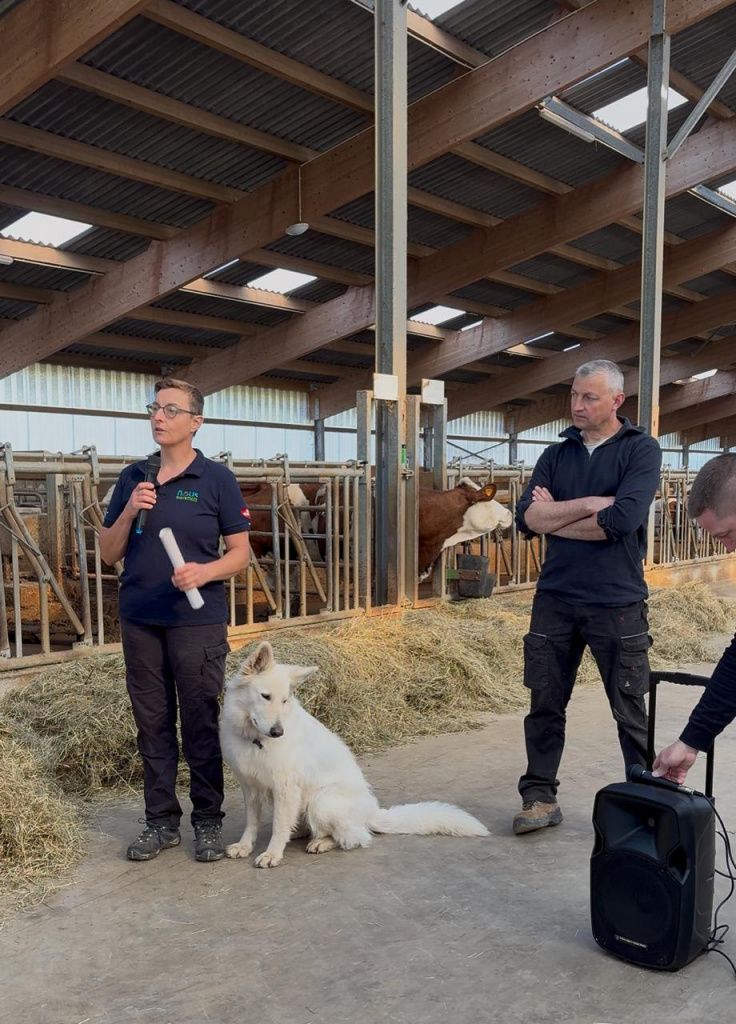
The fourth farm in the program was GAEC du Saugey in Vevy. The farm produces 720,000 liters of grass-based milk for Comté, keeps 105 dairy cows and uses 230 hectares. The farm is operated by three partners and one apprentice. The farm philosophy is formulated as K.I.S.S. — Keep It Simple and Stupid. The selection criteria include milk, legs and feet, fore and rear udder attachment, fat and protein. The environmental approach is highlighted separately: the farm aims to be aligned with the environment, biodiversity and human resources; 25% of cows are dried off without antibiotics, and the 100% grass-based forage system is used through grazing.
The fifth stop was the livestock project of Victorien Reverchon in Besain. The farm produces 450,000 liters of milk for Comté, keeps 60 dairy cows, and average milk production is 8,000 kg per cow per lactation. Victorien and his employee Mathias work on the farm. The total area is 124 hectares, of which 122 hectares are located within no more than 1.5 km. The farm’s technological characteristics include year-round calving, 100% genotyping and an average ISU of 130. The farm’s objective is earlier calving in order to increase milk output per day of life and profitability, accelerate genetic progress and work on polled genetics: the first heifer in this direction was born on the farm 13 years ago.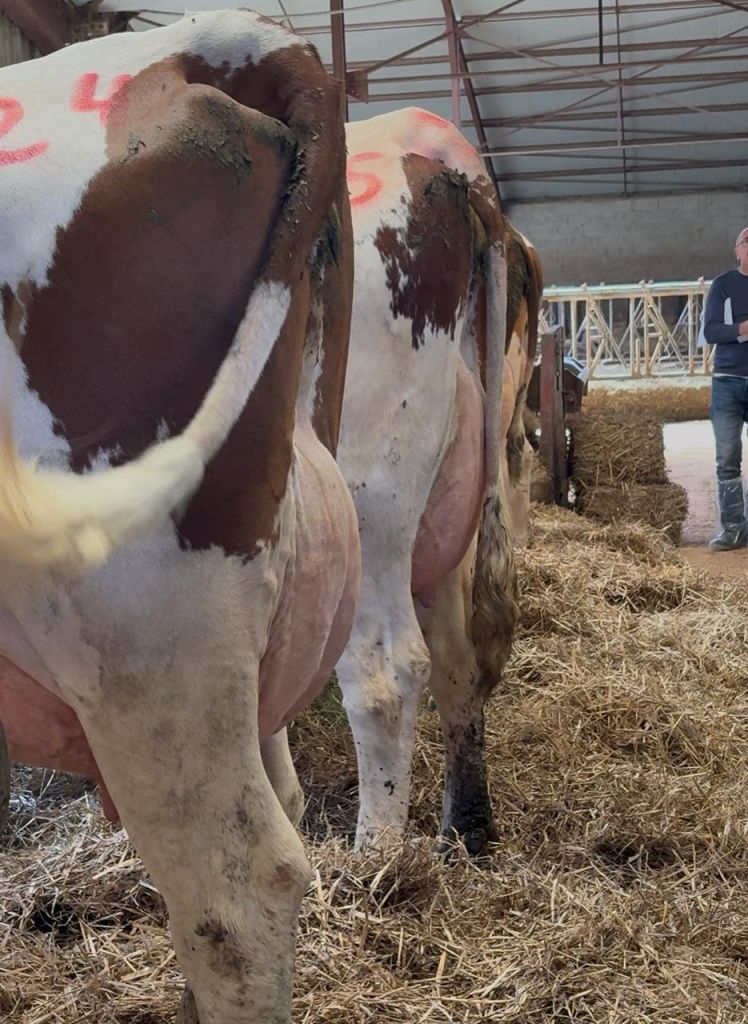
The largest farm on the tour was GAEC des 4 Vents in Vannoz. The farm produces 1.08 million liters of milk for Comté, keeps 150 dairy cows, uses 330 hectares and is managed by four partners with the participation of one apprentice. The herd consists entirely of Montbéliarde JB cattle. The farm describes itself as a family farm passionate about breeding and the Montbéliarde breed. The selection criteria are type and legs, udder, milk and functional traits. While producing more than 1 million liters of milk per year, the farm maintains a somatic cell count below 100,000 throughout the year, keeps 100 heifers annually for herd replacement and sale to other farmers, and also sells 60 dairy cows per year. The materials note that several cows on the farm have produced more than 100,000 kg of milk in their lifetime.
A separate section: the EVA Jura bull station
As part of the tour, participants visited the EVA Jura bull station. The program presented the bulls SNIPER JB, TCOOL JB, TOTEM P JB, USEPH JB, USTITI JB, V.I.P JB, VATARA JB, VIMITRI JB, UMEE JB and UVILLY JB. According to the station table, TCOOL JB has an ISU of 171, an udder score of 147 and positive values for udder health and reproduction; V.I.P JB also has an ISU of 171; UMEE JB has an ISU of 169; VATARA JB, 166; VIMITRI JB, 163; and USEPH JB, 156. USTITI JB stands out for milk yield at 2,169 kg, USEPH JB at 1,548 kg and TOTEM P JB at 1,196 kg.
The EVA Jura presentation also lists the leading bulls in the offering by individual traits. For milk yield, USTITI JB ranks first with 2,169 kg, followed by VENALET JB with 1,733 kg, SAFFLOZ JB with 1,642 kg, USEPH JB with 1,548 kg, UNCRACK JB with 1,478 kg and UBELOU JB with 1,281 kg. By ISU index, VADOR JB leads with 177, followed by VRAP JB with 175, TCOOL JB and V.I.P JB with 171 each, and UNCRACK JB and UMEE JB with 169 each. For type, the leading bulls are U TURN JB with 152, SNIPER JB with 149, TCOOL JB with 139, URATY JB with 136, V.I.P JB with 135 and VRAP JB with 134. For udder, U TURN JB leads with 154, followed by TCOOL JB with 147, SNIPER JB and UTONTON JB with 141 each, TITAN JB with 139 and URATY JB with 138.
For protein, the EVA Jura offering highlights SUPREME JB with 5, TALAREF JB with 3, UTONTON JB, VIMITRI JB and TENACE JB with 2.7 each, and TEKPAF JB with 2.5. For fat, TALAREF JB leads with 5.7, followed by TEKPAF JB and VATARA JB with 5.1 each, SALA JB with 4.9, SUPREME JB with 4.1 and UVILLY JB with 4. For muscularity, the leaders listed are VRAP JB with 124, PANINI JB with 121, VADOR JB with 112, UVILLY JB with 111, V.I.P JB with 110 and UTONTON JB with 109.
The Jura region as a showcase of the “breed — pasture — cheese” model
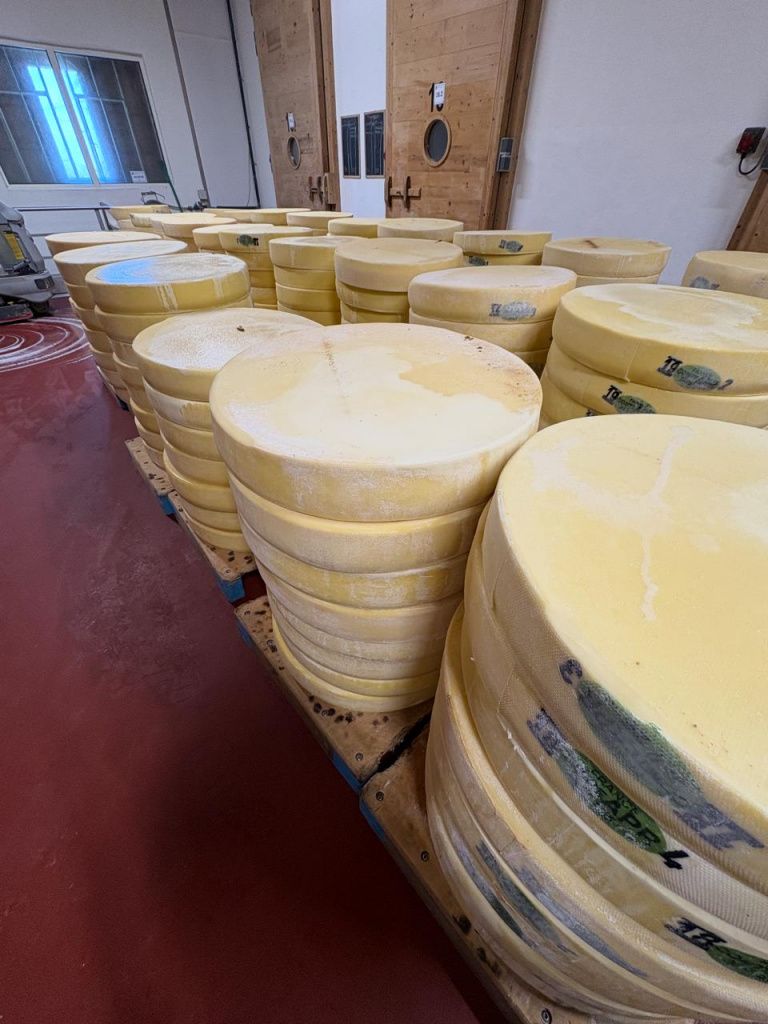
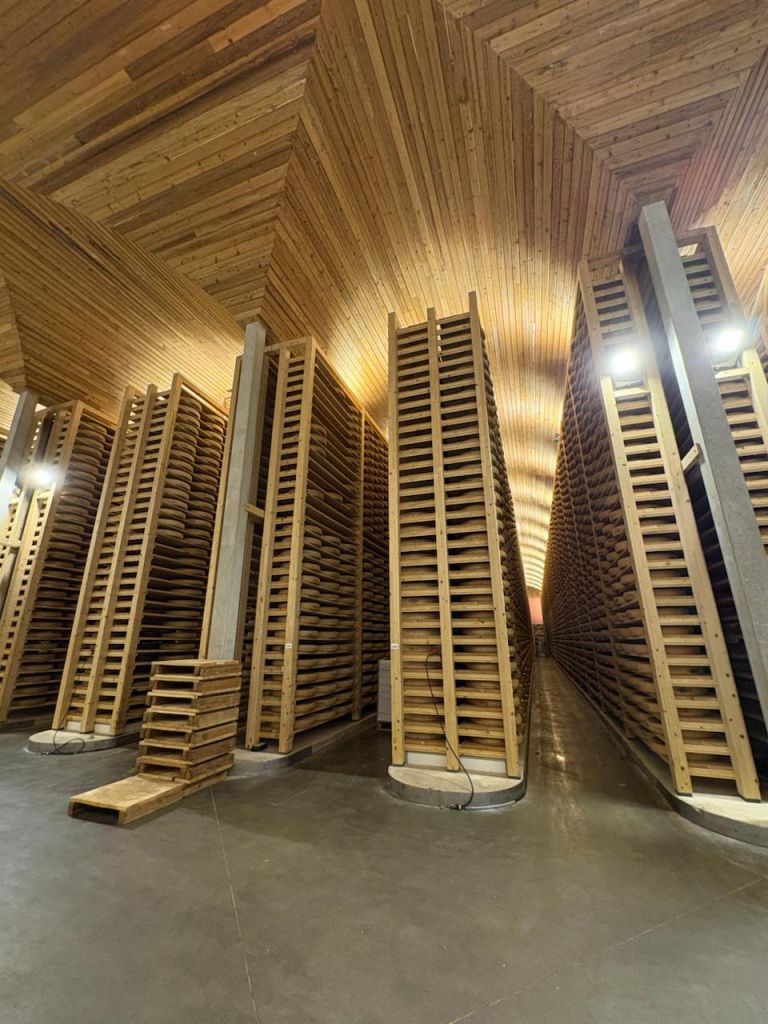
Participants in the event also visited Rivoire-Jacquemin, the oldest and largest cheese-ripening facility in France, founded in 1860. Today, around 150,000 wheels of Comté cheese, or approximately 5,700 tonnes, are maturing at the facility. The facility is a private enterprise that receives Comté cheese from cooperatives. The cheese goes through several stages of maturation. After four months of maturation, the facility pays cooperatives 70% of the cheese value, with the remaining amount paid after the cheese is sold.
At the final stage, the cheese matures at a temperature of 7–8 degrees Celsius and almost 100% humidity. This allows for the slow development of flavor, preservation of texture and formation of the characteristic rind.
The cooperative structure of Comté cheese production from the milk of Montbéliarde cows, created centuries ago, allows farmers in the Jura region to develop sustainably while maintaining relatively small herds.
Participants in the tour were shown not only a bull catalogue and selection indexes, but also real maternal lines, on-farm cow productivity, farmers’ requirements for animals and the economics of working with the breed in a cheese-producing region. For EVA Jura, this also served as a demonstration of the export potential of Montbéliarde JB: the cooperative brings together Jura’s breeding history, modern genotyping tools and an international network for promoting genetics.