China's Potential Impact on Kazakhstan's Dairy Market Amid Subsidy Delays
Accumulated Debt
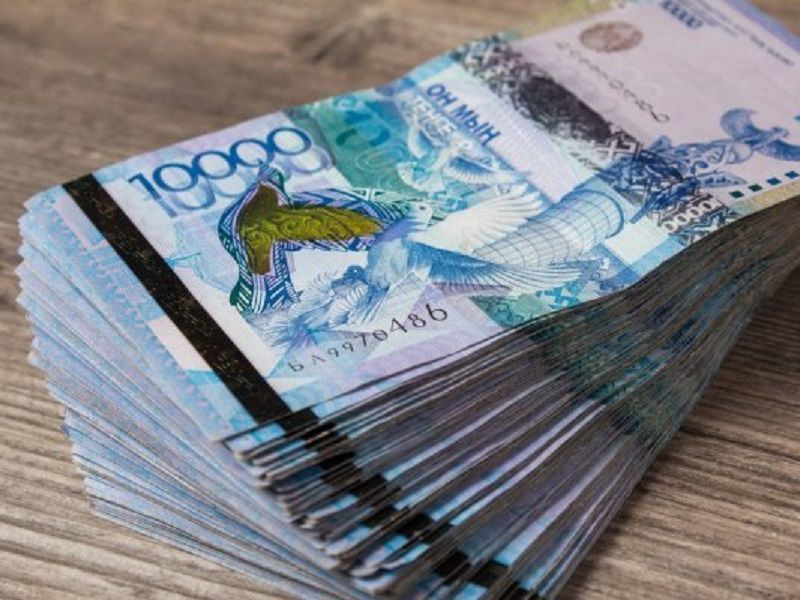
At the beginning of 2026, the government owed Kazakhstan's farmers 391.7 billion tenge in subsidies. This left 34,600 approved applications without funding, with the largest obligations in Kostanay, North Kazakhstan, and Akmola regions.
Official reports on the remaining debt vary by date. According to the Ministry of Agriculture, by June 1, the debt had been reduced by 150.5 billion tenge to 241.2 billion. A later statement from the Prime Minister mentioned approximately 246 billion tenge owed in June, likely due to different data update dates.
The total subsidy budget for agriculture in 2026 is set at 588.3 billion tenge. Of the 39,900 applications received, 11,300 have been paid, and 11,500 are in reserve. Approved but unfunded applications remain in a waiting list until additional funding becomes available.
A market participant, wishing to remain anonymous, believes that a significant portion of claimed state support is effectively directed towards settling past obligations.
"Many farmers are currently without funds. Large companies continue to operate using their own resources, while small and medium enterprises either do not receive subsidies or receive them late," they told DairyNews.today.
The delays affect not only the farms themselves. Farmers postpone construction and upgrades, reduce equipment purchases, and delay payments to suppliers. This liquidity shortage spreads throughout the chain—from milk producers to construction and technology companies.
Thus, increased budget figures do not always mean new investment resources: the government must first cover accumulated debts.
Chinese Risk: Open Niches May Be Filled by Foreign Players
The subsidy issue extends beyond current debt. Dairy farming requires a long investment cycle, so halted projects today cannot be quickly replaced with new capacities in a few years.
A market insider, who requested anonymity, warns that slow local production development could shift industry dynamics.
"If Kazakhstan develops its production at such a slow pace, the country might not scale it up in time. In such a case, Chinese producers might enter the market," they told DairyNews.today.
This forecast is linked to China's consistent modernization of its dairy sector. The China Dairy Association aims for milk self-sufficiency above 70% by 2030, increasing average yields over 10 tons per cow and developing modern feed bases, selection, and digital processing.
Investments are already being made in farms and processing capacities within China. New Yili and Mengniu plant stages are announced in Hohhot, and a 7,000-cow farm project is underway in Ningxia, showing neighboring China's capital, technology, and competence for large dairy projects.
This is not about an accomplished expansion but a competitive risk: if local projects wait years for funding, external investors will find it easier to occupy open niches.
The issue is not just about the origin of investments. The pace of local farm development will determine who controls the growth of raw milk production, the establishment of new farms, and the formation of raw material bases for processing enterprises in Kazakhstan.
Approval Doesn't Guarantee Funding
DeLaval's business development director, Viktor Shtefan, points out the unpredictability of actual project funding.
According to him, an investor might apply for 3 billion tenge and receive preliminary approval, but after seven to eight months, only 500 million tenge is allocated. Without a clear future payment schedule, the project must continue using own funds or be put on hold.
"Projects are either implemented sluggishly using own funds or frozen," explained Viktor Shtefan.
Delays significantly impact capital-intensive dairy farming projects. Their financing usually covers construction, equipment purchases, and the acquisition of livestock. If funds arrive partially or late, the investor cannot synchronize contract conclusion, equipment delivery, and facility preparation.
As a result, some projects remain at an initial stage, despite formal approval. According to Shtefan, due to untimely funding, many initiatives are effectively "in a nascent state."
Viktor Shtefan noted that social-entrepreneurial corporations, subordinate to regional akimats, operate these projects. They are tasked with speeding up promised funding so potential investors can conclude contracts and partially deliver equipment by year's end.
AgroTrust's CEO, Umid Nurmatov, also notes a sharp decline in investment activity. He emphasizes that his assessment is subjective, based on projects his company works with and situations observed among colleagues.
"In the past two years (2025–2026), all the projects we lead or observe among our colleagues in Kazakhstan have practically stopped due to lack of funding," Umid Nurmatov told DairyNews.today.
He says that until recently, investors from various economic sectors showed high interest in dairy farming and considered it a promising direction. However, in the past year, the number of such investors has significantly decreased. Assessing the market situation and associated risks, many have decided to temporarily forgo dairy projects.
AgroTrust observes cases where investors had already acquired land plots, started forming feed bases, prepared design and estimate documentation for dairy farm construction, and successfully passed state expertise, only to freeze projects afterward.
"At a recent meeting, we were directly told: 'We'll focus on crop farming for now and postpone dairy farm construction.' Such decisions are becoming more frequent and clearly show that the current market situation deters potential investors," Nurmatov reported.
According to him, Kazakhstan faces a severe financing problem for investment projects that requires resolution. Compared to 2020–2024, project implementation dynamics in the dairy sector have significantly declined.
The situation with dairy projects varies by region and depends on funding sources. According to the Ministry of Agriculture, of the 86 dairy farms funded in 2023–2024, 39 were operational, and 47 were under implementation. Later projects include the Burabay Milk farm for 1,440 heads in Akmola region and a 7.5 billion tenge dairy farm in Kyzylorda region.
Market participants note that lack of timely funding slows some projects and forces investors to either delay timelines or continue construction using own funds.
Regulations Don't Match Construction Costs
San Zysbai Umirbekov, CEO of Westfalia Kazakhstan, highlights another systemic issue: current investment subsidy regulations don't keep up with rising construction and equipment costs.
According to him, the cost standard is 2.9 million tenge per livestock unit, with the government covering 25% of this amount. However, in recent years, the actual cost of creating dairy complexes has significantly increased due to inflation, devaluation, and rising equipment costs.
"Today, such a subsidy effectively covers no more than 10% of actual costs," noted San Zysbai Umirbekov in a comment to DairyNews.today.
Building a farm for about a thousand heads, including equipment and animal purchases, may require 6 to 10 billion tenge. Therefore, even with government support, the investor needs significant own capital or access to long-term credit.
According to Umirbekov, current new project implementation activity is about 15–20% of the 2023–2024 level. Farmers are more cautious about investing in dairy farming due to liquidity shortages and uncertainty about subsidy repayment timelines.
He recalled that a 100 billion tenge financing program in 2022–2023 boosted the industry: many new projects started in 2023–2024. Current activity decline shows how much the dairy farming investment cycle depends on government support availability and predictability.
Livestock Procurement Often Precedes Farm Completion
Another issue is the inconsistency of financing for different project parts.
Building and equipping a dairy farm for 1,000–1,200 heads typically takes one and a half to two years, sometimes extending to three years. Livestock can be purchased and delivered in about two months.
However, financing for construction, equipment, and animal purchases often opens almost simultaneously. As a result, livestock may arrive when the facility is only 20–70% ready.
According to San Zysbai Umirbekov, placing animals on an unfinished site creates additional risks: construction and equipment continue, dust and noise persist, complicating veterinary and sanitary compliance.
In two decades working in Kazakhstan, Umirbekov says he saw only one project in North Kazakhstan where animals arrived after complete construction and equipment installation. In most cases, farms accept livestock before the complex is fully ready.
The expert believes that livestock procurement financing should be tied to actual building and equipment readiness, not just the project approval date.
Most projects the company works with are likely to be completed. However, their investors have sufficient resilience and can finance dairy operations through crop farming or other businesses. Smaller independent farms often lack this option.
Umirbekov doesn't observe mass closures or bankruptcies of dairy farms but confirms growing financial pressure on farms. He notes that commodity milk subsidies are also delayed, with the situation varying by region.
Plans Until 2030 Require Predictable Funding
The Kazakhstan government approved a comprehensive livestock development plan for 2026–2030. Officially, milk production reached about 3.8 million tons, increasing by 5%, and cattle numbers grew by 2.4%. These indicators don't support an overall livestock sector crisis.
Simultaneously, the government acknowledges that annual livestock product growth of 2–3% doesn't unlock the sector's potential. The plan aims to increase cattle numbers from 7.9 to 12 million, but a specific trajectory for industrial milk production is not provided in the published statement.
The Problem Isn't Just Support Volume
Comments from DairyNews.today's interlocutors show that the subsidy system needs more than additional funding. Investors need four conditions: current cost standards, a transparent application queue, known payment timelines, and coordinated financing of construction, equipment, and livestock procurement.
Without settling old debts and increasing government support predictability, a significant portion of financial risks is shifted onto farmers. Meanwhile, delays in paying approved subsidies undermine trust in the support mechanism and hinder enterprises from planning multi-year investments.
Market participants warn that Kazakhstan may lose the milk race. Neighboring China actively develops its dairy sector and has resources for large projects, while subsidy delays slow Kazakh producers' growth. If the issue persists, open niches in Kazakhstan's market may become more attractive to exporters.