
Challenges and Opportunities in India's Dairy Industry Growth
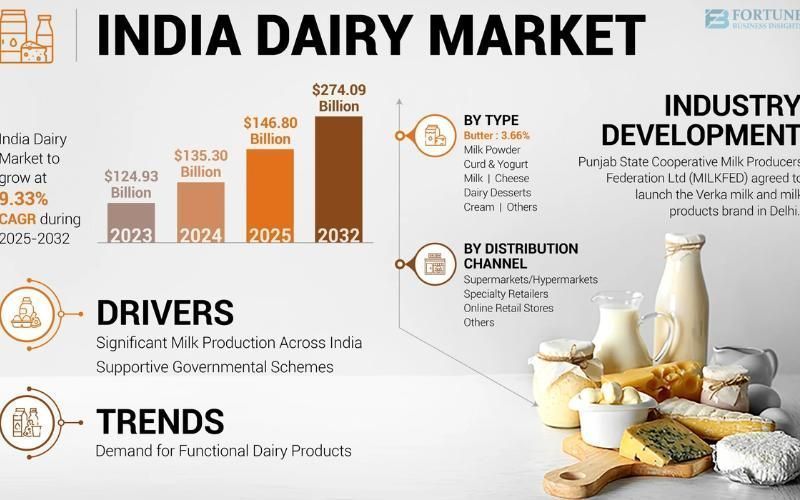
India stands as the world's leading milk producer, boasting an estimated 258 million tonnes in annual production. Despite this impressive output, the Indian dairy sector faces a critical question: can it grow without increasing milk volumes? This question arises amid a backdrop of nutritional needs and evolving consumer demands.
Currently, the per-capita milk availability in India is approximately 485 grams per day, significantly higher than the average consumption rate of 230 grams. This discrepancy highlights that a substantial portion of milk is allocated to non-household uses such as sweet making, bakeries, and exports. Only about 45% of the milk produced enters the commercial dairy economy, with the remaining consumed locally or within producer households.
The commercial dairy sector, valued at roughly ₹12–13 lakh crore, is dominated by unorganised and unbranded channels, which account for nearly 60% of its volume. This segment is plagued by systemic adulteration issues, including the addition of detergents and synthetic substances to manipulate milk quality, posing significant health risks to consumers.
Efforts to shift consumers towards packaged, branded dairy products are underway, with approximately 60% of liquid milk already consumed in this form. This transition aims to mitigate health risks and build consumer trust under the regulations of the Food Safety and Standards Authority of India (FSSAI).
Despite high formalisation rates in liquid milk, other dairy categories like curd and ghee see limited organised trade, representing only 20-30% of the market. Paneer, another vital product, has less than 10% formalisation. The push for greater formalisation across all dairy products is crucial for consumer health, farmer income, and industry sustainability.
Economic and nutritional concerns also drive the need for increased milk volumes. As a staple in Indian households, milk not only supports daily nutritional needs but also builds brand loyalty and reduces production costs through higher plant throughput. Encouraging the consumption of two glasses of milk per day, particularly among children and women, could address prevalent deficiencies in calcium, vitamin D, and protein.
Ultimately, while value-added products offer promising growth margins, milk remains central to the Indian dairy sector's purpose. The industry's challenge is to responsibly grow milk volumes to support both consumer health and economic viability without compromising safety and trust.