Anatoly Tikhonov: EU Risks Facing Food Crisis Due to Rising Fertilizer Prices
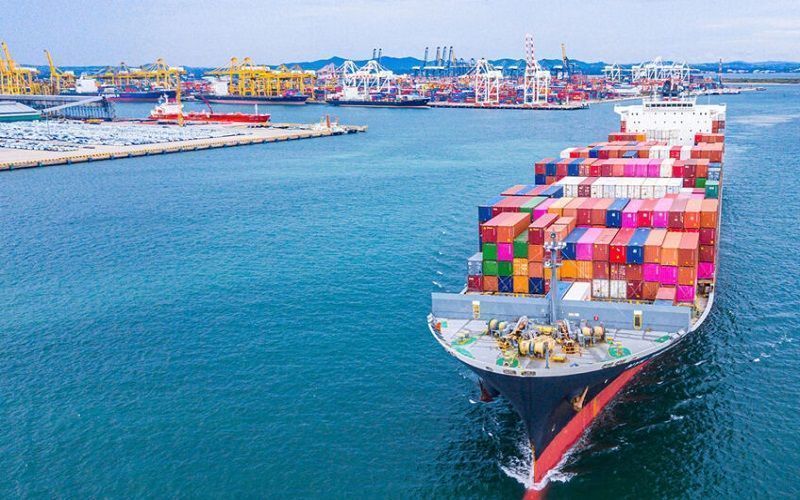
According to his assessment, Iran's closure of the Strait of Hormuz has been one of the factors that have sharply changed the situation in the global transportation and agricultural raw materials market. The expert believes the era of cheap and stable global logistics is coming to an end, and the primary burden fr om rising costs may fall on European consumers.
"The blockade of the Strait of Hormuz, which has been ongoing for three months, combined with the sanctions policy, has put the West in a difficult situation. To a large extent, as is already clear, it is due to its own political decisions. The era of cheap and reliable global logistics is fading, and European consumers will have to pay for it," noted Anatoly Tikhonov.
One of the key consequences of the crisis has been a sharp increase in global fertilizer prices. According to the expert, if urea cost about $400 per ton at the beginning of the year, by the end of April, prices on an FOB Baltic basis reached $790–830 per ton depending on the type. In the Middle East and Brazil, prices exceeded $850 per ton.
According to World Bank estimates, the average price of granular urea in March was $725 per metric ton. This is almost 55% higher than the February level and is the highest since April 2022. The World Bank forecasts the fertilizer price index could rise by more than 30% by 2026 due to a 60% spike in urea prices.
Anatoly Tikhonov associates this trend with the role of the Strait of Hormuz in global fertilizer trade. This route traditionally accounted for about a third of the world's maritime fertilizer trade, and the Persian Gulf countries provided about a quarter of the world's urea exports.
"The reason for such a sharp price increase is obvious: about a third of the world's maritime fertilizer trade traditionally passed through the Strait of Hormuz, and the Persian Gulf countries provided about a quarter of the world's urea exports. The loss of these volumes has created a structural supply deficit that cannot be quickly replenished," the expert noted.
In this context, restrictions on Russian fertilizers have become an additional pressure factor for European farmers. From July 1, 2025, the EU introduced prohibitive duties on their import. According to Tikhonov, after active purchases in the first half of 2025, imports of Russian fertilizers to the EU in the second half of the year fell by 44% to 1.53 million tons.
In January 2026, the decline became even more pronounced. According to Copa-Cogeca, imports of nitrogen fertilizers from Russia to the EU decreased by more than 80% year-on-year to 179.9 thousand tons compared to 1.18 million tons in January 2025.
"Today, European farmers are caught in a vise: on one side, a global deficit and record prices, on the other, regulatory pressure from their own government," noted Anatoly Tikhonov.
According to him, some farms in Europe are already forced to reduce planting areas, switch to less profitable crops, or abandon sowing altogether.
Russia, according to the expert, is less affected by the current crisis as its main export routes through the Baltic Sea, the Black Sea, and the Northwest are not dependent on the situation in the Persian Gulf. Meanwhile, Russian fertilizer producers continue to increase their export revenue.
According to the federal center "Agroexport," in the first quarter of 2026, Russia exported 9.6 million tons of mineral fertilizers worth $3.6 billion. In value terms, this is 16% more than in the same period last year.
Anatoly Tikhonov also emphasized that the Russian domestic market is supplied with fertilizers: by early May, the domestic agricultural sector had purchased more than half of the annual requirement.
The crisis, according to the expert, may hit developing countries, especially in Africa, the hardest, wh ere there is high dependence on imported fertilizers and persistent risks of food instability. However, Tikhonov considers Europe a separate case, as he believes the EU has exacerbated its own vulnerability by restricting access to Russian supplies.
"And here lies a significant difference: unlike Africa, which has become a hostage to geographical remoteness from alternative suppliers, Europe has consciously trapped itself in a food crisis. The EU had the resources, time, and political will to avoid this crisis. The fact that it chose the path of self-isolation from a reliable supplier makes its vulnerability particularly notable," concluded the expert.