A US appeals court revived a Chobani allulose lawsuit
A US appeals court has revived a lawsuit against Chobani brought by a couple who say they were misled by the company’s “zero sugar” claim. The Greek yogurt named in the case contains 4 grams of allulose per serving, and the plaintiffs argue that amount should prevent the product from being described as sugar-free.
The dispute concerns guidance issued by the Food and Drug Administration in 2020. The agency said allulose did not need to be included in calculations for “Total Sugars” or “Added Sugars” on labels because most of the compound passes through the body without being metabolised. The guidance was issued under the FDA’s enforcement discretion and did not change federal regulations.
Those regulations continue to define “Total Sugars” as including monosaccharides, the category that includes allulose. That provision allowed the court to reopen the case. The litigation has implications for labelling practices involving dairy products and other foods, including chocolate, although the case itself remains unresolved.
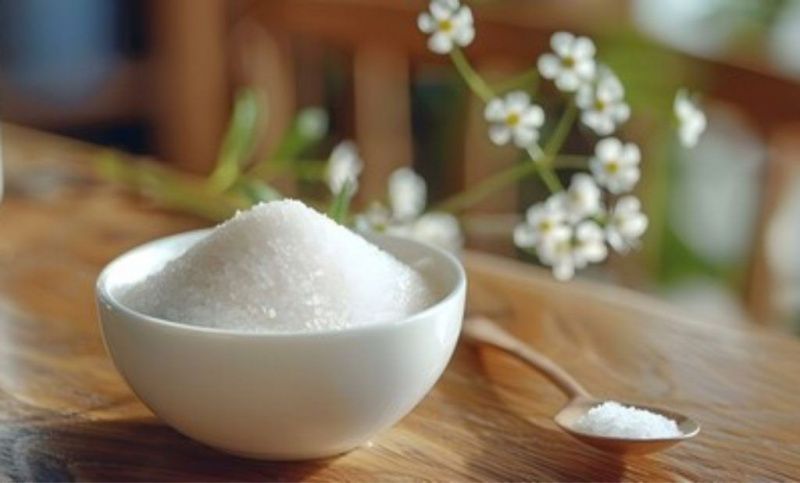
Hannelore Daniel, a professor of nutritional physiology at the Technical University of Munich, describes allulose as a chemical “twin” of fructose. The human enzyme aldolase cannot break it down, so nearly all consumed allulose is excreted in urine. Daniel says it does not affect blood glucose or trigger insulin release. The ingredient provides 0.4 kilocalories per gram and has about 70% of the sweetness of sucrose.
Commercial allulose is produced through an industrial process. Tate & Lyle converts corn into starch, then fructose, and finally allulose. The University of Nottingham says naturally occurring allulose, found in small amounts in figs, raisins, wheat and maple syrup, has the same formula and structure as the industrial ingredient.
Food companies are also examining allulose for functions beyond sweetness. Lindt & Sprüngli and ingredient maker Savanna Ingredients have applied for a patent covering an allulose-based chocolate. Antonella Lisella, a food and nutrition project manager at Kline and Company, says the ingredient can provide volume, texture, browning and mouthfeel in recipes. Manufacturers have therefore tended to use it within broader sweetener systems rather than as a standalone sugar replacement.
EJ Simpson of the University of Nottingham’s David Greenfield Human Physiology Unit says high consumption has been shown to cause abdominal distension, gas, cramps and diarrhoea. The long-term effects of consuming large quantities remain under study. Allulose is authorised in the United States, China, Japan, Singapore, South Korea, Australia, New Zealand and Mexico. It has not yet been authorised for food use in the European Union, where it is being assessed under the Novel Food framework. The European Food Safety Authority has not classified it as unsafe, but has said that safety could not yet be established from the available information.
Production is concentrated in Asia. Kline’s Alternative Sweeteners Intelligence Center identifies South Korea’s Samyang and Daesang, along with China’s Shandong Sanyuan Bio, Shandong Bailong Chuangyuan and Baolingbao, among the leading suppliers. Tate & Lyle, which launched an allulose syrup in 2016, Ingredion of the United States and Germany’s Savanna Ingredients are prominent Western participants. Tate & Lyle and Ingredion both have allulose in their portfolios, a factor relevant to Ingredion’s proposed acquisition of Tate & Lyle.