Woolworths will phase out Farmers’ Own milk by mid-2027
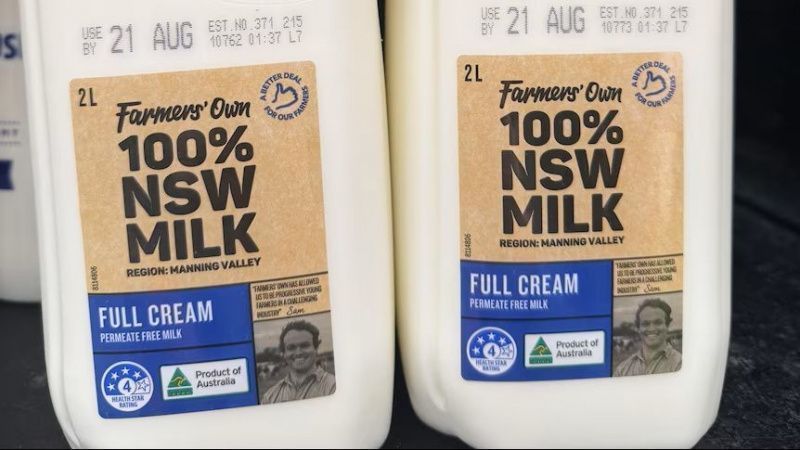
Woolworths launched Farmers’ Own in 2013 as a direct-procurement scheme that connected regional dairy farming groups with the supermarket. The arrangement was designed to avoid conventional corporate processors and allowed participating collectives to negotiate farmgate prices directly with Woolworths.
The brand began in the Manning Valley of New South Wales and was presented as a change to the usual relationship between farmers, processors and retailers. It offered producers direct access to the supermarket and pricing arrangements described as more transparent than standard procurement. Woolworths is now ending the model as the remaining supply contracts reach their stated expiry dates.
Farmers’ Own milk has already been removed from stores in South Australia. Woolworths plans to complete the withdrawal in New South Wales, Queensland, Victoria and Western Australia by the middle of 2027, when the outstanding agreements are due to end.
The supermarket said it was helping suppliers manage the change. Measures include extensions of as much as 12 months and introductions to milk processors in the relevant regions. Some South Australian suppliers have already redirected raw milk into cheese production and other dairy-manufacturing channels.
The change has left farmers with contracts tied to the direct-supply arrangement seeking alternative outlets. Advocates for producers have raised concerns that a return to conventional processor supply books could reduce farmgate payments for some businesses that had organised their operations around longer-term agreements with premium pricing.
The withdrawal is taking place amid limits on processing capacity in parts of eastern Australia. In Queensland, the sale of major urban processing sites for industrial redevelopment has coincided with closed supplier books at regional co-operatives and multinational processors, leaving some milk volumes with fewer domestic outlets. Industry representatives have also pointed to state plans to increase raw-milk production, while noting that changes in retail sourcing affect how additional volumes can be absorbed and how farmers assess investment in their businesses.
Tim Bale said shoppers wanted to support farmers, while Ben Bennett said the dairy industry needed more than token support to reverse its decline. Farmers’ Own milk has sold at a higher price than Woolworths’ standard home-brand milk. The phase-out therefore changes both the supply arrangements for participating farms and the retail range through which the direct-sourcing brand was sold.