
Brazzale Says India and South America Will Drive Dairy Growth
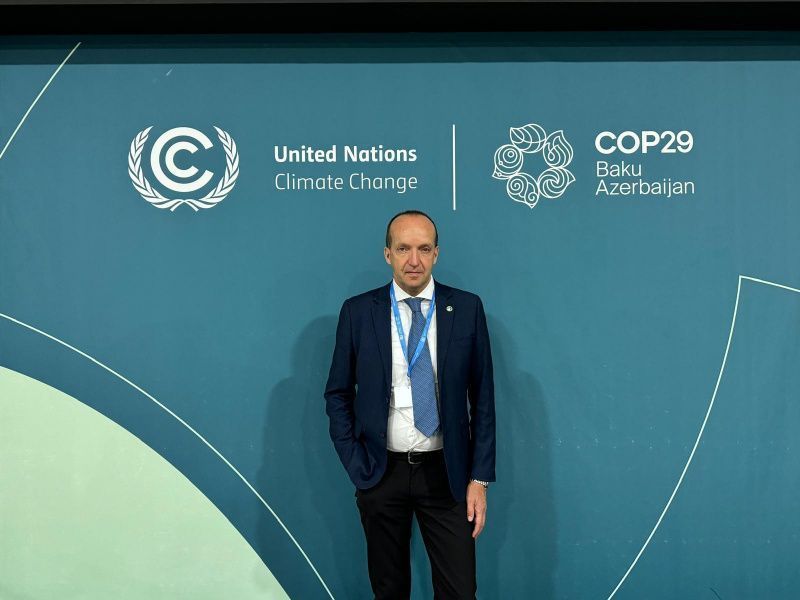
Piercristiano Brazzale, a former president of the International Dairy Federation, said India and South America would be the main sources of additional dairy production in the next decade. He said New Zealand and the European Union were still increasing output through productivity gains, but that herd numbers and production growth in those markets were approaching practical limits.
India has about 300m cattle and buffaloes, including roughly 200m cows and 100m buffaloes, according to Mr Brazzale. The country has around 80m dairy farms and average output of about 6 litres per animal. India produces close to 240m tonnes of milk a year, or approximately one-quarter of the roughly 1bn tonnes produced worldwide in 2025. Mr Brazzale said improvements in breeding and feeding could raise productivity, noting that selecting an appropriate bull for a cow could, in some cases, double production through genetics.
He also pointed to Chile, Argentina, Uruguay and parts of Brazil as productive areas with further capacity to expand. South America has access to land and feed, which Mr Brazzale associated with lower production costs. He contrasted this with China, where substantial investment in farms and infrastructure has been accompanied by constraints on land availability and greater reliance on imported feed.
Mr Brazzale cited projections from the Food and Agriculture Organisation, Rabobank and the United States Department of Agriculture that point to a shortfall of about 30m tonnes of milk in international trade by 2030. He linked stronger demand to the wider spread of protein-enriched foods and drinks, including products containing whey. He said such products had become increasingly visible in supermarkets in China and Japan, while whey and whey-powder prices had been supported by consumer demand.
He described India’s low labour costs and the role of dairy in everyday life as competitive advantages, while saying South America had the strongest competitive position because of its production costs. He also said global demand for protein-based functional foods was expanding among younger consumers in China and among younger and older consumers in Europe and the United States. Africa could add about 1bn people by 2050, although Mr Brazzale noted that the pace of future growth in purchasing power there was uncertain.
Global population is expected to rise from about 8.2bn people to more than 10bn by 2050, according to the interview. Mr Brazzale cited an estimate that consumption of animal protein would increase by about 20% in absolute terms by then, while food production would need to be 50% to 70% higher than in 2020. He said this would require greater efficiency and innovation while limiting the use of natural resources.
Mr Brazzale also referred to research presented by Badi Besbes of the FAO at the 2024 World Dairy Summit in Paris. Using the GLEAM methodology, the study found that about 95% of the feed consumed by dairy cows was not used for human food. He said this included forage and by-products such as soybean meal left after oil extraction. The views in the interview were given in Mr Brazzale’s personal capacity and were not presented as positions of the IDF, its committees or its members.










