Taiwan Dairy Association Justifies High Milk Prices Amidst Global Comparisons
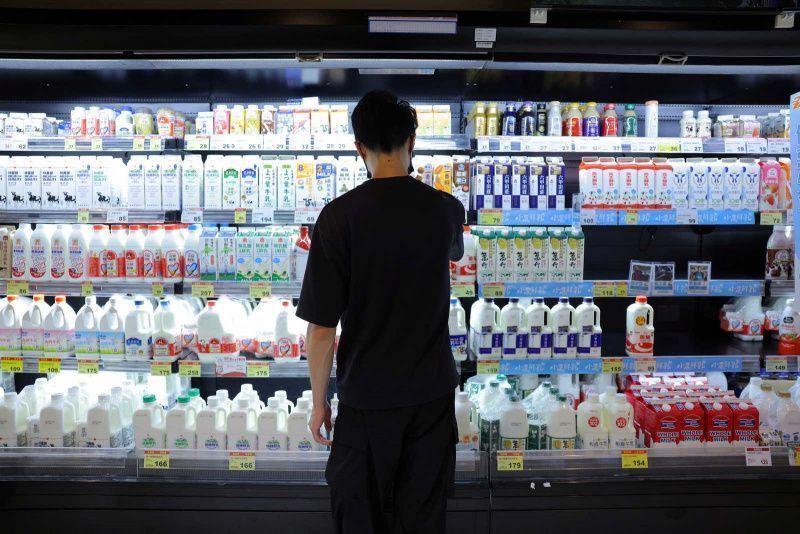
The Dairy Association of Taiwan has come forward to explain the high prices of fresh milk, which stands at about NT$90 (US$3.09) per liter, positioning it as one of the most expensive worldwide. The association attributes the cost to rigorous quality standards that require the use of only premium Grade A raw milk.
According to the association, raw milk is categorized into four grades based on somatic cell counts, a measure used to assess the health of a cow's udder. Grade A milk features fewer than 300,000 somatic cells per milliliter, whereas lower grades, such as Grade B and C, have higher counts. Taiwanese dairy processors exclusively use Grade A milk, in contrast to some countries like New Zealand and Japan, where lower-grade milk is permissible for dairy production.
Chairman Hsu Jih-tay highlighted that contractual agreements between dairy processors and farmers forbid the use of milk below Grade A, with lower-grade milk often discarded. The contracts also stipulate stringent checks for veterinary drugs and antibiotic residues, aiming for zero detectable traces. Milk is collected from farms via tanker trucks, and samples are tested before the milk is unloaded to ensure compliance with quality standards. Any shipment failing the tests is destroyed, and the responsible farm is penalized financially, incentivizing stringent quality control.
In light of past food safety scandals in China, the association expressed concerns over importing Chinese dairy products. The 2008 melamine-tainted milk scandal in China, which affected thousands of infants, led to a ban on Chinese dairy imports by Taiwan. Despite recent low milk prices in China due to oversupply, concerns remain about the reliability of Chinese testing methods for protein content and risks associated with animal diseases.
Hsu argued that due to these safety and transparency issues, Taiwan should maintain its ban on Chinese dairy imports to protect public health. The association believes that the high standards maintained in Taiwan justify the higher milk prices, as they ensure better quality and safety for consumers.