Rising Diesel Costs Squeeze US Dairy Margins
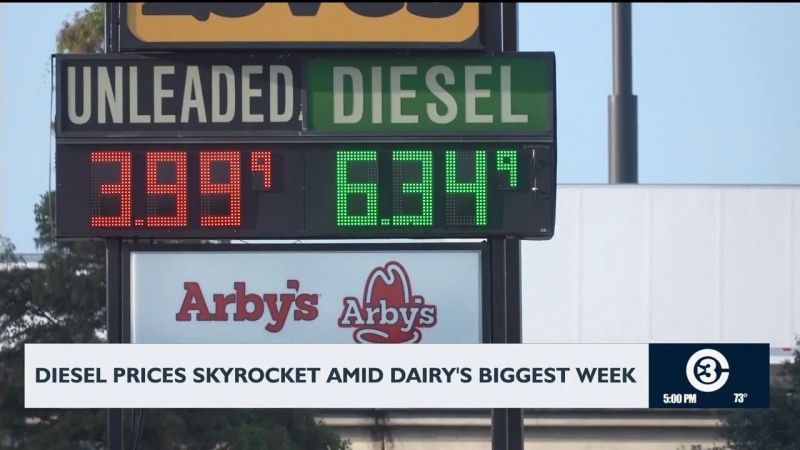
Fuel costs have become a major issue for dairy businesses preparing for the autumn harvest. Producers attending annual industry conventions in Madison described pressure on their balance sheets as higher diesel bills coincided with silage cutting, manure application and other seasonal work.
The increase affects farms with substantial forage acreage most directly. Businesses operating several thousand acres use tractors and other heavy equipment to fill and compact bunker silos, move feed to livestock and distribute liquid manure over contracted fields. The additional fuel expense therefore raises the cost associated with producing each hundredweight of milk.
Some commercial farms have recorded unexpected diesel charges of as much as $200,000 during the autumn harvest period. Field prices in key dairy-producing areas are approaching $7 a gallon, compared with approximately $3.50 twelve months earlier. The reported level is close to double the earlier cost of fuel used for machinery and routine animal-care operations.
Dairy producers have limited scope to recover those expenses through the price of milk. Under federal milk-order formulas, farms receive payments based on wholesale commodity values, while fluid handlers and manufacturing plants pay uniform class prices. The arrangements do not adjust farm payments for differences in local energy costs, leaving producers to absorb higher operating bills through lower net cash flow.
The pressure extends beyond diesel. Tight middle-distillate inventories, overseas tensions and supply interruptions have been associated with higher costs for synthetic fertiliser, forage-preservation chemicals and contracted freight. Regional farms are also entering the winter-feeding period with less working capital available, according to the source.
Industry discussions have included precision-feeding methods, more efficient machinery scheduling and advance hedging of wholesale energy purchases. Processors and co-operative boards are also under pressure to consider arrangements intended to reduce the exposure of rural suppliers to sharp energy-price movements. International dairy gatherings continue to provide forums for technical exchanges and genetic marketing, while farm operators focus on managing fuel use and other production costs.