Insects gain momentum as a protein source for feed and food systems
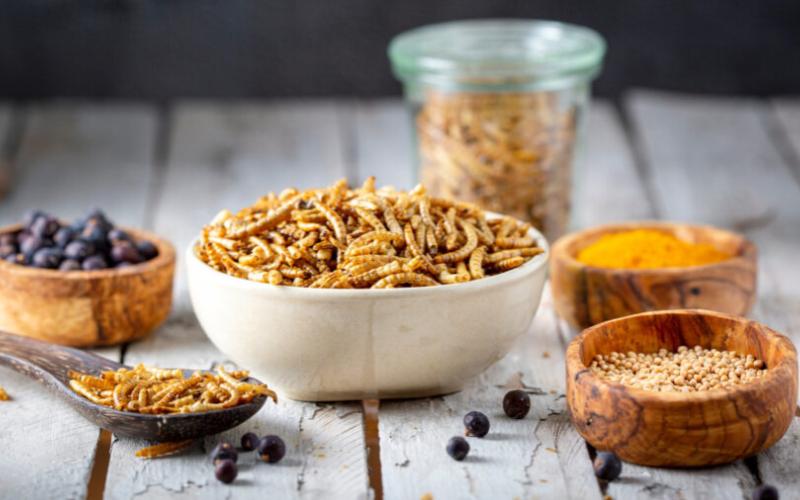
A growing role in sustainable protein supply
Interest in insect-based protein is rising globally as the agri-food sector looks for more sustainable and resource-efficient alternatives to conventional livestock and feed ingredients.
According to the Food and Agriculture Organization (FAO), insects offer high-quality protein comparable to meat and fish, with protein content in many species exceeding 60% of dry matter .
At the same time, they are significantly more efficient to produce. For example, crickets require up to six times less feed than cattle to generate the same amount of protein, and can convert roughly 2 kg of feed into 1 kg of insect biomass, compared to about 8 kg required for cattle .
This efficiency positions insects as a promising solution in the context of a growing global population, which is expected to reach around 9 billion by 2050, increasing pressure on food systems and natural resources .
Circular economy and feed applications
One of the key advantages of insects lies in their ability to convert low-value agricultural by-products and organic waste into high-quality protein.
Industry and research data show that insects can be reared on side streams such as food waste or agricultural residues, contributing to nutrient recycling and reducing dependency on traditional feed ingredients like soy and fishmeal .
This is particularly relevant for Europe, which currently imports around 70% of its protein for animal feed, highlighting the strategic importance of alternative protein sources .
Insects are already a natural component of many animal diets. For example, insect protein can account for up to 70% of the dietary needs of some fish species, making it highly suitable for aquaculture and livestock feed formulations .
Environmental performance and efficiency
Beyond feed efficiency, insects are often highlighted for their environmental benefits.
They require less land and water than traditional livestock and produce significantly lower greenhouse gas emissions, with some studies indicating that pigs can emit 10–100 times more greenhouse gases per kilogram of weight than certain insect species such as mealworms .
In addition, insect farming can help reduce waste streams. For example, species such as black soldier fly larvae are capable of reducing organic waste volumes by up to 50–60% during the conversion process .
From research to commercial applications
The growing interest in insects as a protein source is now translating into industrial development and new business opportunities.
The theme day highlighted how companies can leverage insect-based solutions across multiple areas, including modern feed strategies, food innovation and technology transfer from research into commercial practice.
Today, the sector is moving beyond pilot projects. Insect protein is already being used in aquaculture, pet food and, increasingly, poultry and pig feed, supported by improving regulatory frameworks and scaling production technologies.
Regulatory framework shaping the market
In Europe, the development of the insect protein sector is closely linked to evolving regulation.
The European Food Safety Authority (EFSA) has assessed the safety of insects for food and feed, concluding that risks are broadly comparable to other animal protein sources, provided production is properly controlled .
At the same time, the EU’s novel food framework governs the approval of insect-based products for human consumption, while feed regulations define:
- permitted insect species
- approved substrates
- processing requirements
- licensing procedures
These regulatory developments are seen as a key enabler for scaling the industry across Europe.
From niche to value chains
Beyond regulation and technology, the sector is increasingly focused on market integration.
Industry events and theme days now combine expert discussions, regulatory insights and product tastings to demonstrate how insects are being incorporated into real value chains—from feed ingredients to food applications.
While insects are already part of the diet of approximately 2.5 billion people worldwide, their adoption in Western markets remains at an earlier stage, driven by innovation, sustainability concerns and changing consumer attitudes .
Outlook: opportunity with conditions
The development of insect protein reflects broader structural trends in the global food system: the search for efficiency, circularity and new protein sources.
However, scaling the sector will depend on several factors, including:
- regulatory clarity
- cost competitiveness versus soy and fishmeal
- industrial-scale production technologies
- consumer acceptance in food applications
As the industry evolves, insects are moving from a niche concept toward a strategic component of future feed and food systems—but their role will depend on how effectively these challenges are addressed.