Farmers’ fuel cost burden to drive up food prices
Victorian farmers are being battered by soaring fuel prices just as they were beginning to recover from prolonged drought, and rising agriculture costs are now expected to drive up household food prices.
Staples including milk and meat are among the items likely to rise significantly as war in the Middle East continues to drive up the cost of fuel.
Rocketing diesel prices are hitting agriculture sectors across Victoria, fr om dairy and cattle farmers to crop growers. One supply expert said it was still too early to determine how much more Victorian consumers would pay for food, but increased fuel and fertiliser costs would inevitably worsen the cost of living.
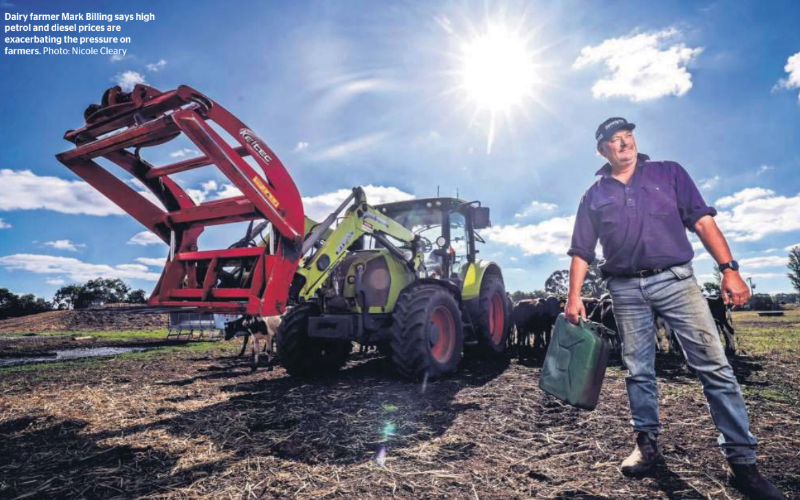
Dairy farmer Mark Billing said higher fuel prices meant farmers were paying more to run their tractors and transport goods. ‘‘Food production is heavily reliant on diesel,’’ he said. Global trade disruptions have also driven up the cost of fertiliser. Billing, who farms in Larpent in south-west Victoria, said the increased price of fertiliser, known as urea, was exacerbating the pressure on farmers. ‘‘Farmers and farm businesses can’t keep absorbing these costs without passing them on to consumers,’’ he said.
The daily average retail diesel price rose 59¢ a litre to 237.9¢ in Melbourne between February 20 and March 11, according to the Australian Competition and Consumer Commission. RMIT logistics and supply chain management professor Vinh Thai said both locally produced and imported foods would become more expensive because of international events.
‘‘We are going to see increases in food items for the foreseeable future,’’ he said. Thai said the cost of producing milk and meat would be directly affected in the shorter term, but imported goods might also increase in cost over the long term due to shipping and aviation delays.
‘‘Farmers in regional areas have already seen the [fuel] shortages,’’ he said. ‘‘That’s increased the production cost for everything.’’ Thai expected the price of imported foods to increase because of shipping disruptions, which would also affect the price of medicines and even electronics if the instability continued.
Australia imports about 90 per cent of its medications. Victorian Farmers Federation grains director Ryan Milgate said uncertainty about fuel had hit farmers across the state. ‘‘There are pockets around the state wh ere people just can’t get any fuel,’’ he said. ‘‘Across the board, getting fuel we need is difficult.’’ Milgate, who is based in Minyip in north-west Victoria, said he had seen prices rise on average by 9¢ a day.
‘‘Unprecedented is the word I keep hearing,’’ he said. He said farmers had no choice but to pay for fuel to run their tractors, machinery and other operations.
‘‘We’ve got no alternative. We can’t take public transport,’’ he said. ‘‘The only thing that’s probably saving us is we’re yet to start seeding in earnest.’’
Crop growers in the Wimmera Mallee area will start sowing hay crops and barley in two or three weeks, followed by wheat and lentils. Milgate said tractors required more than 1000 litres of fuel a day. In Elaine, west of Melbourne, sheep farmer Richard Davies had already been forced to buy in feed for his animals last year due to the drought. Now, his business is facing increased costs again because of fuel prices.
He said consumers would inevitably bear some of those additional costs. ‘‘Meat is going to go up in the shops,’’ he said. ‘‘It’s expensive enough as it is.’’
The Victorian Farmers Federation has urged commuters to swap their cars for public transport to conserve fuel. The federation also called on the government to make public transport free until the fuel price stabilises.
Rocketing diesel prices are hitting agriculture sectors across Victoria, fr om dairy and cattle farmers to crop growers. One supply expert said it was still too early to determine how much more Victorian consumers would pay for food, but increased fuel and fertiliser costs would inevitably worsen the cost of living.
Dairy farmer Mark Billing said higher fuel prices meant farmers were paying more to run their tractors and transport goods. ‘‘Food production is heavily reliant on diesel,’’ he said. Global trade disruptions have also driven up the cost of fertiliser. Billing, who farms in Larpent in south-west Victoria, said the increased price of fertiliser, known as urea, was exacerbating the pressure on farmers. ‘‘Farmers and farm businesses can’t keep absorbing these costs without passing them on to consumers,’’ he said.
Billing estimated that the higher fuel prices might increase his costs by tens of thousands of dollars between now and spring.
The daily average retail diesel price rose 59¢ a litre to 237.9¢ in Melbourne between February 20 and March 11, according to the Australian Competition and Consumer Commission. RMIT logistics and supply chain management professor Vinh Thai said both locally produced and imported foods would become more expensive because of international events.
‘‘We are going to see increases in food items for the foreseeable future,’’ he said. Thai said the cost of producing milk and meat would be directly affected in the shorter term, but imported goods might also increase in cost over the long term due to shipping and aviation delays.
‘‘Farmers in regional areas have already seen the [fuel] shortages,’’ he said. ‘‘That’s increased the production cost for everything.’’ Thai expected the price of imported foods to increase because of shipping disruptions, which would also affect the price of medicines and even electronics if the instability continued.
Australia imports about 90 per cent of its medications. Victorian Farmers Federation grains director Ryan Milgate said uncertainty about fuel had hit farmers across the state. ‘‘There are pockets around the state wh ere people just can’t get any fuel,’’ he said. ‘‘Across the board, getting fuel we need is difficult.’’ Milgate, who is based in Minyip in north-west Victoria, said he had seen prices rise on average by 9¢ a day.
‘‘Unprecedented is the word I keep hearing,’’ he said. He said farmers had no choice but to pay for fuel to run their tractors, machinery and other operations.
‘‘We’ve got no alternative. We can’t take public transport,’’ he said. ‘‘The only thing that’s probably saving us is we’re yet to start seeding in earnest.’’
Crop growers in the Wimmera Mallee area will start sowing hay crops and barley in two or three weeks, followed by wheat and lentils. Milgate said tractors required more than 1000 litres of fuel a day. In Elaine, west of Melbourne, sheep farmer Richard Davies had already been forced to buy in feed for his animals last year due to the drought. Now, his business is facing increased costs again because of fuel prices.
He said consumers would inevitably bear some of those additional costs. ‘‘Meat is going to go up in the shops,’’ he said. ‘‘It’s expensive enough as it is.’’
The Victorian Farmers Federation has urged commuters to swap their cars for public transport to conserve fuel. The federation also called on the government to make public transport free until the fuel price stabilises.