Embryo Transfer Becomes a Fundamental Tool for Genetic Progress - Dauren Matakbaev
According to Dauren Matakbaev, the traditional selection model faces several limitations — a lack of data, high dependency on human factors, and unpredictable results. In this context, the key task becomes reducing the time between generations and increasing selection accuracy.
The speaker introduced in vitro fertilization (IVF) technology, which has already become a primary tool for genetic progress in developed markets.Whereas embryo transplantation was previously considered an additional technology, today it takes center stage. According to the presented data, the share of IVF in global practice has grown from 8% in the late 1990s to about 80% in recent years.
The key advantage is the significant acceleration of genetic herd renewal by reducing the intergenerational interval and more intensive use of the best animals.
The expert emphasized that the implementation of IVF addresses several tasks at once:
- allows for more offspring from the best animals in a short period;
- enables work even with pregnant cows;
- ensures maximum use of valuable genetics;
- reduces the impact of random factors in reproduction.
Meanwhile, the technology itself becomes more predictable economically: the production cycle from obtaining an egg to an embryo takes about 7 days, fundamentally changing the speed of decision-making on the farm.
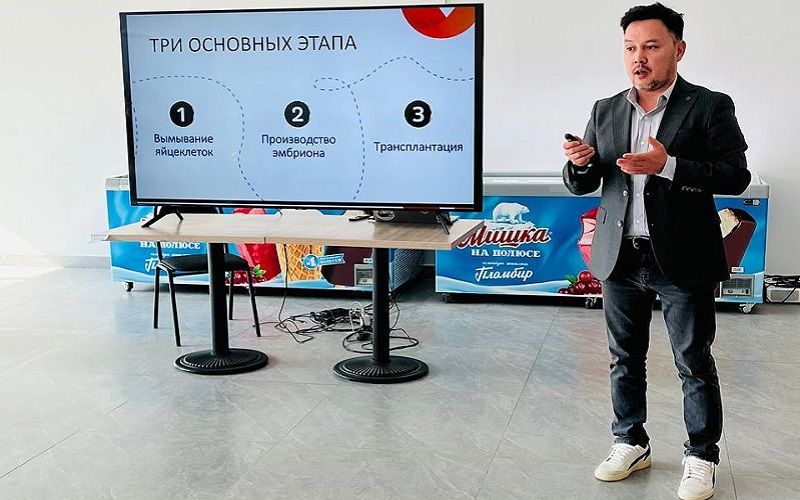
Dauren Matakbaev presented a clear technological chain of the process, consisting of three key stages:
- egg collection (aspiration);
- laboratory fertilization;
- embryo transplantation.
An important feature of the model is the ability to regularly (weekly) obtain material without using hormonal stimulation, which reduces stress on the animals and simplifies process management.
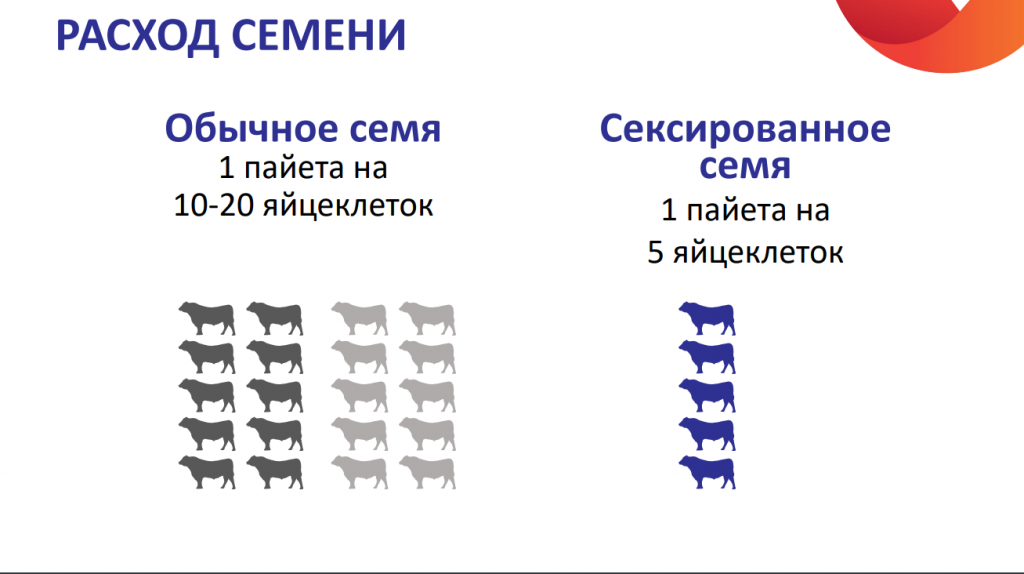
The economic logic is particularly emphasized: payment is made only for first-class embryos, which reduces risks for farms and makes investments more manageable.
However, the speaker noted that the technology itself is not a 'magic solution.' Its effectiveness directly depends on the quality of herd management.
Three basic conditions for successful implementation were identified:
- donor management;
- obtaining a quality embryo;
- recipient management.
Special attention is given to the selection of animals: age, condition, reproductive status, and health directly affect the result.
Seminar partners: Shin-Line (Kazakhstan), GGI-SPERMEX GmbH (Germany), Republican Chamber of Dairy and Combined Breeds of Cattle (Kazakhstan), CRI Kazakhstan (Kazakhstan), Holstein Breed Producers Association (Russia), Molvest (Russia), DairyNews.ru, France Group