A Puebla Dairy Conflict Reshaped Cattle Farming
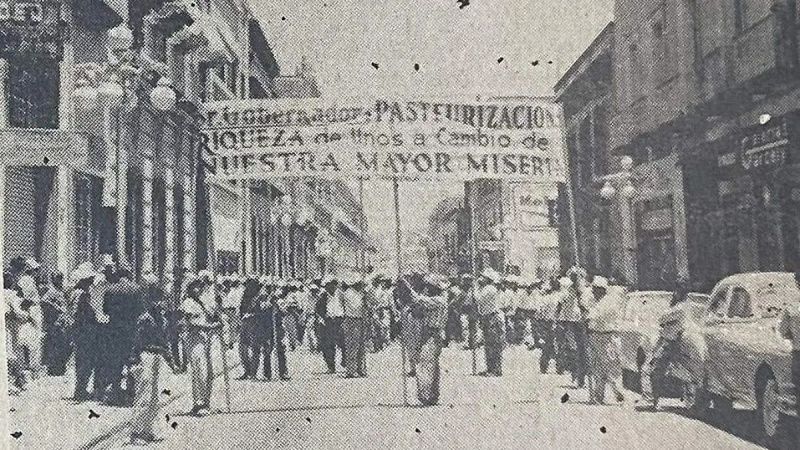
In 1964, Puebla’s legislature enacted a law requiring milk to undergo pasteurisation. The measure concentrated the processing of the state’s estimated daily output of 100,000 litres in one private plant linked to political leaders, according to the account. Producers and distributors were required to sell raw milk to the facility at prices set by the processor.
The affected dairy network included producers in Cholula, Atlixco, San Martín Texmelucan and Tehuacán, which supplied Puebla’s capital. The sector’s collective assets were estimated at 90m pesos and included 20,000 cattle and 20,000 hectares used to grow forage and alfalfa. Individual animals used for production were valued at about 1,500 pesos, while cultivated pasture represented an investment of roughly 2,000 pesos per hectare.
Before the law, milk was delivered directly from peripheral farms to households by morning route sellers and distributors. The reported consumer prices were 1.50 pesos a litre for home delivery, 1.40 pesos at local outlets and 1.30 pesos at the farm. Most small dairies lacked their own cooling and pasteurisation equipment, and the law did not provide a technical transition period.
Sector analyses cited in the account projected that the exclusive industrial arrangement would raise retail prices by more than 30%. Prices of as much as 2.20 pesos a litre had already been recorded in dairy regions elsewhere in central Mexico. Producers also said the arrangement would reduce the share of each litre’s value reaching the farm.
Opposition included distribution stoppages, mass deliveries of free milk and the disposal of milk in sewers. Producer organisations sought a five-million-peso loan from the Banco Nacional de Fomento Cooperativo to build their own processing plant. The proposed cooperative facility was designed to handle the basin’s 100,000 litres a day and allow producers to retain revenue from packaging.
Worker and peasant federations supported the dairy producers’ position, arguing that public-health requirements should be accompanied by accessible financing rather than imposed through rules that transferred control of the market. The dispute later joined with university students and agrarian organisations. Large demonstrations were followed by police repression, and the conflict ended with the forced resignation of Puebla governor Antonio Nava Castillo.