From the U.S. to Brazil: The Return of Missing Person Campaigns on Milk Cartons
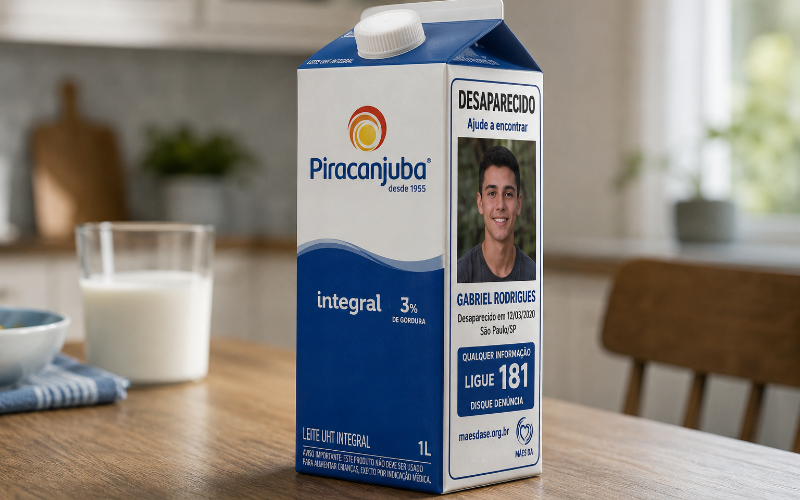
The idea of using milk cartons to help find missing people dates back more than 40 years and has appeared in several countries in different forms. Today, brands and organizations are reviving the concept using modern technologies such as AI, geotargeted distribution, and social media integration.
Piracanjuba: AI-powered search campaign in Brazil
In 2025, Piracanjuba launched the campaign “Missing PortrAIts” together with the NGO Mães da Sé and agency Ampfy. The company used AI-generated age progression technology to recreate how long-missing people might look today and printed the updated portraits on more than 300 million milk cartons distributed across Brazil.
The campaign targeted regions connected to each disappearance case, increasing the likelihood of recognition. According to campaign reports, eight people were found within the first month after launch.
Piracanjuba said the initiative was especially effective because its products reach around 98% of Brazilian households, including areas with limited internet access.
The original U.S. “Milk Carton Kids” movement
The concept itself began in the United States in 1984, when Anderson Erickson Dairy in Iowa printed photos of two missing boys — Johnny Gosch and Eugene Martin — on milk cartons. The idea quickly spread nationwide and became one of the most recognizable public awareness campaigns of the 1980s.
At its peak, an estimated five billion milk cartons carried photos of missing children across the U.S. Around 200 children were featured during the campaign’s lifespan.
The campaign turned breakfast tables into awareness platforms long before social media and Amber Alerts existed. While critics later questioned the campaign’s effectiveness and ethics, several cases reportedly resulted in successful recoveries or new leads.
Australia brings the concept back
In 2019, the Australian Federal Police partnered with Canberra Milk to relaunch the idea in Australia. Photos of 12 long-term missing people were printed on milk bottles sold throughout the Australian Capital Territory.
Authorities said the goal was to create everyday visibility for missing persons and encourage public conversations around unresolved cases. The campaign deliberately referenced the historic milk carton concept fr om the 1980s while adapting it to modern public awareness efforts.
UK retailer Iceland and missing person appeals
In the United Kingdom, supermarket chain Iceland Foods launched multiple missing person campaigns on milk packaging together with charity Missing People. One of the campaigns focused on teenager Andrew Gosden, who disappeared in 2007.
According to campaign reports, Iceland had participated in more than 130 missing person appeals between 1997 and 2006, with over 40 individuals later found.
From packaging to social impact
What connects all these campaigns is the unique role of dairy packaging as a high-frequency communication channel. Milk products enter millions of homes every day and remain visible far longer than traditional advertising.
Industry observers say these projects show how FMCG brands can use packaging not only for marketing, but also for public service and social impact — especially in categories like dairy, wh ere household penetration remains extremely high.