When Access to Essential Genetics Is Unjustifiably Restricted: Hungary’s Successful Holstein Breeding Experience and the Regulatory Barrier in Kazakhstan
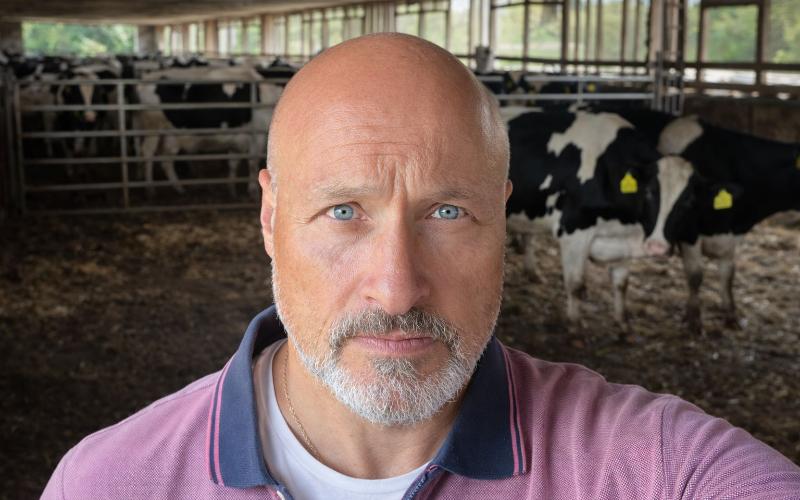
Why the Hungarian experience is of such professional interest to Kazakh livestock producers today, which breeding tools underpin its success, and why serious regulatory restrictions have emerged against this background — we discussed these issues with Alexey Kitain, Regional Director of the Hungarian company Hunland Trade Kft.
Alexey, how would you describe the current state of the dairy sector in Hungary in terms of its level of development and production performance?
In short, Hungarian dairy farming is a mature, well-organized, and industrially developed sector, fully integrated into the European and global system. As early as the beginning of the 1970s, Hungary was among the first countries in Europe to consistently transition to the Holstein-Friesian breed. At that time, large-scale imports of Northern European genetics were carried out, effectively replacing the existing Simmental cattle population.
Importantly, Hungary did not follow a “long” path of gradual Holsteinization. Instead, a breeding nucleus was formed immediately through the mass import of bulls, heifers, and semen. This sharply accelerated genetic progress and avoided a prolonged period of absorptive crossbreeding.
Today, the sector is characterized by high production performance and strict technological discipline. It is also important to understand the structure of the industry: the Hungarian model is based primarily on large industrial farms rather than small family holdings. Hungary ranks first in the world by the average number of dairy cows per farm and sixth by average milk productivity. This similarity in operating conditions — scale, process organization, and herd management requirements — makes the Hungarian experience especially applicable to Kazakhstan.
What key breeding results for the Holstein breed have been achieved in Hungary in recent years?
In recent years, the most noticeable results have been achieved not only in productivity, but also in longer-term indicators such as herd health, reproduction, and productive longevity. This is not accidental, but rather the result of systematically applied tools.
First, there is the consistent use of semen from bulls with high genetic value from North America and EU countries. Second, there is widespread use of sexed (female) semen in heifers and first-calf cows. And, of course, there has been the consistent implementation of genomic selection and a national comprehensive breeding value index.
I would particularly emphasize sexed semen because it allows the rapid formation of a large pool of breeding heifers, followed by strict selection based on genomic evaluation. As a result, breeding becomes faster, more accurate, and economically more efficient.
How does Hungary’s national breeding system function?
It is centralized and based on objective data recording — this is the fundamental principle. The level of productivity recording is among the highest in the world: more than 92% of dairy cows are systematically recorded in a single information database.
Genomic evaluation is widely and systematically applied, genotyping of breeding young stock is carried out under the state HunGenom program, and comprehensive breeding value indices are actually used as management tools rather than merely for reporting purposes.
Another important point is that Hungary uses its own national comprehensive breeding value index, adapted to the conditions of large industrial farms. This is not a mechanical copy of foreign indices, but a truly applied system tailored to real production conditions.
What is the practical value of Hungary’s breeding and production experience for Kazakhstan?
From a practical perspective, the value lies in the genuine comparability of farming models. The scale of dairy complexes, process organization, herd management practices, and requirements for data discipline are largely similar. In addition, climatic proximity is an important factor.
From a technological standpoint, the Hungarian production model includes silage-based feeding systems, intensive young stock rearing, early insemination, and early first calving. Rearing young stock at specialized sites separate from milk production is also widely practiced.
Taken together, this makes the Hungarian reference base — in terms of productivity, indices, and genomic evaluation — highly applicable to the development of Kazakhstan’s national breeding system. I would emphasize that this is not about copying, but about the competent use and adaptation of accumulated experience.
Please tell us about Hunland and its cooperation with Kazakhstan.
Hunland is one of the world’s leading suppliers of agricultural livestock. We have been operating internationally for over 30 years and supply breeding animals to dozens of countries worldwide.
Our cooperation with Kazakhstan has been ongoing since 2009. We participate in the supply of breeding cattle for the establishment and development of dairy farms, support projects aimed at the sustainable development of the sector, and have a strong practical understanding of both market requirements and the regulatory environment.
How do you assess the prospects for further cooperation between Hungary and Kazakhstan?
In my view, the prospects are very strong and extend far beyond animal supplies. They include the transfer of breeding technologies, the implementation of genomic tools, the development of comprehensive breeding value indices, and the improvement of the national system for recording breeding information.
Importantly, this is no longer theoretical. A practical program is already being implemented between Hungarian and Kazakh профильные institutions to modernize the Holstein breeding system and to develop a Kazakh comprehensive breeding value index based on the Hungarian model. This is a long-term, ongoing systemic project, not a declaration of intent.
Of particular value to Kazakhstan is the effective support provided by the Hungarian Holstein Association in facilitating the accession of the Republican Chamber for Dairy and Dual-Purpose Cattle Breeds of Kazakhstan to the World Holstein Federation. As a result, Kazakh livestock producers gained access to the most advanced global achievements and international experience in Holstein-based dairy farming.
How would you characterize the current regulatory situation regarding the import of breeding cattle into Kazakhstan, especially in relation to Hungary?
Frankly speaking, the current practice appears non-uniform and selective compared to the approaches applied to other EU countries under comparable epizootic conditions.
Regarding bluetongue disease, the Kazakh veterinary authority generally applies the principle of regionalization — restrictions are imposed on specific administrative territories rather than entire countries. However, in the case of Hungary, a nationwide ban has been introduced, covering not only imports but also transit.
If we look at practices applied to other major exporting countries, Germany, the Netherlands, and the Czech Republic have been affected by bluetongue since 2023, yet no complete ban has been imposed. Regionalization is applied, and exports from disease-free regions have continued. Denmark lost its bluetongue-free status across its entire territory in 2024, but imports of vaccinated animals are permitted under the existing veterinary certificate from all regions without exception, and supplies to Kazakhstan continue on a regular basis.
In contrast, a full ban on imports and transit from Hungary was introduced on December 17, 2025, on the eve of the lifting of restrictions related to foot-and-mouth disease — outside the vector activity period and in the absence of any epizootic risk. Clearly, this decision requires revision, with a return to previously applied methods — either regionalization or admission of vaccinated animals under existing rules.
The current situation complicates long-term planning for breeding cattle supplies from the EU to Kazakhstan and for investment projects, and raises questions regarding transparency and consistency of regulatory measures.
Why does the timing of the bluetongue restrictions introduced on December 19 raise questions?
Because the introduction of restrictions on December 19, after the end of the period of registered epizootic cases, raises questions about the logic and consistency of the decision-making process.
Even more attention is drawn to the timing: bluetongue restrictions were introduced just before the expected lifting of foot-and-mouth disease restrictions, for which Hungary had previously regained disease-free status. This chronology may create the impression that a new restriction was used to maintain a de facto long-term ban.
From the standpoint of phased normalization of veterinary conditions, this appears contradictory and requires professional clarification.
What are the economic consequences of the current restrictions?
The economics are quite straightforward. Due to the ban imposed by the Kazakh regulator on imports of cattle from Hungary, Kazakh farms are effectively deprived of the most cost-efficient and animal-safe overland supply route for breeding cattle from the EU via transit through Russia. They are forced to switch to air transport, which immediately and significantly increases the cost of imported young stock.
At the same time, an additional logistical bottleneck arises within Kazakhstan: transporting animals from major international airports to farms is complicated by a shortage of modern specialized livestock vehicles, increasing the risks of delays, animal stress, and associated losses.
Overall, this reduces access to high-quality genetics, worsens the economics of investment projects, and makes their implementation less predictable in terms of timelines and outcomes. Rising costs extend payback periods, force revisions of procurement volumes, and delay herd modernization at existing farms.
There is also a regional effect: the transit ban reduces Kazakhstan’s role as a logistics hub and limits access to genetics for Central Asian countries.
Moreover, the unjustified ban effectively undermines intergovernmental cooperation in Holstein breeding, depriving Kazakh producers of access to advanced genetics and modern breeding tools that are essential for systematically improving productivity, sustainability, and economic efficiency of dairy herds.
What solution do you consider the most rational?
The most rational and professional solution regarding bluetongue regulation is to return to the rules already agreed between the European Union and Kazakhstan, enshrined in the existing veterinary certificate for the supply of breeding cattle and fully compliant with the recommendations of the World Organisation for Animal Health.
This means applying the principle of regionalization, using vaccination and PCR testing as core risk management tools, and ensuring a uniform, non-discriminatory approach toward EU member states under comparable epizootic conditions, while maintaining a high level of veterinary safety.
Such an approach would not only remove unjustified barriers but also preserve the logic of implementing national dairy and breeding programs, which objectively require a stable, predictable, and scientifically grounded regulatory environment.