U.S. Dairy Exports Rise 14% Driven by Cheese and Butterfat
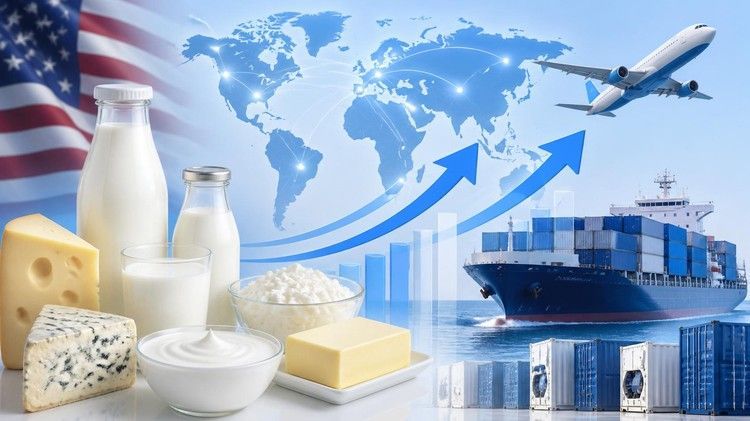
U.S. dairy exports witnessed a 14% year-on-year increase in May, measured in milk solids equivalent (MSE), continuing a streak of eight consecutive months of growth. The cumulative value of these exports for the first five months of the year reached $4.32 billion. This growth occurred despite severe logistical disruptions in the Middle East and volatility that had previously raised international dairy powder prices.
Cheese and butterfat, including butter and anhydrous milk fat, emerged as primary drivers of this expansion. For the third month in a row, cheese exports surpassed 60,000 metric tons, with significant increases in shipments to South Korea, up by 52%, and Mexico, up by 16%. Meanwhile, butterfat exports doubled to 15,158 metric tons. This growth was facilitated by redirecting shipments from the Middle East to Saudi Arabia, circumventing the logistical blockade of the Strait of Hormuz.
In the specialized derivatives segment, exports of low-protein whey saw a 56% year-on-year jump, totaling 57,164 metric tons for the month. This surge was primarily attributed to a massive increase in purchases by China, up by 282%. However, sector analysts caution that this percentage is inflated due to a 'base effect,' as shipments to China had plummeted the previous spring due to tariff uncertainties.
Conversely, nonfat dry milk (NFDM/SMP) exports experienced a 20% decline, dropping by over 12,000 tons. This decrease returned the market to its usual trading levels after an unusual peak in April. The rise in U.S. product prices compared to competitors directly impacted Mexico, the main trading partner for this commodity, where shipments fell by 13%, indicating a temporary slowdown in demand by Mexican processing plants.
Despite the setback in milk powders, the commercial outlook for U.S. exporters appears optimistic for the second half of 2026. The stabilization of nonfat milk prices through June, narrowing the gap with European Union and New Zealand quotations, along with sustained demand in North America and Asia, suggests a favorable logistical and competitive environment for maintaining profitability and export momentum in the global market.