Maharashtra Bans Sale of Loose Milk Amid Safety Concerns
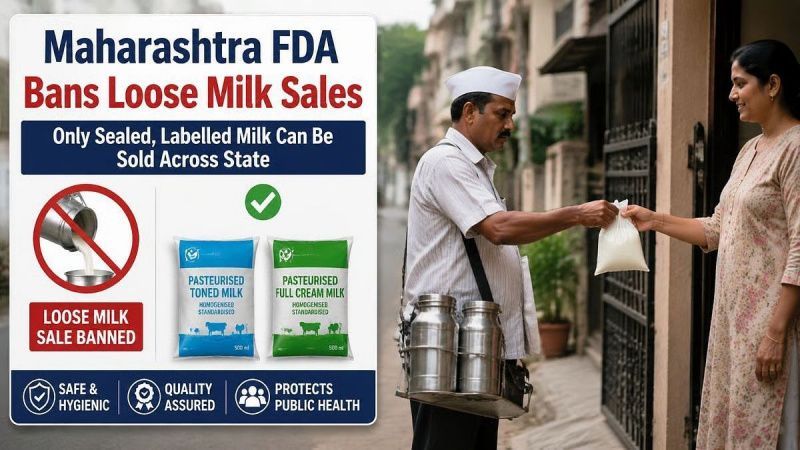
The Maharashtra Food and Drug Administration (FDA) has enacted a comprehensive ban on the sale of loose milk throughout the state. This decision, effective immediately, mandates that all milk must be sold in sealed, labeled, and tamper-evident packaging. The order, issued by Food Safety Commissioner Tukaram Mundhe on July 3, 2026, has forced thousands of small milk retailers to cease operations.
Retailers who fail to comply with the new regulation face a hefty fine of Rs 3 lakh. This has led to significant job losses and disruptions in the regional milk supply chain. The ban arises from findings by the Food Safety and Standards Authority of India (FSSAI), which identified serious public health risks from antibiotic residues and Aflatoxin M1 in milk.
The financial burden of setting up compliant processing facilities is substantial, with costs estimated to exceed Rs 12 crore. This expense is prohibitive for many small and family-run businesses, resulting in the closure of numerous distribution networks. Consumer groups have expressed concern that the shift to packaged milk will increase household expenses.
The ban also affects commercial buyers such as sweet shops and ice-cream parlours, which previously relied on more affordable unsealed milk supplies. Babu Chodankar, secretary of the Thane Sahar Doodh Vyavasi Cooperative Society (TSDVCS), confirmed that all members had to stop selling loose milk by the end of the week.
Urban centers like Mumbai, which require 50 lakh litres of milk daily, are particularly impacted by the regulation. The broader Mumbai Metropolitan Region (MMR) consumes nearly 60 lakh litres daily. Previously, unorganized wholesalers and local retailers supplied about 35% of this demand, drawing from production areas such as Kolhapur, Satara, Nashik, Pune, and Sangli.
This regulatory change necessitates a significant reorganization of the regional dairy distribution network, compelling informal traders to either exit the market or invest in expensive processing infrastructure. The disruption has sparked backlash from various stakeholders, including consumer advocacy groups and independent milk traders.