Light and Shadow: A Closer Look at Austria’s Dairy Industry
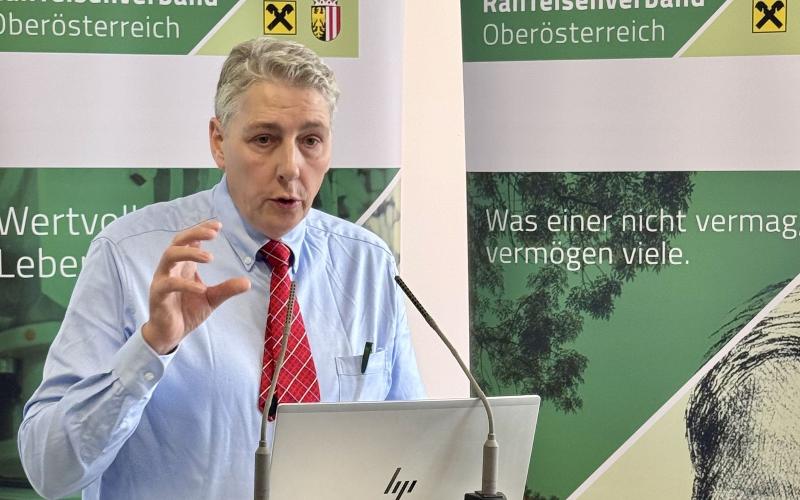
Last week, I had the pleasure of presenting in Linz at the Raiffeisenverband event, where I shared key findings on the current state of the dairy industry in Austria.

1. SUCESSFUL TRANSFORMATION OF 50% OF THE COWS: Austria made a successful transformation fr om very small farms in the year 2000 ( 7 cows / farm on average to now 20 cows/ farm). The leading farm size category today is 30-100 cows/farm which holds 52% of the cows and has grown significantly. In the year 2000 only 8% have of the cows have been in this size category. The growth in this farm size category was the engine of milk production growth the last 10 years of 16%. After Ireland, Poland, Austria has been in the EU among the leading dairy growth countries.
2. CHALLENGES WITH 50% OF THE MILK SUPPLY BASE AND WITH THE NEXT STEPS FOR THE FARMS: There are still ca. 240.000 cows in farms with have on average 15 cows/ farm. In the last 25 years 75% of the farms of this size category gave up and it looks that this trends will continue in the future. A simple trend analysis indicates almost all farm in the size segment 1-30 cows/ farm will give up milk production within the next 10-15 years and with that ca. 44% of milk supply base will be gone.
In the past there was the opportunity to build a new freestall barn and grow in the farm size of 40 – 60 cows. Despite investment support and direct payment programs it looks to me that such a step will be economically more and more difficult. The wages that can be earned on such a new farm are significantly below the wage level in Austria and therefore most young farmers will choose not to go for this step.
My QUESTIONS to the representative of dairy cooperatives in Linz:
a) Do you think that the structural change in Austria will continue?
b) Once you answer a) with yes; do you want to prepare for this?
c) Once you answer b) with yes; who shall take leadership+ built strategies?
My recommendation for Austria as a fascinating dairy region in the EU: Once you want to remain a dairy region with the current milk volume it requires “fitting” future dairy farming systems and "supportive systems". Most important is to find farming models which are economically viable and attractive for the next generation of farmers.
I like to thank Norman Eichinger for the invitation to this great event
Moreover I like to also thank Josef Hambrusch from the Bundesanstalt für Agrarwirtschaft for sharing dairy farm structure data of Austria and IFCN Dairy Research Network for supporting this presentation with key slides.
2. CHALLENGES WITH 50% OF THE MILK SUPPLY BASE AND WITH THE NEXT STEPS FOR THE FARMS: There are still ca. 240.000 cows in farms with have on average 15 cows/ farm. In the last 25 years 75% of the farms of this size category gave up and it looks that this trends will continue in the future. A simple trend analysis indicates almost all farm in the size segment 1-30 cows/ farm will give up milk production within the next 10-15 years and with that ca. 44% of milk supply base will be gone.
In the past there was the opportunity to build a new freestall barn and grow in the farm size of 40 – 60 cows. Despite investment support and direct payment programs it looks to me that such a step will be economically more and more difficult. The wages that can be earned on such a new farm are significantly below the wage level in Austria and therefore most young farmers will choose not to go for this step.
3. MILK SUPPLY IN THE FUTURE ALSO FROM FARMS WITH > 100 COWS/FARM: In all other EU countries the structural change has continued and farmers started to invest in farms > 100 cows and with that compensated for the loss of milk supply from farms with less than 30 cows. It looked to me at if Austria today is a point wh ere Denmark was in the year 1990.
My QUESTIONS to the representative of dairy cooperatives in Linz:
a) Do you think that the structural change in Austria will continue?
b) Once you answer a) with yes; do you want to prepare for this?
c) Once you answer b) with yes; who shall take leadership+ built strategies?
My recommendation for Austria as a fascinating dairy region in the EU: Once you want to remain a dairy region with the current milk volume it requires “fitting” future dairy farming systems and "supportive systems". Most important is to find farming models which are economically viable and attractive for the next generation of farmers.
I like to thank Norman Eichinger for the invitation to this great event
Moreover I like to also thank Josef Hambrusch from the Bundesanstalt für Agrarwirtschaft for sharing dairy farm structure data of Austria and IFCN Dairy Research Network for supporting this presentation with key slides.