Impact of 24-Month Calving Intervals on New Zealand Dairy Farms
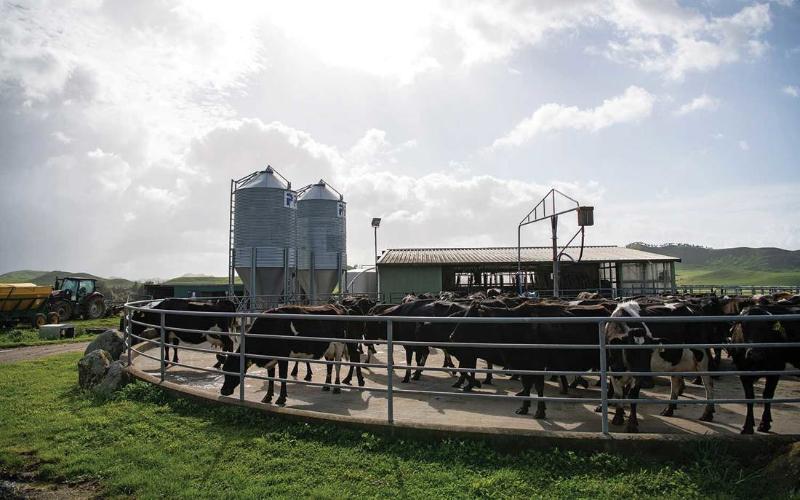
At DairyNZ’s Scott Farm in Hamilton, researchers have been examining the effects of a 24-month calving interval on dairy cows over the past two years. This interval contrasts with the typical 12-month cycle, and the study has recently expanded to include Jersey herds alongside the initial Friesian cattle. The commercial implementation of this system is also underway on a pilot farm.
The trial, initiated through a co-design workshop with farmers and professionals, aims to address labor demand peaks, particularly during spring. Early modeling indicates that a 24-month interval, with half the herd calving each spring, could be the most profitable extended lactation system. However, profitability may vary by region, with predictions suggesting higher gains in Northland, similar outcomes in Waikato, and slightly lower profits in the South Island compared to the traditional 12-month interval.
During the trial, the extended lactation farmlet required additional feed to sustain the herd through winter, initially needing 180kg of dry matter per cow. To mitigate this, the farm increased autumn pasture cover and adjusted calving schedules, yet extra supplements were still required. Despite these challenges, the farm manager reported a significant reduction in stress levels during calving periods.
One potential benefit of the 24-month interval is a reduction in the replacement rate from 22% to 11%, which could help in maintaining a balanced age structure within the herd. Additionally, non-replacement calves have decreased by nearly 60%, simplifying the rearing process for dairy-beef production.
Following promising outcomes from the farmlet trial, commercial farms, such as the one managed by Ben Fisher, Emma Gardiner, and Caleb Higham at Gordonton, are adopting this system. Their herd of 240 cows underwent a transition to the 24-month interval, with mating of only 60% of their crossbred herd in spring 2024 and calving completed by early September 2025. The farm reports a decrease in stress for farm management and a reduction in health and metabolic issues, due to fewer cows calving simultaneously.
Overall, the project is keenly observed by stakeholders interested in its scalability and potential benefits for the dairy industry in terms of labor management and economic sustainability.