Global FoodTech Investment Is Shifting Towards AgTech and Food Science
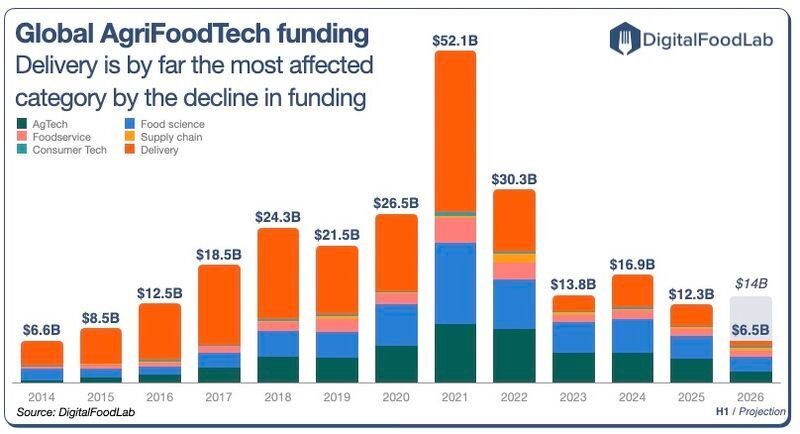
DigitalFoodLab’s Global FoodTech Investment Report 2026 describes a change in the distribution of investment across the food value chain. Funding is increasingly directed towards agricultural productivity, food formulation, ingredient development and health-focused nutrition, while delivery businesses receive a smaller share than in earlier periods.
The wider funding market remains difficult. FoodTech startups raised $12.3bn in 2025, 27% less than in 2024. The report recorded early signs of improvement in 2026, but said that a sustained recovery had not been established by the time of its publication.
Delivery companies once received more than half of global AgriFoodTech investment. Their share fell to 13% in the first six months of 2026. AgTech and Food Science captured 64% between them during the same period, indicating a different distribution of capital across the sector.
Health-focused nutrition is among the areas covered by the report. It includes better-for-you food brands, supplements and related services. The report also identifies interest in healthy ageing and dietary changes associated with GLP-1 medicines. For manufacturers, these developments relate to product design, ingredient choice and formulation. Commercial performance still depends on substantiated benefits, compliance with regulation and continuing consumer demand.
AgTech investment is concentrated on issues including labour shortages, farm productivity, crop performance and the efficient use of resources. Technologies intended to strengthen agricultural resilience may affect businesses across the supply chain. In dairy, developments in this area are relevant to feed availability, forage production, farm costs and the consistency of raw-material supplies. Improvements in feed-production efficiency may therefore be considered by farmers and processors managing operating costs and milk production.
Food science and novel ingredients are also approaching the commercialisation stage highlighted by the report. Product launches, customer uptake and partnerships with industrial companies are identified as factors that can support further investment. Moving from research to market requires manufacturing capacity, product validation, regulatory approvals and dependable supply chains. Partnerships between startups and established manufacturers can provide production infrastructure, technical expertise and customer access. For dairy processors, ingredient suppliers and other food manufacturers, the report points to possible partnerships involving upstream agricultural technologies, new formulations and alternative ingredient sources. The pace of commercial adoption will determine which innovations receive additional funding.