CARB provisionally approves H2B2’s Bar 20 hydrogen project
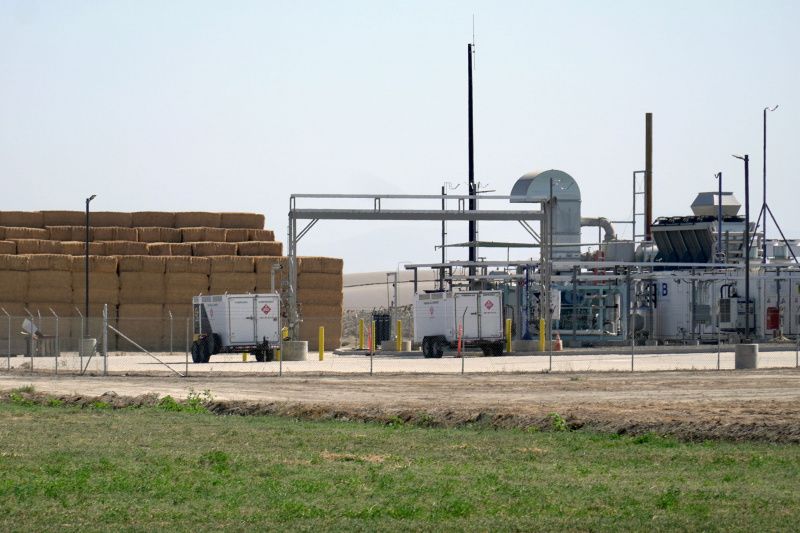
H2B2 Electrolysis Technologies is operating the project beside Bar 20, a dairy farm near Kerman in Fresno County with roughly 13,000 cows. The company captures biogas from covered manure lagoons and uses it to produce hydrogen for delivery by truck to hydrogen-refuelling stations in California. The California Air Resources Board (CARB) approved the project on a provisional basis in July.
Bar 20’s manure is processed in an anaerobic digester that collects methane. The resulting biogas is used to generate electricity through a fuel cell and a reciprocating engine. Some of that electricity powers electrolysis, which separates hydrogen and oxygen from water. CARB spokesperson Lindsay Buckley described the project as “groundbreaking and novel in two ways” because it converts waste into electricity and then biogas into hydrogen.
The project’s carbon-intensity value was set at -1,887.35 grams of CO₂-equivalent per megajoule. Under the LCFS, a lower value produces more valuable credits for the fuel producer. Environmental groups and a university expert said most biogas projects receive values near -250, while wind and solar projects generally receive a value of zero or more. The financial value of the Bar 20 project will also depend on the volume of biogas captured and processed.
Food & Water Watch, the Leadership Counsel for Justice & Accountability and the Animal Legal Defense Fund criticised the rating. Tyler Lobdell of Food & Water Watch called the carbon-intensity values “bogus” and said the approval showed that CARB’s priorities did not include Californians living near large dairies. Christine Ball-Blakely of the Animal Legal Defense Fund said methane deliberately generated by liquid-manure systems “can never become renewable fuel”. Environmental groups argue that methane capture does not resolve nitrogen, phosphorus and ammonia pollution from manure lagoons, which they say affects local water and residents’ health.
CARB said the rating was provisional and could change. Buckley said that considering the carbon-intensity figure alone would not show how many credits the project could generate. She said the figure represented the project’s lifecycle greenhouse-gas emissions per megajoule and that negative values for digester pathways reflected the capture of methane that otherwise would have entered the atmosphere. CARB has also disputed claims that digesters are driving herd expansion. At least 165 digesters operate among more than 1,000 concentrated animal-feeding operations in California.
The hydrogen project has become part of a wider dispute over the LCFS, which was introduced in 2011. The programme requires transportation fuels to reach carbon-intensity levels at least 30% below the fossil-fuel baseline by 2030 and 90% below it from 2045. CARB said in 2024 that the programme had displaced more than 31bn gallons of fossil fuels with lower-carbon alternatives. Environmental groups, including Food & Water Watch and Defensores del Valle Central para el Aire y Agua Limpio, are suing the state, arguing that the standard supports the biogas industry.
Research cited in the dispute has produced differing findings. A Stanford and Johns Hopkins study, published the previous autumn and later updated, found that three years after a planned digester installation, the facilities studied had 1,825 square metres more barn area than matched controls. The researchers estimated that expansion could reduce claimed methane-emissions reductions by as much as 9%. A separate study published in July by another Cal Poly researcher and supported by the US Department of Agriculture said its findings disputed the theory that digesters were causing consolidation.
Kevin Fingerman, an energy and climate professor at California State Polytechnic University, Humboldt, said the hydrogen component was notable but not the first of its kind. He said energy was lost at each conversion: the Bar 20 system turns biogas into electricity and then uses part of that electricity to make hydrogen, so a given quantity of captured methane produces less delivered fuel than in some other biogas projects. A report he wrote in July 2025 identified at least $589m in state and federal funding for California dairy-digester infrastructure since 2014, excluding LCFS and federal Renewable Fuel Standard incentives.
Bar 20 manager Brian Visser said the hydrogen made from the farm’s digester provided “significant air quality benefits for the region and climate benefits consistent with state policy goals”. The farm did not answer questions about its use of LCFS or concerns raised by residents, while H2B2 did not respond to requests for comment. Public records show that a regional water board cited Bar 20 in 2011 over a discharge near a lagoon, noted standing water or leachate near a silage stockpile in 2017 and issued a 2019 notice concerning groundwater monitoring. A 2022 inspection required improved runoff management if a production area remained in use. The farm manager said those matters were addressed without monetary penalties.