US Genetic Market Signals Structural Shifts in Global Dairy and Beef Production — NAAB Report
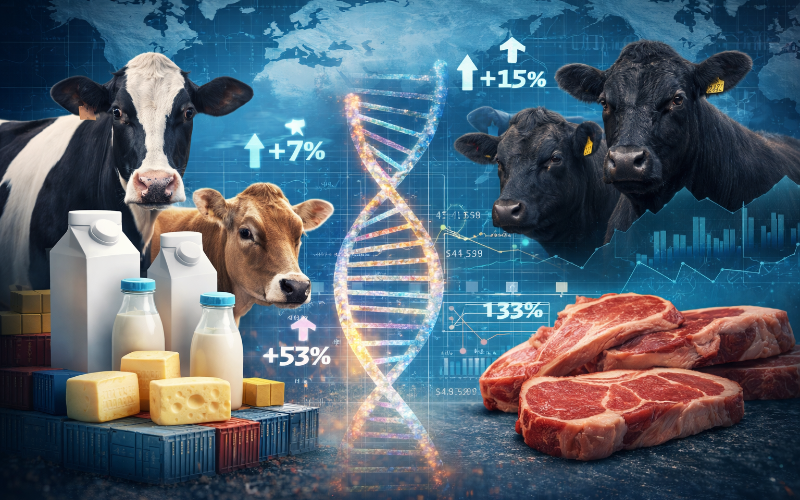
According to NAAB data, U.S. companies sold 66 million doses of bovine semen in 2025, marking a 4% decline year-on-year. The decrease was primarily driven by reduced exports of dairy genetics, largely due to the closure of the Chinese market.
Dairy Segment: Growth Driven by Sexed Semen
Despite the overall decline, the domestic U.S. dairy sector continues to expand. In 2025, dairy farms purchased 24.6 million doses, up 2.5% compared to 2024.
The most notable trend is the rapid adoption of sexed semen:
-
Sales of sexed dairy semen increased by 7%, reaching 10.6 million doses
-
Its share in total dairy insemination rose to 43%
-
Conventional semen usage declined by 5%
At the same time, the use of beef semen in dairy herds (Beef-on-Dairy strategy) showed moderate growth of 2.5%, reaching 8.1 million doses.
According to NAAB analysts, this trend is supported by advances in genomic testing, allowing farmers to better sel ect high-value animals for breeding.
Market Saturation of Beef-on-Dairy Strategy
While Beef-on-Dairy remains a key profitability tool, the report suggests the strategy is reaching its natural limits. The availability of replacement heifers is becoming a constraint, limiting further expansion without compromising herd sustainability.
Breed Structure: Holstein Dominance Continues
Holstein genetics remain dominant in the U.S. dairy sector, accounting for 83.5% of total dairy semen sales in 2025, with 13.8 million doses sold.
Jersey semen ranked second but declined significantly by 12.4%, reflecting shifting farm strategies and economic considerations.
An emerging niche trend is the rapid growth of heterospermic dairy semen (multi-sire blends), which increased sharply fr om just 1,500 doses in 2024 to over 65,000 in 2025, likely linked to aging herd structures and declining fertility.
Beef Segment: Stability with Structural Changes
The beef genetics market remained relatively stable, with total sales reaching 20.2 million doses (+1%).
Key developments include:
-
Decline in domestic beef herd insemination (–4%)
-
Growth in Beef-on-Dairy usage (+2.5%)
-
Strong export growth (+13%)
Angus remains the leading breed, accounting for 47% of the market, although its share is gradually declining due to diversification.
One of the most significant shifts is the rapid rise of crossbreeding:
-
Crossbreed semen sales surged by 153%, becoming the second-largest category
Meanwhile, heterospermic beef semen lost momentum, with sales declining by 15%.
Key Takeaways for Global Markets
The NAAB report highlights several long-term trends shaping the global livestock sector:
-
Sexed semen is becoming the primary driver of dairy herd expansion
-
Beef-on-Dairy strategies are stabilizing after rapid growth
-
Crossbreeding is gaining importance over mixed semen approaches
-
Market transparency and data-driven decision-making are critical for industry efficiency
These trends underline the increasing role of genetics, technology, and strategic herd management in improving productivity and resilience in both dairy and beef sectors worldwide.