Dairy Processing Equipment Market to Reach $17.4 Billion by 2031
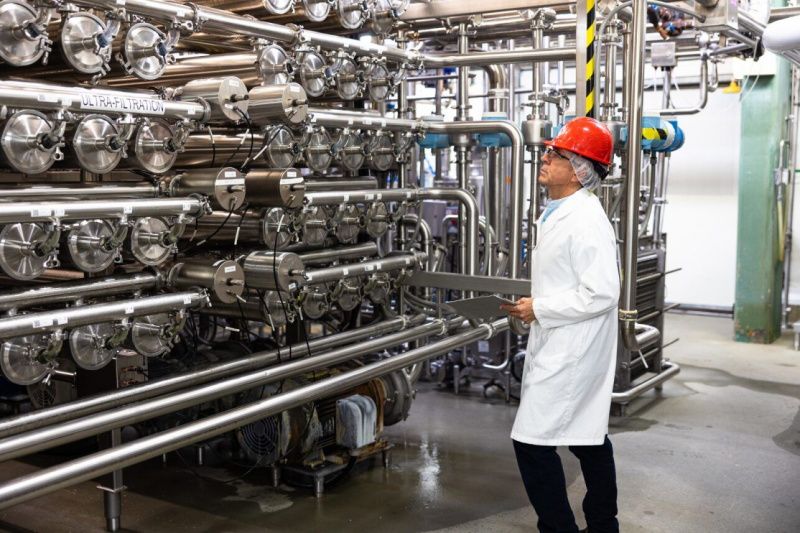
The analysts identify the main driver as rising demand for processed and value-added products — drinking milk, cheese, yogurt, butter, and dairy beverages. Producing them requires systems capable of handling large volumes without compromising product consistency or safety. The core processes remain pasteurization, homogenization, membrane filtration, evaporation, and drying. Automation and digital monitoring give the market an additional boost: they allow processors to improve efficiency, maintain uniform quality, and reduce costs. Separately noted is the growing demand for dairy ingredients — milk powder and protein-based products — which is spurring investment in high-capacity, energy-efficient equipment, above all at export-oriented enterprises. In parallel, organized processing is expanding in developing countries, which is also broadening the use of such equipment.
Evaporators — the Fastest-Growing Segment
Within the equipment-type category, the analysts forecast the highest growth rate for the evaporators segment. Evaporation removes 85–90% of the water from raw milk or whey, concentrating the solids before drying, and effectively sets the throughput of the entire powder production line — that is, it acts as the production "bottleneck."
Demand for evaporation equipment is growing alongside export-oriented output of milk powder and whey products. To reduce energy costs, which account for a notable share of processing expenditure, large enterprises are increasingly investing in multi-effect evaporators (MEE) and thermal and mechanical vapor recompression systems (TVR/MVR). The shift toward continuous and integrated production lines is strengthening demand for industrial-scale automated evaporation systems, while growing output of whey protein concentrates and isolates and of lactose supports the need for the concentration stage. Modern units are designed for stable solids levels, compatibility with clean-in-place (CIP) systems, and minimal downtime.
Milk Powder — a Driver of Equipment Demand
Among applications, strong growth is expected in milk powder production — one of the most equipment-intensive processes, combining pasteurization, homogenization, evaporation, and spray drying. The growth is fed by demand for infant nutrition products, functional dairy ingredients, and products with higher protein content, as well as by exports. Each new powder production facility requires comprehensive integrated lines, which makes this segment one of the key sources of equipment demand.
North America Retains a Substantial Share
A substantial share of the market, according to MarketsandMarkets, is held by North America — owing to its well-developed dairy industry and strong processing infrastructure. The region is home to large producers using automated, high-capacity systems, while SPX FLOW and Paul Mueller are named among the equipment suppliers. Demand for value-added products — cheese and protein ingredients — is raising the need for separators, membrane filtration, and evaporation and drying units. The market is further supported by strict regulatory requirements and a well-developed cold chain.