U.S. Dairy Farms Face Declining Profitability Amid Rising Costs
The latest Farm Journal State of the Dairy Industry Report reveals a concerning decline in profitability expectations for U.S. dairy farms, projecting significant challenges by 2026. The survey, which involved nearly 250 dairy producers with herds of over 100 cows, indicates that only 46% of farmers now anticipate turning a profit in 2026. This marks a steep drop from the 74% who expected profitability just a year earlier.
The decline in profitability outlook is largely attributed to severe cost inflation affecting the dairy supply chain. While milk prices continue to fluctuate, expenses related to feed, fuel, infrastructure, and labor have risen markedly. Farmers reported that costs for basic maintenance investments, such as manure handling systems, have nearly doubled over the past five years. This escalation makes it difficult to maintain operational efficiency and animal care standards.
Financial stress is exacerbated by increasingly restrictive lending conditions. As profitability wanes, access to essential financing has become more limited, hindering efforts to modernize facilities or replace outdated equipment. This situation creates a cycle of reduced productivity, as farms struggle to secure the capital needed for necessary upgrades.
Beyond economic challenges, the report highlights a significant emotional toll on the sector. Many farmers express burnout and uncertainty driven by geopolitical tensions, inflation, and concerns over global trade instability. These factors are significantly impacting farm-level decisions, particularly for those reliant on global dairy demand to sustain milk prices.
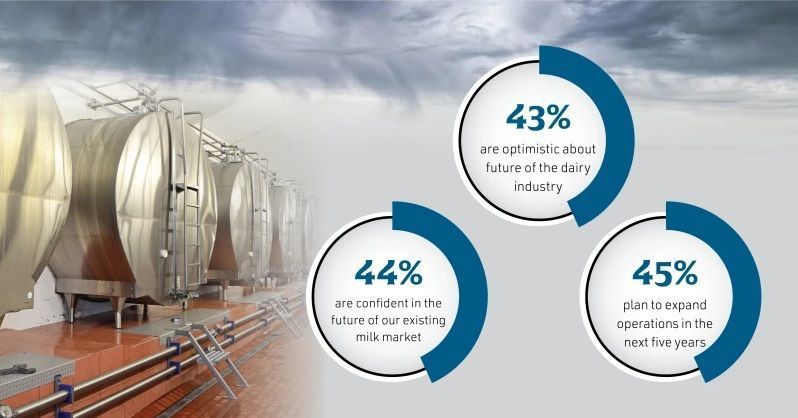
Despite the tough outlook, there is a notable resilience among U.S. dairy producers. Nearly 45% of surveyed farmers plan to expand operations over the next five years, suggesting a belief in long-term demand for dairy products and the industry's adaptability. Analysts interpret this as a shift towards larger, more strategic operations that can leverage efficiency gains and smarter management to survive in a challenging economic landscape.