Kazakhstan and Latvia Discussed Transit of Agricultural Products Through the Baltic Region
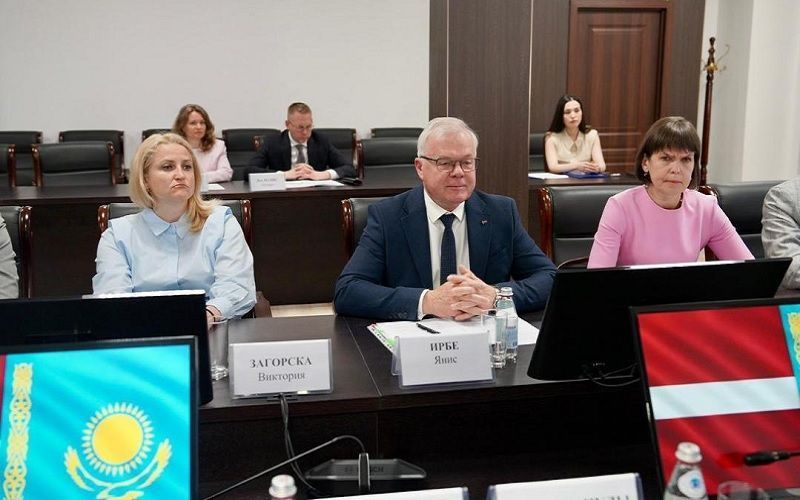
The negotiations took place in Astana between the Vice Minister of Agriculture of the Republic of Kazakhstan, Yermek Kenzhekhanuly, and the Parliamentary Secretary of the Ministry of Climate and Energy of the Republic of Latvia, Janis Irbe.
Special attention was paid by the parties to trade and economic interaction. By the end of 2025, the trade turnover of agro-industrial complex products between Kazakhstan and Latvia amounted to $51.4 million.
Yermek Kenzhekhanuly noted that Kazakhstan considers Latvia as an important and reliable partner in the European Union.
"Your visit reflects the mutual interest of our countries in strengthening the partnership, expanding practical cooperation, and developing direct dialogue between relevant government bodies, scientific and educational institutions, as well as the business communities of the two countries," emphasized the Vice Minister.
The Kazakh side presented the country's potential as one of the major grain producers. The sown areas of agricultural crops in Kazakhstan amount to almost 24 million hectares, a significant part of which is occupied by grain crops.
At the same time, Kazakhstan is developing the export of processed products, including flour, compound feeds, pasta, and deep processing products. The Ministry of Agriculture of the Republic of Kazakhstan noted that Kazakhstan ranks 10th in the world in grain exports, 2nd in flour exports, and 8th in sunflower oil exports.
The transit of Kazakh plant products through the Baltic region was discussed separately. In 2025, the total volume of shipments through Latvian ports amounted to 750 thousand tons, and since the beginning of 2026, it has already reached 250 thousand tons.
The parties also considered prospects for cooperation in agricultural science and education. In particular, interaction between the Kazakh National Agrarian Research University and the Latvian University of Life Sciences and Technologies was noted. Within the framework of cooperation, academic mobility programs, scientific internships, and joint research projects are being implemented.
Kazakhstan expressed interest in developing joint research projects, preparing applications for Erasmus+ programs, expanding academic mobility, and launching dual degree programs for master's and doctoral students.
A separate block of negotiations was devoted to veterinary and phytosanitary control issues. As a result of the meeting, Kazakhstan and Latvia signed a Memorandum of Understanding on cooperation in the field of plant quarantine.
The parties believe that the document will enhance direct interaction between the relevant services of the two countries, improve plant quarantine and protection systems, and expand mutual trade in agricultural products.
Additionally, the potential for cooperation is planned to be discussed at the Kazakhstan-Latvia business forum in Astana.
Photo: Press Service of the Ministry of Agriculture of the Republic of Kazakhstan