Joe Lyall wins Young Farmer of the Year 2026
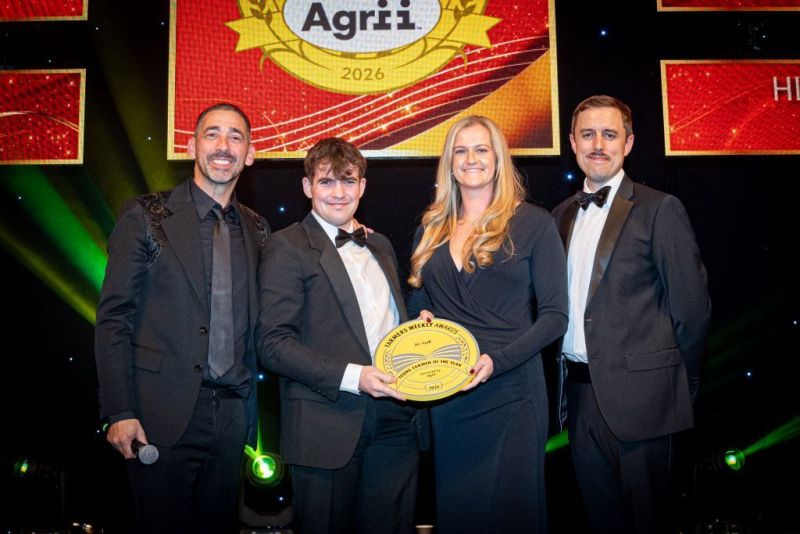
Lyall received the award at a ceremony held last Thursday at London’s Grosvenor House Hotel. The Farmers Weekly Awards recognised farmers and agricultural professionals from across the United Kingdom, with about 1,000 people attending, according to Lyall.
The judging panel consisted of Charles Mayson, chairman of agricultural adviser CXCS; Luke Brignall, vice-chair of the National Federation of Young Farmers’ Clubs council; and Farmers Weekly writer Debbie James. The judges said Lyall had a strong grasp of both the opportunities and difficulties associated with milk production, and had approached them by seeking new ways to increase the value generated by the herd and the farm’s land.
Before graduating from university, Lyall had negotiated the strongest available milk price for his family’s business. The arrangement increased farm income by about £30,000 a year. He credited his father, whom he described as an exceptional stockman, for helping to achieve the result and said his own ambition was to develop comparable knowledge of the cows.
The family’s system places animal welfare and nutrition at its centre. Lyall identified an opportunity to obtain a financial return from those practices through the farm’s milk contract with Aldi, by becoming an aligned supplier. In July, the business also joined Arla’s Welfare Pro scheme, which offers additional price bonuses. It installed cameras in the calving sheds and humidity sensors in the main cubicle housing.
Lyall said that a modern farm required a team because no individual could retain all the necessary information. The judges also noted the constraints at High Oaks Farm, where a railway line divides the grazing platform. The herd therefore operates in two groups, which are moved around separate sets of fields. Lyall’s next stated aim is to increase the share of milk produced from forage despite that arrangement.
Environmental land management is another part of the farm’s work. A mid-tier Countryside Stewardship agreement supports some of the measures, while a partnership with United Utilities has involved catchment nitrogen balancing. The farm has also built infrastructure to divert dirty water, covered yards and fenced watercourses to keep cattle away.
Lyall said he wanted to take on more responsibility and continue farming in a way that was sustainable for both the environment and the business. He said neither he nor his father wanted to expand to a herd of 1,000 cows. Instead, they were considering ways to spread costs through improvements in youngstock health and performance and by reducing the age at first calving.