Italian Insights Drive Strategic Shift in Brazilian Cheese Sector
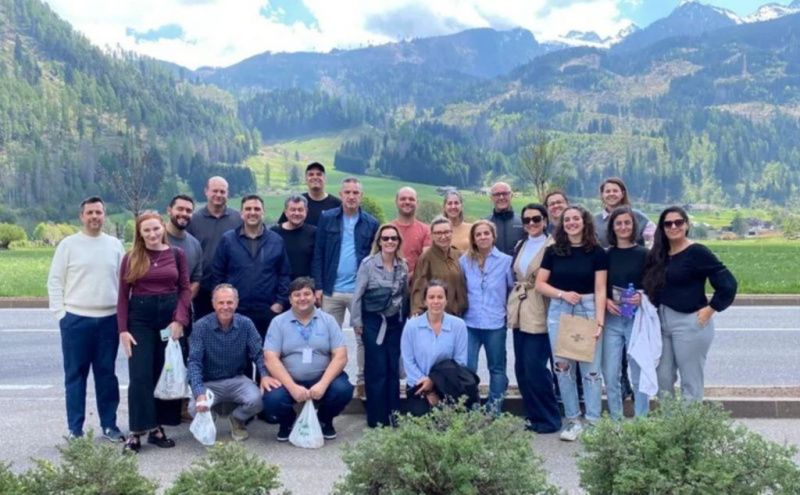
During a recent mission to Italy, Brazilian representatives from the cheese industry, including Sérgio Lorenzon of Laticínios Beija-Flor, observed the Italian emphasis on product quality and market preservation over mere volume increase. This observation has spurred Brazilian producers to enhance the value of 'queijo colonial' from the Serra Gaúcha region through the implementation of a Geographic Indication (GI).
The formal establishment of a consortium for Serra Gaúcha's 'queijo colonial' is anticipated at the upcoming Expointer in Esteio. Emater has indicated that at least 25 legal cheese producers from the region could become part of this consortium. The process requires technical alignment among producers, including the creation of a manual outlining criteria for regional identification, which will cover production specifics, sanitary standards, territory, and sensory analysis.
Alexander Cenci, a researcher with the Secretary of Agriculture, Livestock and Rural Development, noted that universities, extension agents, and researchers are collaborating to gather the necessary information. Discussions also extend to raw material quality, with producer Daniel Chichelero emphasizing the importance of milk quality and animal feeding conditions.
Participants in the mission visited Italian cooperatives and dairies, including the Consorzio Parmigiano Reggiano DOP and Consorzio Asiago, which are well-established in handling protected designation origin products. These visits reinforced the understanding that territorial value enhancement relies on collective coordination, clear rules, and continuous reputation building.
The challenge for Serra Gaúcha's 'queijo colonial' lies in converting regional identity into an organized model for value capture. The initiative aims to leverage both cultural recognition and market differentiation as strategic tools.