Irish Dairy Farmers Say Grass Sets Their Exports Apart
Managing pasture
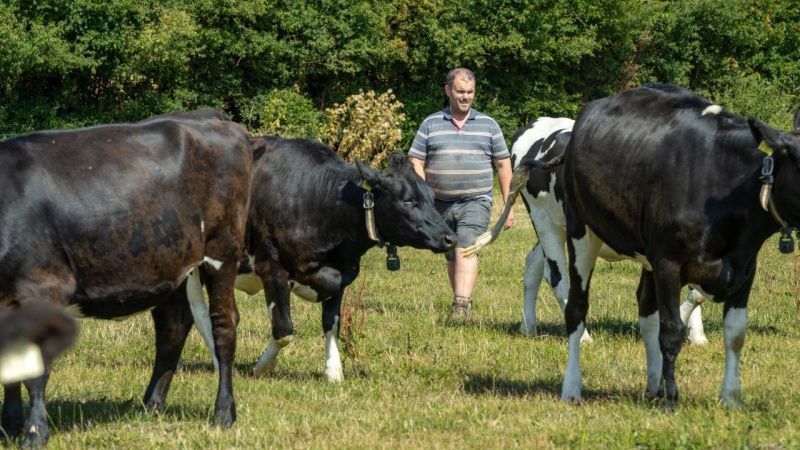
David Hally farms near Clonmel in County Tipperary and supplies Dairygold. His 35-hectare platform carries about 2.6 cows per hectare. The farm produced 530kg of milk solids per cow last year, and Hally aimed to exceed that figure in the year covered by the interview.
Grass measurement is a central part of his management system. During the main growing period, he checks the pasture roughly every five days. The farm undergoes soil testing every two years, while about 10-12% of its area is reseeded annually. Hally aims for pre-grazing covers of approximately 1,200-1,400kg of dry matter per hectare. Surplus grass is removed quickly for baling and later returned to the grazing programme after regrowth. The normal rotation lasts 21-23 days.
White clover has become part of the reseeding approach. Hally uses a mixture containing 4kg of clover seed and 10kg of perennial ryegrass per acre. He said he wanted to produce a greater share of the farm’s grass through clover and rely less on nitrogen.
Drought pressure
The summer’s dry conditions placed particular pressure on the farm’s free-draining soils. Hally said growth had suffered from insufficient moisture since the middle of June. The interview took place in early August. As pasture output slowed, the herd spent more time indoors to receive adequate nutrition. He said the cows were not going outside for substantial feeding, but instead obtained what they needed indoors before going out to lie down.
Hally described the conditions as an additional cost for the business. He said the farm needed enough flexibility to manage such difficulties. He also linked pasture-based production to the position of Irish dairy products in overseas markets, saying that grass-fed production distinguished Irish dairy farmers from producers elsewhere and from the wider world market.
Verification of grass-fed claims
David Kennedy, Bord Bia’s head of dairy, said the organisation works with Irish dairy exporters to help return value to farmers through international markets. He said global customers required strong, independent evidence for the claims made about Irish dairy production.
The Sustainable Dairy Assurance Scheme provides the basis for this process. Every Irish dairy farm is visited at least once in an 18-month period, and the assurance procedure includes the preparation of a carbon footprint. According to Kennedy, the process gives overseas customers independently verified data supporting Ireland’s sustainability claims.
Bord Bia has also worked with the dairy industry on a grass-fed standard. Under that framework, milk used in an ingredient or product must come from cows whose diet consisted of 90-95% grass and which grazed outdoors for most of the year. The series on Irish dairy’s grass-fed credentials was produced jointly by Agriland and Bord Bia.