Innovative Technologies Enhance Cheese Production Efficiency
The dairy industry is undergoing a transformation with the adoption of new technologies aimed at improving the efficiency of cheese production. Among these innovations is the use of microbial transglutaminase (mTG), an enzyme acting as a 'molecular glue' that binds whey proteins with casein micelles. This process results in a more robust protein network capable of retaining more water, fat, and solids, which can enhance cheese yield by over 15% in certain types such as Mozzarella.
Another emerging technology is the use of phospholipase A1 to improve fat emulsification within the curd, minimizing losses during cutting and whey expulsion. Furthermore, ultrafiltration (UF) is changing the economic dynamics of cheese plants by concentrating proteins and fat before coagulation, which increases the density of solids and can boost yield by 10% to 20% depending on the cheese type and concentration level applied.
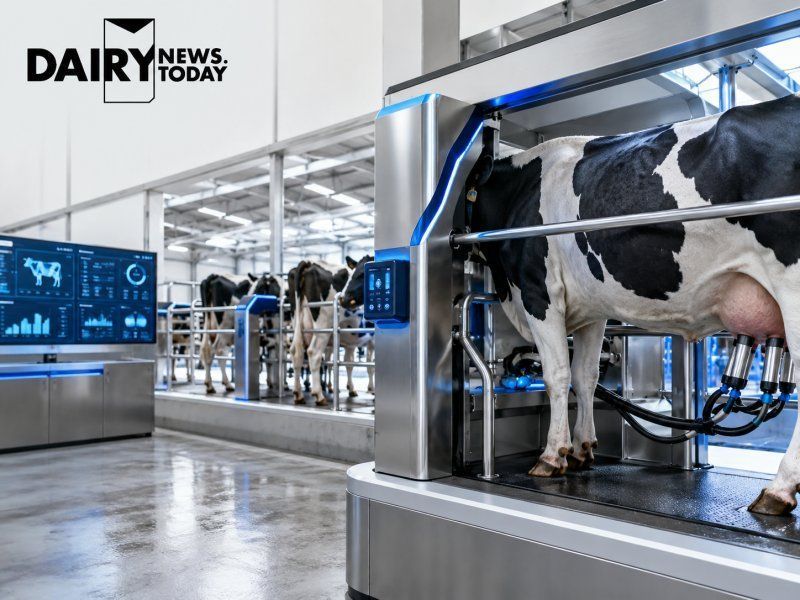
In addition to these methods, real-time process control has become a strategic tool to prevent invisible losses that directly impact profitability. Sensors monitoring curd firmness in real-time enable the precise timing of cuts to prevent protein and fat loss to whey. Industrial experiences suggest that minor adjustments in cutting time can boost plant productivity by over 5%.
Artificial intelligence and digital twins are increasingly used to integrate data on pH, temperature, culture activity, and curd behavior, optimizing production processes automatically. These technologies aim to reduce waste, improve uniformity, and enhance efficiency without increasing structural costs.
The rationale behind these technological advancements is to produce more cheese from the same amount of milk, directly improving profit margins in an industry where raw material costs are significant. Furthermore, better utilization of solids reduces the organic load in whey and lowers effluent treatment costs.
As a result, the cheese industry is entering a new phase where competitiveness depends not just on the volume processed, but on the ability to extract more value from each liter of milk through molecular precision, automation, and applied science.