Industrial Livestock Waste Poses Major Threat to Food Safety
The Environmental Working Group (EWG) has released a report highlighting the risks posed by industrial livestock waste to global food safety. The report identifies a persistent issue of contamination affecting the food supply, with federal investigators monitoring between 17 and 36 foodborne illness outbreaks weekly. These outbreaks involve both raw produce and processed foods, pointing to systemic vulnerabilities in waste management by large-scale animal farms.
Volume of Waste
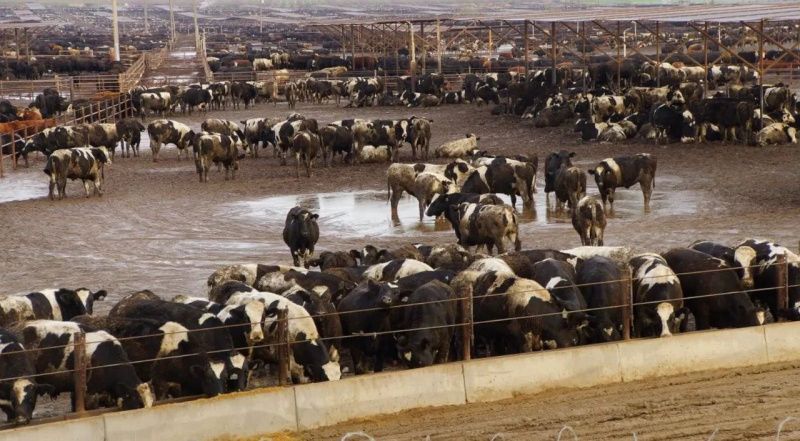
According to EWG's analysis, the quantity of manure produced by concentrated animal feeding operations (CAFOs) is a severe biosecurity threat. A notable example is Iowa, where the waste from these facilities is estimated to be 70 times greater than that produced by the state's human population. This waste contains harmful substances such as heavy metals, hormones, pathogens, and antibiotics, along with bacteria like E. coli and salmonella.
Contamination Pathways
Two main pathways for contamination have been identified: direct surface runoff or airborne drift into irrigation canals, and dust carrying bacteria settling on crops. These methods allow bacteria to reach consumer crops, even when standard safety measures are applied. An example of the risk was the 2018 E. coli outbreak linked to romaine lettuce in Yuma County, Arizona, which was traced back to contaminated irrigation water near a cattle feedlot.
Regulatory Challenges
The report also highlights regulatory challenges, noting that while the FDA updated agricultural water safety standards in 2024, they fall short of a comprehensive mandate. Current regulations require basic risk assessments but not systematic water testing, leaving farmers to manage the biosecurity risks associated with industrial livestock waste independently.
Proximity Issues
Geographical analyses from the EWG show that many large livestock farms in California are located close to water sources designated for crop irrigation. This proximity exacerbates the risk of contamination, with some facilities being as close as 35 feet to irrigation canals.