India's Dairy Production Dominates Yet Struggles in Global Trade
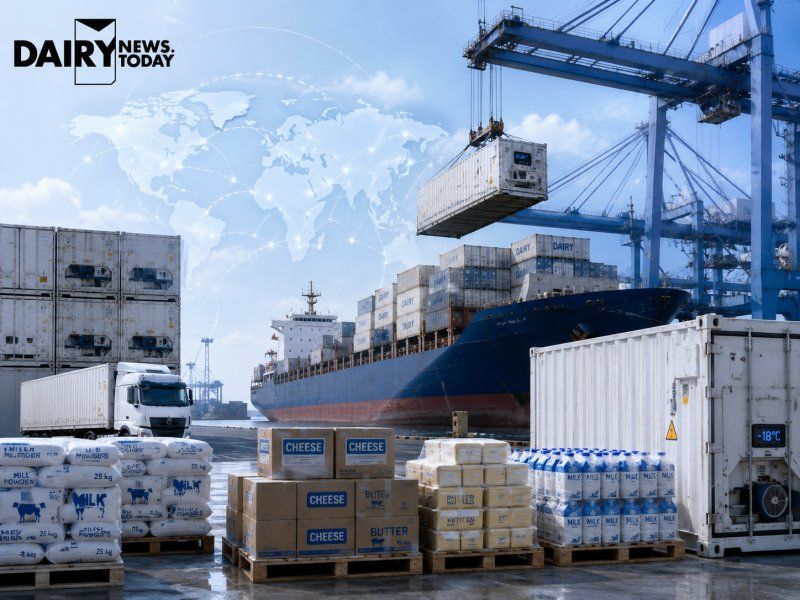
India, the world's largest milk producer, generates approximately 230 million tons of milk annually, which represents about 25% of the global milk supply. However, the country contributes less than 1% to global dairy exports. This discrepancy is largely attributed to the domestic-focused structure of India's dairy industry.
The Cooperative Model
India's dairy landscape was significantly shaped by the launch of 'Operation Flood' in 1970, which transformed the nation from a milk-deficient state to a self-sufficient dairy powerhouse. The initiative, led by Dr. Verghese Kurien, implemented a Three-Tier Cooperative Model consisting of village-level primary societies, district-level unions, and state-level federations. This model was designed as a socio-economic safety net rather than a profit-driven export system, supporting around 80 million rural families.
Challenges in Quality and Infrastructure
Several structural issues hinder India's dairy export potential. The productivity of Indian cows is significantly lower compared to international standards, with foreign systems producing up to 10 times more milk per cow. Moreover, quality control remains a critical challenge; Indian milk often faces rejection in international markets due to high bacteria counts and contamination issues.
Another barrier is the mismatch in milk source and product type. The global dairy market primarily revolves around cow's milk, whereas India produces a blend of cow and buffalo milk. International markets are skeptical of buffalo milk, creating a barrier to entry. Additionally, while global trade favors high-margin processed products like cheese and infant formula, India predominantly sells milk in raw or liquid form and focuses on traditional items such as ghee and butter.
Infrastructure Limitations
India's dairy infrastructure also suffers from inefficiencies. The country loses about 3% of its total milk production each year due to inadequate cold storage and a fragmented export network, amounting to 6.3 million tons of wasted milk annually.
In contrast, New Zealand's Fonterra has developed a highly efficient export strategy, utilizing high-tech processing and strategic market placement, which India has yet to adopt.