ICAR: India Must Reduce Food Losses During Storage and Processing to 5% by 2047
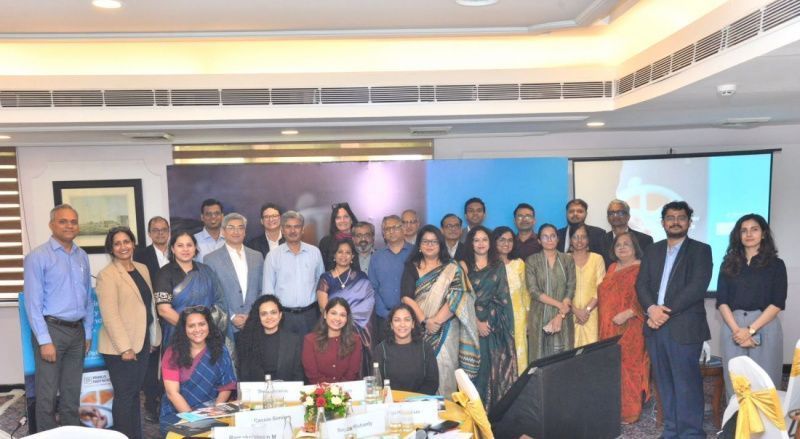
The statement was made during the “Strengthening Food Security for a Growing India” industry workshop, organised in Delhi by Tetra Pak in collaboration with the International Council for Circular Economy (ICCE) and consulting firm Primus Partners.
The event brought together representatives of government agencies, the food industry, academic and research institutions, and international organisations, including NIFTEM, ICAR, TERI, UNIDO, Nestlé, PepsiCo, BASF, IFPRI and the Good Food Institute.
According to Dr. Singh, the growth in food production demonstrates the resilience of India’s agricultural sector. The next step should be to reduce product losses during storage, processing and transportation, while also improving water- and nutrient-use efficiency and advancing mechanisation.
Siraj Hussain, former Secretary of India’s Ministry of Food Processing Industries and Ministry of Agriculture and Farmers’ Welfare, noted that the country’s food security depends on more than simply increasing production. Technologies for food storage, processing and preservation, as well as more efficient supply chains, should play a significant role.
One of the central topics of the discussion was the development of the so-called “critical middle” of the food value chain. This includes the collection and aggregation of agricultural raw materials, processing, packaging, storage, logistics and distribution of finished products.
Participants highlighted the need to expand processing and packaging infrastructure capable of extending product shelf life and reducing losses between producers and consumers. For the dairy industry, the condition of this part of the value chain is particularly important because of the limited shelf life of raw milk and finished dairy products, dependence on an uninterrupted cold chain and the need to process raw materials quickly.
Other priorities included improving farmers’ access to technologies and markets, digitalising supply chains and applying circular-economy principles in the food industry.
Participants also pointed to a lack of detailed data on food losses and food waste across individual regions and stages of the supply chain. More accurate statistics are needed to identify problem areas, select appropriate support measures and assess the results of their implementation.
The workshop also included a proposal to establish specific and measurable national targets for reducing food loss and waste and to consider incorporating them into India’s nationally determined contributions under its climate policy.
During the event, the National Institute of Food Technology Entrepreneurship and Management (NIFTEM) and Tetra Pak presented a study on greenhouse gas emissions associated with food loss and waste in India. The authors view reducing such losses as both a tool for strengthening food security and a means of lowering the climate impact of the food system.