EU cheese project develops environmental assessment tools for PDO producers
Established in 2017, LIFE The Tough Get Going (TTGG) examined cheese-making in France and Italy to identify supply-chain efficiencies and ways to lower products’ environmental impact. Its name refers to the hard and semi-hard varieties covered by the project. Participants included universities, start-ups, manufacturers, public institutions and research organisations. Their objectives included improving production efficiency, sharing findings across Europe and supporting more sustainable production and consumption. Software was used to create a Life Cycle Inventory database, making Product Environmental Footprint calculations simpler, and an Environmental Decision Support System. Producers of hard and semi-hard EU PDO cheeses using cows’ milk can use the latter to calculate their products’ footprint and assess environmental reductions.
The work sits alongside the EU’s ambition to achieve carbon neutrality by 2050. The bloc identifies environmental degradation and climate change as threats to sustainable food systems, food security and farmers’ livelihoods. Its Strategic Dialogue on agriculture’s future emphasises making sustainability accessible and inclusive, with initiatives covering the supply chain through to food left uneaten. LIFE TTGG also supports the global “Zero Waste, More Taste” campaign, launched in 2015 to raise awareness of waste’s environmental cost. That campaign promotes conserving resources through responsible production and consumption, reuse and recovery of products, packaging and materials, without incineration or releases into soil, water or the atmosphere.
Protected Designation of Origin (PDO) and Protected Geographical Indication (PGI) schemes cover hundreds of EU cheeses. Beyond safeguarding regional traditions, the schemes are presented as supporting livelihoods, landscapes and native livestock breeds. France ranks second among EU dairy producers and has numerous protected dairy designations. CNAOL, the French National Committee for Dairy Designations of Origin, regards PDO status as a means of maintaining the vitality of producing areas, as well as preserving distinctive flavours and established practices. According to the EU-funded article, 46 French PDO cheeses signed up to the country’s sustainable dairy plan in March 2002.
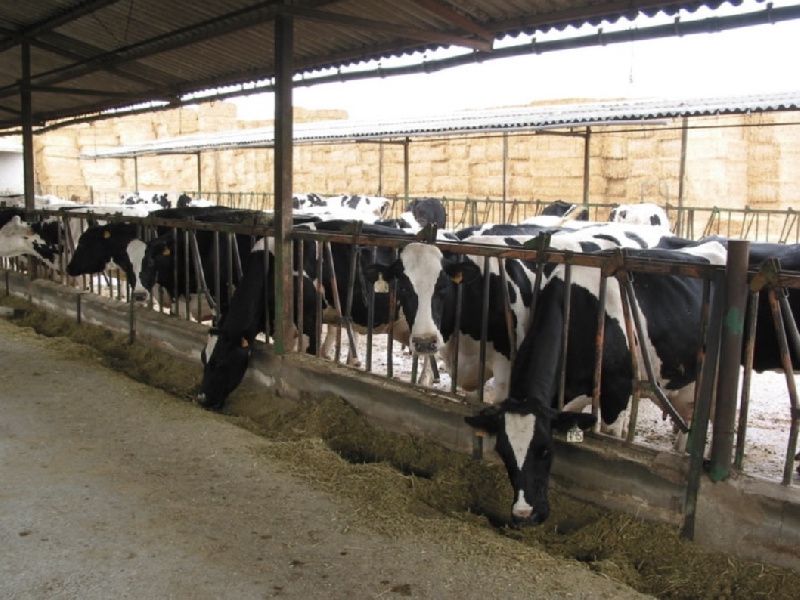
Grazing requirements appear in the specifications of 85% of PDOs, allowing animals to spend time outside and feed on pasture. The sustainability commitments described in the article also cover hedges, rotational grazing and permanent grassland as measures to maintain biodiversity. Keeping small populations of local breeds within their home territories is another component. To conserve local resources, PDO producers require feed suppliers to use regional or local inputs without genetically modified organisms. These requirements connect the rules governing protected products with farming practices and the sourcing of animal feed.
Germany’s Allgäuer Bergkäse PDO provides another example. The article describes production of the cheese, also called Hornkäse, as helping preserve the world’s remaining 600 German horned cows. The mountain cattle belong to a biodynamic cooperative, eat only hay from its own farms and remain with their calves. Under the PDO specifications, the cheese has to be made by hand using raw milk from cows fed without silage. It must then mature for at least four months. The article links these production methods to the preservation of livestock and German Alpine cheese-making heritage.
Alongside the environmental initiatives, the article describes growing interest in artisanal and continental cheeses. It cites the view that pressures following the pandemic and the cost-of-living crisis have encouraged consumers to eat out less and buy affordable treats for home consumption. Established craft and authenticity are associated with increased sales of less familiar varieties, including Chaource PDO, Morbier PDO and Ossau-Iraty PDO. The breadth of Europe’s cheese-making history includes Italy’s Conciato Romano, described in the article as possibly the world’s oldest cheese, with origins dating to the Roman Empire.
Patrick McGuigan, a cheese writer, educator and adviser to the EU’s “More Than Only Food & Drink” campaign, attributes strong supermarket sales to ranges refreshed with higher-quality and more artisanal products. He also highlights prepared cheeseboards containing small portions of European PDO cheeses, each identified by a flag. Medal-winning selections combine comparatively familiar varieties, such as Bleu d’Auvergne PDO and Saint Nectaire PDO, with Maroilles PDO and Tomme de Brebis, which appear less often in British supermarkets. The article describes these selections as accessibly priced and well received by discerning shoppers. British cheese-makers are looking to introduce their own ready-made artisan assortments following the success of the European selections.