GDT milk-powder prices rise as butter falls 6.5%
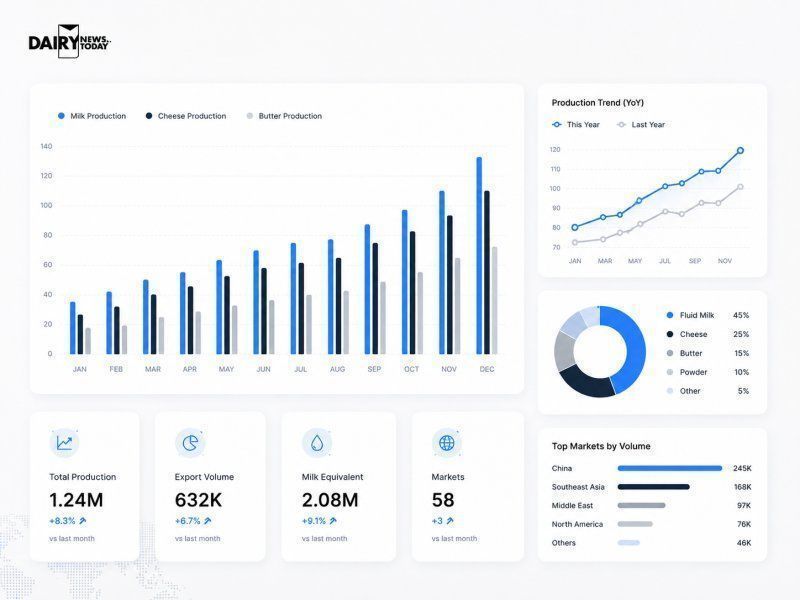
Skimmed-milk powder reached about US$4,187 per metric tonne, its highest level in four years. Whole-milk powder traded slightly above US$4,000 per tonne, an 18-month high. NZX dairy analyst Rosalind Crickett described a continuing split in international dairy markets, with protein prices strengthening while milk fats weakened.
Fonterra raised its projected farmgate payment last month to a range of $9–$10.50 per kilogram of milk solids, setting the midpoint at $9.75. Improving demand for both whole- and skimmed-milk powders was the main reason for the revision.
Higgins, a senior dairy analyst at RaboResearch, said her team had been forecasting approximately $10 per kilogram of milk solids two months earlier. Futures trading was already incorporating some expectation of a higher payout, she told Dairy News. She welcomed the price gains for New Zealand farmers but cautioned that their benefit remained on paper. Farm profitability also depended on margins, she said, with elevated input costs difficult for producers to control.
Crickett said the strongest powder-price gains occurred in the third and fourth contract periods, covering deliveries in February and March. That timing coincides with buyers replenishing stocks after the Chinese Lunar New Year. She also pointed to continuing market concerns about Southern Hemisphere milk availability during that delivery window.
Those concerns centre on a period when the drying effects associated with El Niño typically emerge, according to Crickett. New Zealand’s milk supply has nevertheless held up, with recent North Island rainfall easing earlier concerns about the weather pattern.
At Fonterra’s annual general meeting this month, chief executive Richard Allen said the co-operative had handled record collections during the seasonal peak. He also told shareholders that sales were already substantially covered by contracts for this point in the year.
Allen said Fonterra was prepared to respond to challenges through the remainder of the season. He identified geopolitical developments and weather among the sources of uncertainty and assured shareholders that the co-operative’s teams worldwide would continue adapting to changing conditions.