Kazakhstan's Agricultural Exports Increase to $7 Billion by 2025
According to him, one of the key drivers of the agricultural sector's development is the processing of agricultural products.
"Our strategic goal is not only to increase the production of agricultural raw materials but also to ensure its processing, including deep processing within the country, creating high-added-value products. Processing, in particular, forms new production chains, creates jobs in the regions, increases export potential, and ensures sustainable growth of the agricultural economy. In this regard, the Head of State has set a goal to raise the share of processed products to 70%," Taszhurekov noted.
Increase in Agricultural Production and Diversification of Crops
By the end of 2025, Kazakhstan's gross agricultural output increased by 5.9% to 9.8 trillion tenge, with growth seen in both crop production and livestock.
The country harvested 25.9 million tons of grain in clean weight, including 19.3 million tons of wheat. Oilseed crops reached a record 4.8 million tons, and leguminous crops exceeded 1 million tons.
Simultaneously, crop diversification continued. The area under wheat decreased by nearly 900,000 hectares, while areas under leguminous crops increased by 275,000 hectares and oilseeds by more than 1 million hectares.
According to the ministry's assessment, such a transformation in the agricultural production structure contributes to forming a more sustainable agricultural model and expands the raw material base for the processing industry.
Accelerated Growth of Processing
In light of the increase in agricultural production volumes, the processing sector is actively developing. In 2025, Kazakhstan's food production amounted to 3.9 trillion tenge, which is 8.1% higher than the 2024 figure.
Growth was noted across most product types. Production of canned meat increased by 43%, cereal products by 28.7%, and processed and canned vegetables and fruits by 27%. The output of butter rose by 24.8%, vegetable oil by 17.4%, and pasta products by 12.5%.
Flour production reached 3.6 million tons. Cheese and cottage cheese output increased by 13%, and dairy products by more than 8%.
The main processing directions in the agricultural complex remain the grain, oil and fat, meat, and dairy industries.
Development of Oil and Fat and Grain Processing Industries
About 90 enterprises in Kazakhstan engage in processing oilseeds with a combined capacity of over 5 million tons. By the end of 2025, vegetable oil production reached 888.8 thousand tons, increasing by 17.4% compared to the previous year.
Annually, over 5 million tons of grain are processed. The deep processing of grain is also developing in the country: three enterprises with a capacity of over 500 thousand tons produce starch, gluten, molasses, and bioethanol.
In 2025, 29 thousand tons of corn starch, 28 thousand tons of wheat starch, 13 thousand tons of gluten, 82 thousand tons of molasses, and 21 thousand tons of bioethanol were produced.
Meat and Milk Processing Capacities
There are 210 enterprises in the country's meat processing industry with a combined capacity of about 450 thousand tons. About 180 enterprises operate in the dairy industry, with a total capacity of approximately 2.7 million tons.
One of the most promising directions is the deep processing of grain, with plans to launch new productions totaling 5.8 million tons per year by 2028. Investments in these projects are estimated at around 1.9 trillion tenge, with over 3,300 jobs created.
The new enterprises will produce high-added-value products, including amino acids, syrups, vitamins, and other biotechnological products.
Processed Product Exports Grow
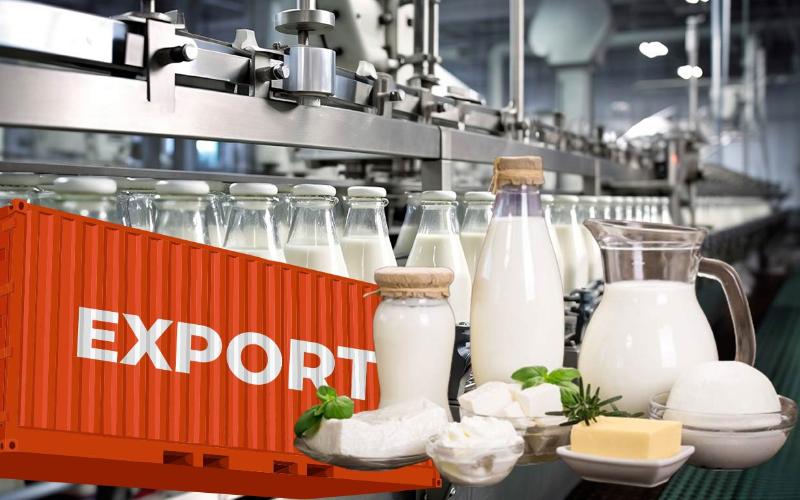
The increase in processing is directly reflected in foreign trade. By the end of 2025, exports of processed agricultural products amounted to $3.6 billion, which is 35% more than the previous year.
Overall, Kazakhstan's agricultural complex exports reached $7 billion.
New Investments and State Support Measures
In the coming years, several investment projects are planned. In the oilseeds processing segment, 13 projects worth a total of 94 billion tenge are expected to launch. In the deep grain processing sector, six projects are planned with a total of about 1.9 trillion tenge.
In the dairy sector, 12 projects worth 41 billion tenge are planned, providing additional milk processing capacities of 165 thousand tons.
The development of the processing industry is supported by the state. Enterprises have access to preferential loans at a rate of 2.5% for acquiring fixed assets and 5% for replenishing working capital. If there is insufficient collateral, a guarantee mechanism of up to 85% of the loan amount is in place through the Damu Fund.
Additionally, investment subsidy measures have been expanded. While the base compensation level is 25%, for a number of priority areas it has been increased to 40% — for sugar production and egg processing — and up to 50% for high-tech production.
According to current data, if in 2024 the share of processed products for key raw materials was about 50%, in 2025 it reached approximately 60%.
"In the coming years, the main focus will be on the development of deep processing, expansion of production capacities, increase in output of high-added-value products, and strengthening Kazakhstan's export positions in global markets. This will allow us to achieve the strategic goal of raising the share of processed products to 70%," noted Yerbol Taszhurekov.