Automation in Dairy Farming: A Family's $5 Million Investment
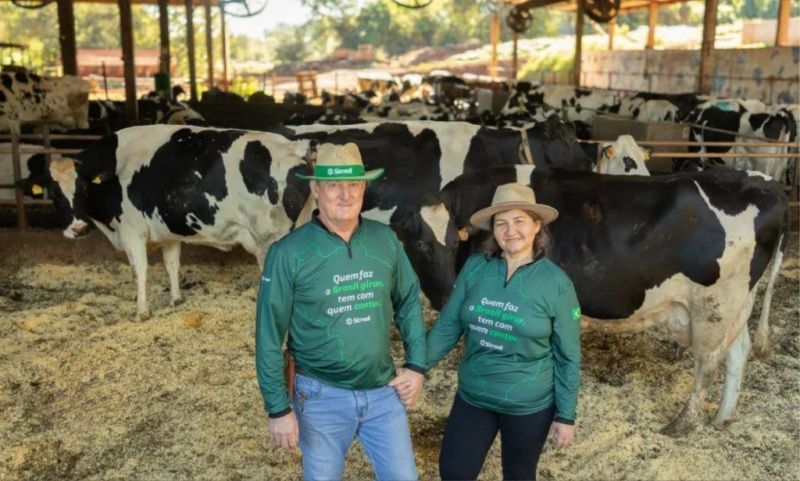
The Risse family in Brazil, associated with Sicredi Progresso PR/SP since 1998, has revolutionized their dairy farm with a $5 million investment in robotic milking technology. Initially, the family managed their farm using manual milking, but faced challenges that led them to consider ending their dairy production.
The turning point occurred when Jaqueline and Odair, the next generation, became involved in the farm's decision-making process. They sought alternatives to reduce the laborious routine and maintain the family's interest in farming. After visiting a sector fair in Castro, PR, and evaluating the investment's feasibility for around nine years, they decided to implement robotic milking technology.
The farm installed two robots, which now perform milking tasks automatically 24 hours a day. Cows voluntarily access the system, which records individual data on production, feeding, rumination, and health. This technology has significantly impacted the farm's productivity, increasing the average production by 10 liters per cow per day, reaching approximately 40 liters daily per animal.
Currently, the farm produces about 150,000 liters of milk monthly, averaging 5,000 liters daily. The impact of automation extended beyond productivity, improving the quality of life for Marlize Risse, who previously faced health issues due to the repetitive nature of manual milking tasks.
Financing for the project was facilitated by Sicredi, marking a unique operation in the region since robotic milking was a novel technology locally. The investment expanded the farm's infrastructure, including new confinement spaces, adjustments to barns, and milking rooms.
Today, Jaqueline and Odair are involved in the management and operations of the farm, while the next generation, including their granddaughter Stephany, begins to show interest in the family business. Arno Risse emphasizes that the legacy will continue with the new generation.
The Risse family's journey exemplifies how strategic planning, access to credit, and technological adoption can transform a potential end into an opportunity for future generations.