Anuga Select India 2026 brought 1,100 exhibitors to Mumbai
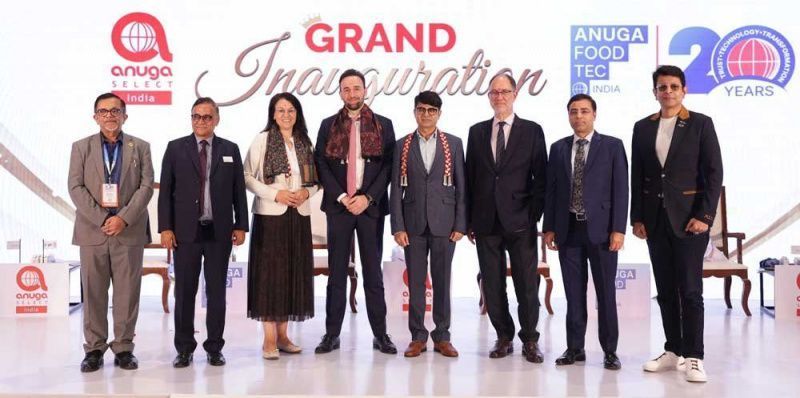
Koelnmesse organised the 19th edition of Anuga Select India alongside the 20th edition of Anuga FoodTec India. The co-located events brought together food manufacturers, suppliers, exporters, importers, retailers, food-service companies and technology providers. Exhibitors and visitors examined commercial opportunities across the food and beverage value chain.
Anuga Select India covered agricultural products, dairy, beverages, fine foods, organic goods, confectionery and snacks, as well as food-service products. Anuga FoodTec India focused on equipment and systems for processing, packaging, automation, digitalisation, intralogistics and supply-chain management.
India’s Ministry of Food Processing Industries supported the event, while the European Union served as its Official Partner Region. National participation included Germany, China, Brazil, Thailand, South Korea, Belgium, Japan, Italy, Spain, Indonesia, Vietnam and Sri Lanka. Companies used the fairs to examine sourcing arrangements, distribution partnerships and technologies related to production, quality control and logistics.
Devesh Deval, Joint Secretary at the Ministry of Food Processing Industries, described India’s food market as being worth between $550bn and $600bn, with annual compound growth of 6-7%. He said food processing was linked to agricultural value addition, investment and employment. India is the world’s largest milk producer and the second-largest producer of fruits and vegetables. Dairy, cereals, meat, fruit and vegetables were identified as important processing segments, alongside fisheries, marine products, animal husbandry and plant-based foods.
Mr Deval also referred to a proposed Centre of Excellence on pea protein at NIFTEM in Kundli. The centre is being developed with Canadian partners and is intended to work on pea-protein extracts and isolates. The project reflects interest in alternative protein ingredients and food products marketed as healthier.
Speakers from Germany, the Netherlands and the European Union highlighted international cooperation, food safety, sustainable technologies and supply-chain resilience. Martina Englhardt-Kopf, Parliamentary State Secretary at Germany’s Federal Ministry of Agriculture, Food and Regional Identity, said the India-EU Free Trade Agreement could improve market access and trade cooperation. Remarks at the event indicated that the agreement was expected to be signed before the end of 2026 and take effect around the middle of 2027. Germany participated through its federal ministry and 12 companies.
Silvio Erkens, representing the Netherlands, pointed to work on food safety, food-loss and waste reduction, agricultural innovation and more resilient food systems. Tarun Bajaj, a senior consultant at the Agricultural and Processed Food Products Export Development Authority, said India’s agricultural and processed-food exports reached $53bn in the 2025-26 financial year. Rice, meat, marine products, coffee and tea were among the leading categories. Processed, value-added products represented almost 30% of the total, while APEDA has set an objective of doubling exports within five years.
Milind Dixit, Koelnmesse’s managing director for India and the SAARC region, put the value of India’s food-processing industry at about $382bn in fiscal 2025 and said it was projected to reach nearly $689bn by fiscal 2034. Organisations attending the exhibitions included APEDA, the Spice Board of India, the Coffee Board of India, the Coconut Development Board, the National Turmeric Board, the Forum of Indian Food Importers and the Plant Based Food Industry Association.