Alpura and FrieslandCampina agree nationwide distribution of El Gallo Azul cheese
The partnership was presented at Hacienda San Antonio Hool in Dzityá, north of Mérida, Yucatán. Those leading the event included Sumeet Mathur, FrieslandCampina's managing director; Juliano Jorge, the Dutch cooperative's country manager for Mexico; and Alfredo Gandarillas, director of New Business at Productos Alpura. The arrangement brings together the Netherlands-based dairy cooperative and the Mexican livestock and dairy-processing company to distribute a brand with more than a century of use in Yucatecan cuisine.
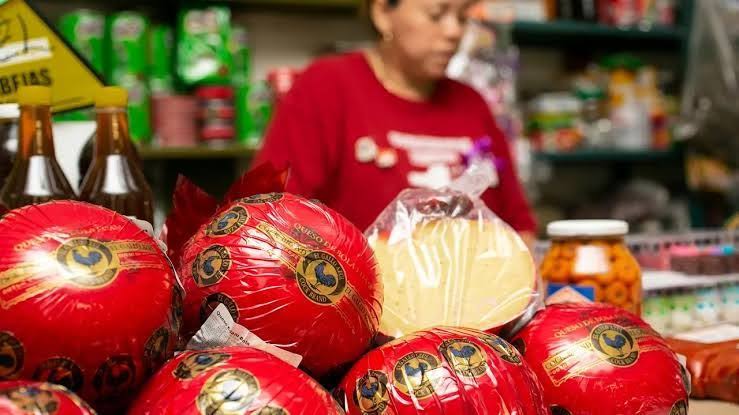
The planned distribution expansion covers both south-eastern Mexico and the rest of the country. Alongside wider retail availability, the agreement provides for stronger specialised supplies to restaurants, bakeries, cake-makers and pastry businesses that use the cheese as an ingredient. El Gallo Azul is an Edam-style product made entirely from cows' milk. The partnership's stated purpose includes giving consumers and food-service operators access to the authentic product with certified traceability.
The report describes the agreement against a retail backdrop in which genuine cows' milk cheeses are sold alongside imitation products in grocery shops, small general stores and supermarkets. It says some substitutes contain imported caseinates, dried whey, modified starches and hydrogenated palm fats, and are offered at lower prices in packaging that reproduces the traditional spherical shape. The report identifies NOM-223-SCFI/SAGARPA-2018 and NOM-155-SCFI-2012 as relevant Mexican standards, and says these substitutes lack the nutritional characteristics and minimum protein contribution required of the genuine dairy products.
The article also sets out the production controls associated with preserving Edam's sensory characteristics, semi-hard texture and melting properties. It describes microbiological control from milking through maturation, with udder health central to milk quality on Dutch cooperative farms and the farms supplying Alpura in Mexico. The procedures outlined include forestripping and antiseptic teat preparation before milking to prevent environmental mastitis and protect milk quality, including somatic-cell counts and casein integrity.
After milking, the report says, raw milk should enter rapid-cooling tanks at 4°C to stabilise its titratable acidity before collection. At certified cheese plants, it describes continuous pasteurisation above 72°C, or an equivalent heat treatment, followed by enzyme coagulation, pressing and brining. A protective red paraffin coating is subsequently applied. These steps form part of the production and refrigerated-distribution controls described in the article for maintaining product safety and stability.
Farm production costs provide another element of the report's account of the alliance. It puts cattle feed at more than 70% of current operating costs per litre of milk on Mexico's commercial dairy farms and family livestock holdings. The feed components cited are maize silage, alfalfa hay and commercial protein concentrates. The report links more efficient logistics and increased sales of higher-value dairy products by farmer-owned companies such as Alpura and FrieslandCampina with their financial capacity to maintain remunerative farm-gate prices.
On market supervision, the report identifies Mexico's Secretaría de Agricultura y Desarrollo Rural (SADER), Secretaría de Economía and consumer-protection agency Profeco as the authorities concerned with labelling and product authenticity at points of sale. It describes enforcement against imitation products using the appearance or designation of queso de bola without meeting NOM-223 as a regulatory priority, alongside support for the formal dairy industry's distribution infrastructure.