Aavin proposes ₹5-per-litre milk price increase in Tamil Nadu
The Tamil Nadu Co-operative Milk Producers’ Federation Limited, which operates as Aavin, submitted the proposal amid higher operating costs and pressure on retailers’ earnings. Processing, packaging, refrigeration and transport expenses feature among the costs behind the request. The submission follows an ₹8-per-litre increase introduced by the Karnataka Milk Federation (KMF) for its Nandini brand in neighbouring Karnataka.
The proposed allocation to Aavin and its district unions would help cover processing, cooling and freight expenditure. The retail allocation would increase booth operators’ earnings from their current commission of 75 paise for each 500ml packet. According to Aavin executives, low commissions, higher business electricity charges and increasing urban rents have prompted many recently opened franchise outlets in Chennai and surrounding districts to close within a few months.
Aavin buys about 3.5 million litres of raw milk each day through village-level dairy cooperative societies. Daily sales of liquid milk in metropolitan Chennai alone exceed 1.5 million litres. Its packaged milk sells below the prices charged by private dairies, whose products retail at ₹75–80 a litre or more across Tamil Nadu.
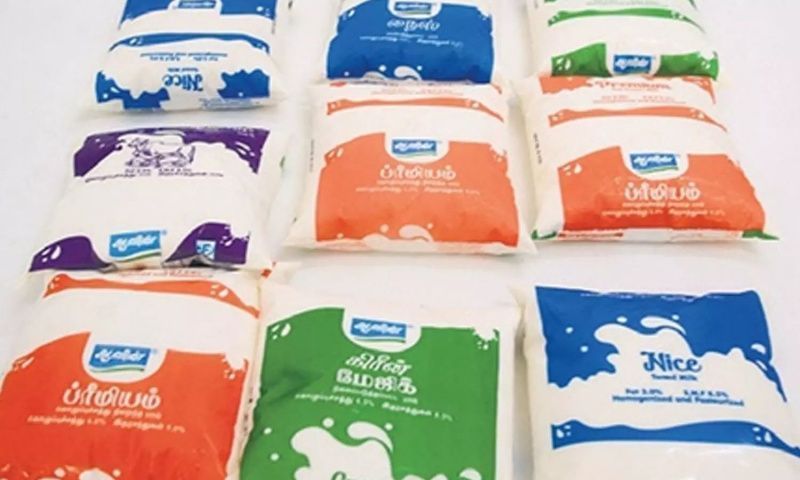
Within Aavin’s range, an orange 500ml pack of full-cream milk with 6% fat costs ₹30, equivalent to ₹60 a litre. Green packs of standardised milk containing 4.5% fat cost ₹24 per 500ml, as do purple packs, putting both at ₹48 a litre. Blue packs contain toned milk with 3% fat and cost ₹20 for 500ml, or ₹40 a litre.
The article attributes purchases of retail packs by commercial customers to the gap between cooperative and private-brand prices. Hotels, restaurants, caterers, tea shops and traditional sweet-makers buy milk from neighbourhood Aavin outlets to reduce ingredient costs. These purchases leave some counters without stock during busy morning trading, affecting household buyers and milk-card holders. Bringing retail prices closer to prevailing market levels is intended to discourage commercial stockpiling and maintain supplies for households.
State officials said earlier increases in procurement prices had helped dairy farmers facing expensive cattle feed and fodder. Consumer prices had not risen correspondingly, leaving the federation’s operating margins under pressure. The proposal is intended to improve processing-plant finances, support franchise retailers and stabilise distribution as Tamil Nadu enters 2027, subject to cabinet approval.