US Dairy Farmers Add High-Oleic Soybeans to Cow Feed
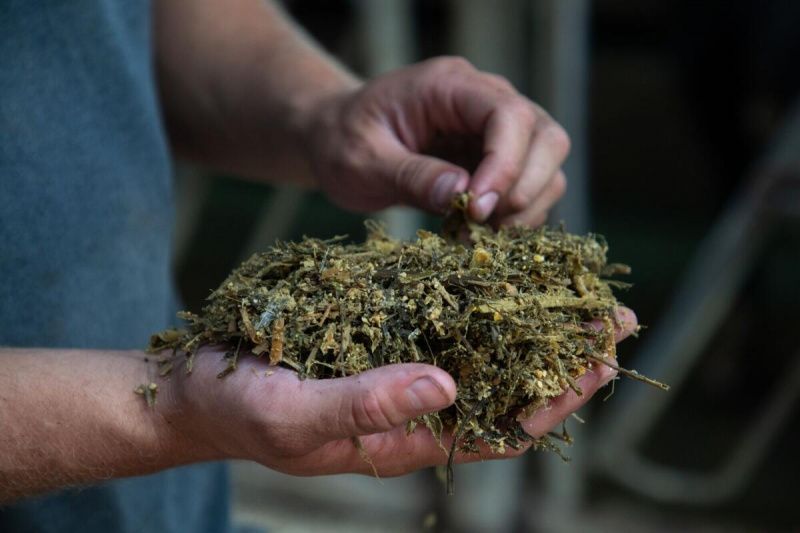
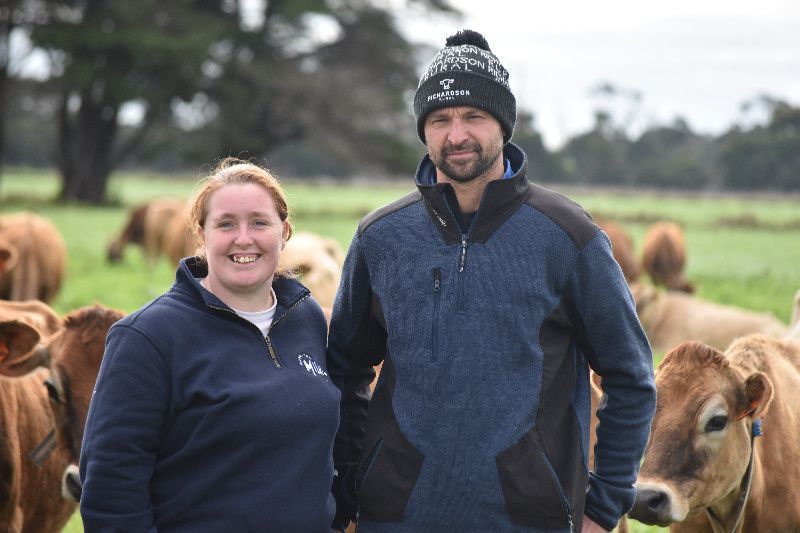
High-oleic soybeans are becoming a specialised feed ingredient for dairy farms in the US Midwest and Northeast. At Perkins Twin Creek Farm in Wolcottville, Indiana, the family feeds 450 Holstein cows a ration made with soybeans grown near the dairy, roasted whole and ground on the farm. Farmer Mitch Perkins said the herd now produces richer milk and spends “more time with their head in the bowl”.
Unlike standard commodity soybeans, which are usually transported to large crushing plants, the beans used at Perkins are processed close to the cattle. Conventional soybeans generally contain about 22% oleic acid, while high-oleic varieties contain at least 70%. Their meal retains more monounsaturated fat, reducing the need for additional fat sources in livestock rations. Perkins said his dairy’s feed costs have fallen by about 30% since the change.
Other farms have reported similar changes in feed economics and milk composition. In southern Michigan, fourth-generation farmer Brian Preston grows roughly one-third of the high-oleic soybeans fed to his family’s herd of about 1,000 cows. After the farm adopted the beans, its daily feed expense declined by approximately 70 cents per cow. Butterfat in the milk increased from 4.4% to 4.8%, raising the milk’s value. The farm roasts the soybeans with electrical equipment installed beside its feed centre.
Growers seek a domestic market
High-oleic soybeans normally sell for about $1 a bushel more than conventional supplies. That premium has become relevant while soybean prices remain below their historical peak of nearly $18 a bushel. During much of 2026, Chicago Board of Trade prices for the commodity ranged between $11 and $12 a bushel.
The United Soybean Board said dairy has overtaken hogs as the second-largest feed-use category for soybeans, behind poultry. The shift comes as US exports face uncertainty in trade with China, the largest importer and home to the world’s biggest hog herd. China typically purchases about two-thirds of global soybean exports. “We still need China,” said Don Wyss, an Indiana grower and board member. The board, financed through a mandatory charge on farmers’ sales, has invested about $100m in high-oleic soybean research.
The variety was first promoted mainly for human food. High-oleic oil is used for frying at some Indiana sports venues and in Nestlé’s non-dairy coffee creamers. It competes with sunflower, palm and corn oils, while demand for soybeans as a biofuel input can vary with crude-oil prices. Darren Moody, the United Soybean Board’s senior director of market development, said the principal use of high-oleic soybeans has now shifted to animal feed.
Processing capacity expands
Only about 1m of the more than 85m soybean acres planted nationwide are expected to be high-oleic this season, according to an industry group. The group estimates that the area could reach 5m to 7m acres within ten years. Corteva said demand is beginning to spread to dairy operations in the Northwest. Roger Theisen, the company’s marketing manager for specialty crops, described the segment as a new domestic outlet that can provide farmers with additional revenue or margin.
Demand has also changed the business of local soybean roasters. Steven Zimmerman, who runs Miller’s Grain Roasting in Indiana, said the rise of high-oleic beans had greatly increased demand for his service. His Roast-A-Matic can process 800 bushels an hour and operates near Perkins’s corn fields and cattle barns. In New York, grower and roaster Todd Du Mond has replaced commodity soybeans on his 6,500-acre farm with high-oleic varieties. He said the premium was a major reason he removed conventional soybeans from his crop rotation; about 90% of those conventional supplies are genetically modified.