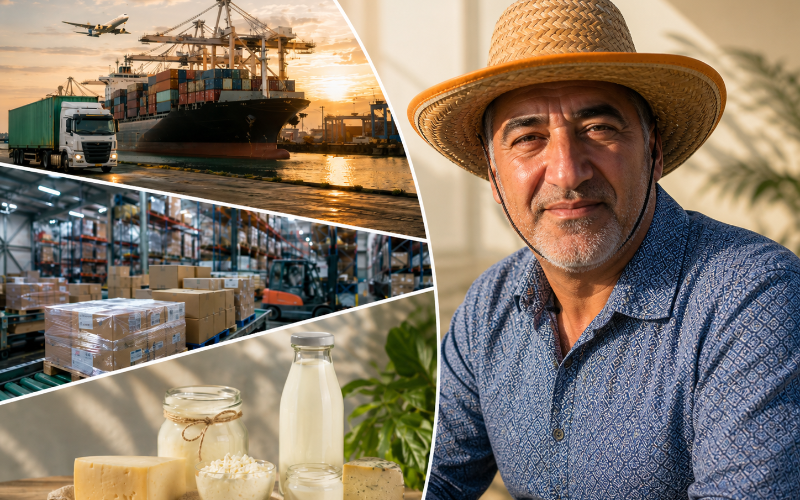
Trade with Iran Becomes a Risk Factor for Kazakhstan's Exports to the USA
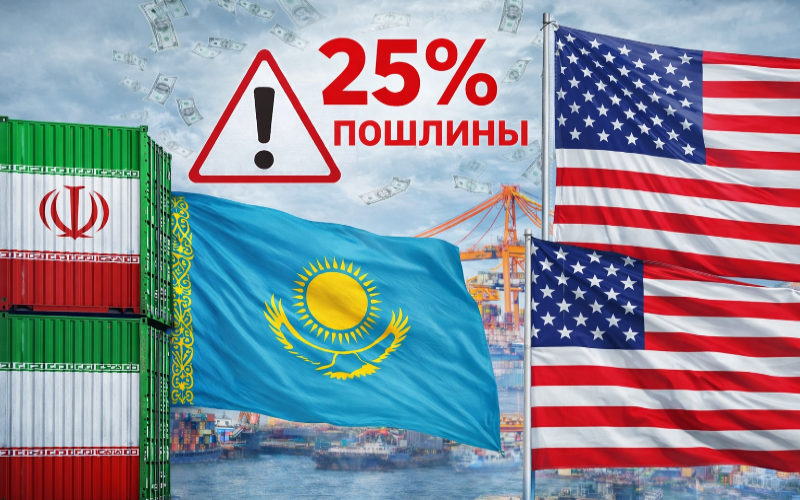
The initiative is seen as a return to the logic of secondary sanctions, where economic pressure is applied not only on Iran but also on its trading partners. For Kazakhstan, this signal becomes sensitive against the backdrop of discussions about expanding economic ties with Iran, including the development of trade and transit routes, according to the Telegram channel Tradereport.Kz.
Trade with Iran Increases Amid Changes in Supply Structure
Against this backdrop, trade between Kazakhstan and Iran is showing growth. According to lsm.kz, the volume of mutual trade increased by 33.6% to $396.1 million for the period from January to November 2025.
The growth is mainly driven by exports from Kazakhstan, which more than doubled to 1.1 million tons worth $224.4 million. Notably, barley supplies increased to 1 million tons (a 2.4-fold increase), cotton fiber to 5.1 thousand tons (an 11-fold increase), and lentils to 2.3 thousand tons (a 14.7-fold increase). Additionally, Kazakhstan resumed wheat exports at 56.7 thousand tons, whereas there were no deliveries in 2024.
Conversely, imports of goods from Iran decreased: over 11 months, Kazakhstan imported 376.4 thousand tons (-20%) worth $171.7 million (-12.4%). Purchases of polymers decreased by 2.3 times to 19.6 thousand tons, and fresh and dried fruits by 27.7% to 49.6 thousand tons.
Meanwhile, the import structure shows growth in specific food products. Notably, imports of milk and cream increased by 3.8 times to 6.2 thousand tons, butter by 1.9 times to 3.2 thousand tons, and cheese by 25% to 3.6 thousand tons. Imports of fresh vegetables also increased by 1.9 times to 24.3 thousand tons.
Exports to the USA Have Already Declined, and New Tariffs Could Intensify the Pressure
The situation is complicated by the fact that Kazakhstani exports to the USA have already significantly decreased in 2025. From January to November, the volume of shipments fell by 2.4 times to 723.9 thousand tons, and in monetary terms by 2.1 times to $880.8 million.
The most noticeable reduction was in oil exports: the USA reduced purchases of Kazakhstani crude by 2.6 times. While 1.6 million tons were supplied from January to November 2024, in 2025 it was only 643.7 thousand tons.
Supplies also decreased (according to lsm.kz):
-
uranium by 1.7 times to 1.4 thousand tons;
-
phosphorus by 32.2% to 2.8 thousand tons;
-
silver by 30.7% to 155.4 tons;
-
ferroalloys by 16.5% to 64.6 thousand tons.
If the USA imposes an additional 25% tariff on goods from countries trading with Iran, the current volumes of Kazakhstan's exports to the United States may come under additional pressure.
Businesses May Face an "Invisible Barrier" Through Banks and Logistics
Moreover, risks for Kazakhstan may manifest not only through direct tariffs but also through indirect restrictions. Even in the absence of formal prohibitions, banks, insurance companies, and logistics operators typically start tightening compliance checks and avoiding operations related to Iran. This increases transaction costs and reduces the predictability of trade chains.
Additional sensitivity arises for infrastructure projects related to transit through Iran and access to Persian Gulf ports. For Kazakhstan, such routes are important as alternative logistics corridors. However, under increased pressure from the USA, any initiatives on terminals, logistics centers, and transshipment capacities may become politically risky.
Official Position: Parameters of Measures Are Still Unknown
Kazakhstan's Ministry of Trade commented on Donald Trump's statement, noting that the ministry is closely monitoring the situation. It is noted that the details of possible measures and the parameters of their application are still unknown, which is why the ministry is evaluating various scenarios for developments.
Between Economy and Geopolitics
Overall, the situation presents Kazakhstan with a contradictory juncture. On the one hand, Iran remains an economically attractive destination as a market and transit route. On the other hand, potential US restrictions increase geopolitical risks and make the Iranian direction more toxic for international financial and logistics partners.
Against this backdrop, the most likely scenario becomes a more cautious model of behavior by businesses and the state: strengthening compliance, conducting transactions through authorized channels, and focusing on more transparent and sustainable interaction schemes to minimize sanctions and tariff risks.