Ten Romita Producers Complete Dairy Processing Training
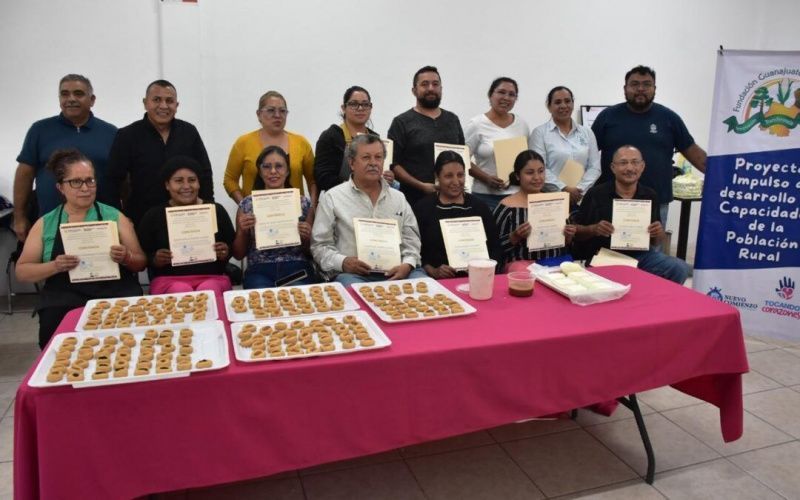
Ten producers and entrepreneurs from Romita, in Guanajuato, completed a specialised course on converting cow’s milk into dairy products. The programme comprised 40 teaching hours over five practical sessions and was endorsed by Mexico’s General Directorate of Technological Agricultural Education and Marine Sciences.
The curriculum covered the preparation of panela cheese, fresh cheese, whipped yoghurt, traditional cajeta, dulce de leche and chongos zamoranos. Participants also studied methods for calculating production costs, standardising recipes and measuring output from each litre of milk processed.
The training was conducted in a dairy-producing area of the Bajío where many family farms and mixed-purpose cattle holdings operate. Small farms commonly milk between five and 20 cows. According to the source, a shortage of rapid-cooling tanks at farm level can leave producers needing to process or sell milk quickly to prevent bacterial acidification.
During the sessions, participants practised good manufacturing procedures, slow pasteurisation in vats and enzymatic coagulation. Instruction also covered hygienic handling of rennet, mechanical whey removal and uniform pressing. These techniques were presented as measures for controlling food safety, shelf life and the concentration of solids and protein in artisanal cheeses.
The course addressed the sale of fresh milk as well as the local market for processed dairy products. In regional retail channels, cheeses made entirely from whole milk compete with industrial substitutes containing vegetable fats, modified starches and dehydrated whey. Traditional products such as cajeta and concentrated milk sweets were described in the source as generating gross margins more than 40% higher than sales of unpasteurised raw material.
Guanajuato’s family dairy farms also face higher costs for feed inputs, maize silage and mineral supplements. Direct sales of raw milk to intermediaries are often made at prices that provide limited coverage of operating costs, according to the article. The training therefore included operational costing so that participants could set prices using the actual expenses associated with production, including veterinary medicines and energy.
The programme’s official accreditation may allow participants to seek support for basic equipment, stainless-steel utensils and productive loans from rural-development agencies. The course was organised as a technical training initiative for local producers and entrepreneurs, with the stated aim of enabling them to make higher-value dairy products from milk produced in the municipality.