Surprising pay-off from a $6m robotic dairy gamble
Source: Dairy Australia
A $6 million robotic rotary dairy in southwest Victoria is the only one of its kind in the southern hemisphere – and it’s delivering a return on investment years ahead of schedule.
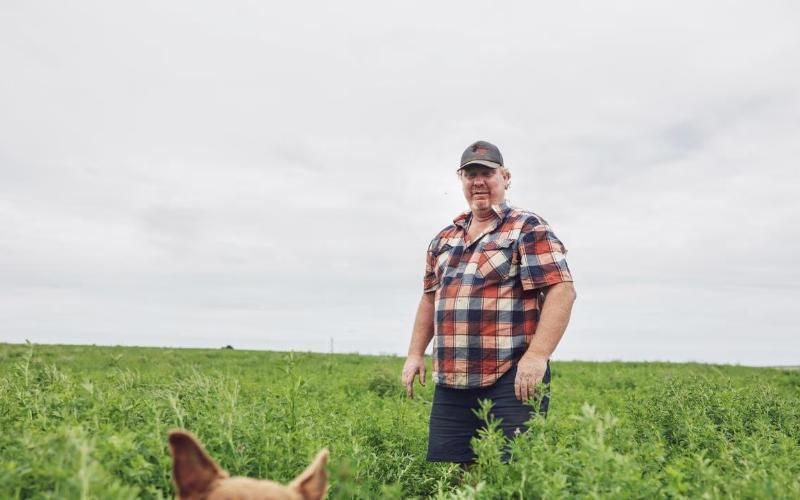
Paul Smith installed 40 robots on a rotary platform at his Mepunga East property three years ago, replacing a 25-year-old 50-unit rotary that had reached the end of its life. The GEA DairyProQ system milks 800 cows and can operate as a one-person show. Paul is rarely required in the dairy anymore, spending his time on other farm work instead.
“It’s changed my life so much, it is one of the best things I’ve ever done.” The system cost $2m more than building a conventional rotary, but labour savings and tax depreciation benefits have delivered returns far exceeding expectations.
“We thought the return on investment would be about 15 years,” Paul said. “In reality it will be about five years.” The system differs from box robots, which wouldn’t have suited Paul’s L-shaped property and farm layout. With one robot per stall, his new set-up maintains conventional milking capacity at 250 cows per hour.
The dairy can now operate with just one person but when first commissioned in October 2022, it wasn’t quite up to scratch. The system required extra hands to keep it running smoothly and Paul wasn’t satisfied.
He spent 21⁄2 years working with German engineers to modify the programming for true autonomous operation. “It will now milk by itself while we are getting the cows in,” he said. “When we get back to the dairy we just babysit it, which involves watching Kayo Sport on TV and having cups of coffee.”
Paul has reduced full-time staff by two and continues pushing boundaries with the technology.
“It’s changed my life so much, it is one of the best things I’ve ever done.” The system cost $2m more than building a conventional rotary, but labour savings and tax depreciation benefits have delivered returns far exceeding expectations.
“We thought the return on investment would be about 15 years,” Paul said. “In reality it will be about five years.” The system differs from box robots, which wouldn’t have suited Paul’s L-shaped property and farm layout. With one robot per stall, his new set-up maintains conventional milking capacity at 250 cows per hour.
The dairy can now operate with just one person but when first commissioned in October 2022, it wasn’t quite up to scratch. The system required extra hands to keep it running smoothly and Paul wasn’t satisfied.
He spent 21⁄2 years working with German engineers to modify the programming for true autonomous operation. “It will now milk by itself while we are getting the cows in,” he said. “When we get back to the dairy we just babysit it, which involves watching Kayo Sport on TV and having cups of coffee.”
Paul has reduced full-time staff by two and continues pushing boundaries with the technology.