Shanghai turns more than 6,000 plastic milk bottles into asphalt
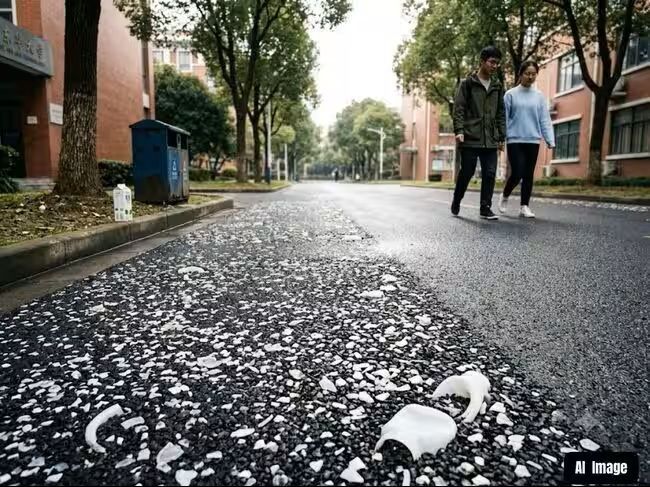
A roadway built at the East China University of Science and Technology’s Xuhui Campus incorporates plastic recovered from more than 6,000 used milk bottles. The bottles were combined with other post-consumer plastics and used in polymer-modified asphalt.
The project was developed by Dow, a materials-science company, and Shiny Meadow, a Chinese premium dairy brand. Collected packaging was processed into raw material for road construction rather than being sent to landfill or treated through energy-intensive disposal methods.
Under the process, recovered plastics were melted and blended with conventional bitumen. The resulting material was used to construct the road, creating an outlet for rigid dairy containers that commercial re-processors may classify as low-value waste.
Milk packaging is difficult to handle in standard recycling systems when organic residue remains on the inside of the containers. Cleaning and sanitising those containers requires additional water, chemicals and sorting work, which can make collection and processing uneconomic for municipal recycling operations.
Polymer-modified asphalt is designed to improve pavement elasticity and tensile strength, as well as resistance to rutting under repeated heavy vehicle loads. The formulation also replaces part of the petroleum-based bitumen with recycled polymers, reducing the quantity of conventional bitumen used in the asphalt mixture.
For dairy companies using rigid plastic containers, the project provides an alternative route for post-consumer packaging. The source described viable collection and reuse channels as relevant to extended-producer-responsibility obligations and corporate circular-economy targets.